 Nephrology
 Urology
 Andrology
 Fertility (IVF)
 General Nephrology
 Paediatric Nephrology
 Dialysis
 Renal (Kidney) Biopsy
 CRRT
 Peritonial Dialysis
 Robotic Surgery
 Urinary Incontinence
 Uro-Oncology
 Laparoscopic Urology
 Reconstructive Urology
 Anaesthesiology
 Radiodiagnosis
 Nutrition and Dietetics
 Pediatric and Immunization
 Cardiology
 Intensive Care Unit




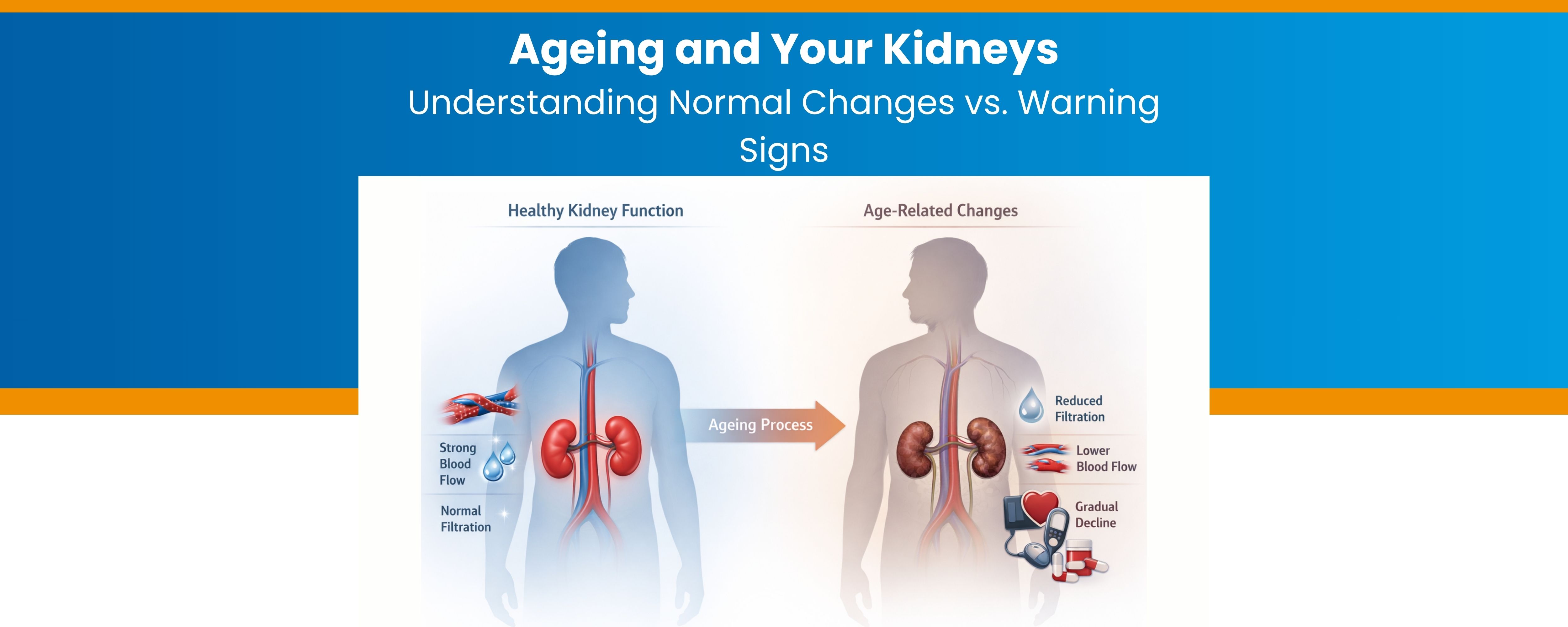
Ageing can be measured by the physical changes that are easily visible to the eye. But internally our organs are also undergoing an inevitable, slow transformation. The kidneys are no exception. For years, the kidneys have filtered your blood, balanced your electrolytes, and managed your blood pressure.
When it comes to kidney health and ageing, there is a lot of information around us that can be worrisome for seniors. This is why it is important to know the difference between normal changes that occur with time and warning signs.
Quick Overview
Kidney filtration (eGFR) begins to decline naturally by about 1% per year after age 40. However, this is normal and usually does not lead to kidney failure in ageing adults. However, the real danger to senior renal health occurs when age-related decline is sped up by conditions like poorly managed diabetes, hypertension, or prolonged use of medicines.
By learning to differentiate between a healthy ageing kidney and the clinical warning signs of kidney disease, individuals can manage comorbidities and avoid kidney failure. This is the most effective way to prevent age-related kidney loss, ensuring people maintain sufficient functional reserve to enjoy an active and healthy life well into their 80s and 90s.
Kidney Health and Ageing
As a person enters their 40s or 50s, the kidneys begin to undergo senescence, a biological process of ageing-related deterioration. It is important to understand that this is not a disease, but a shift. Even reduced kidney function at 60 shouldn’t be a source of panic.
While not everyone will develop kidney diseases, the risk definitely increases with age. Reduced kidney function is far more common in individuals above the age of 60, and it is accelerated if they live with other conditions that affect the kidneys. This includes,
· High blood pressure or hypertension
· Heart diseases
· Diabetes
Understanding the relationship between kidney health and ageing is important as kidney diseases rarely show symptoms in the early stages and develop slowly. One may only find out when the risk has increased exponentially.
Through early detection and treatment, patients can prevent complications, avoid/delay the need for dialysis or transplant, and improve the overall quality of life.
How Ageing Can Impact the Kidneys
Each kidney is made up of tiny nephrons, which are filtering units present in millions at birth. As we age, the number and function decline, and they may not filter blood as efficiently as they once did. Common age-related changes seen in the kidneys are:
· Reduced hormone production
· Increased sensitivity to medications
· Slowed response to stress
· Stiffened blood vessels
· Decreased ability to conserve water, making dehydration more likely
Moreover, people may develop kidney conditions as they age. This includes:
· Chronic kidney disease (CKD)
· Type 2 diabetes
· High blood pressure
· Heart disease
· Acute kidney injury
What is eGFR and the Decline in eGFR with Age
eGFR stands for estimated Glomerular Filtration Rate and is used by medical professionals to determine how well your kidneys are filtering wastes produced in the body, such as creatinine and cystatin C. Seeing a decline in eGFR with age is standard as human beings tend to lose a small amount of functional reserve with time.
Individuals may need an eGFR test if they experience symptoms such as excessive urination, itching, fatigue, swelling, muscle cramps, nausea/vomiting, or loss of appetite. These are also symptoms of kidney failure in the elderly.
Decline in eGFR is as follows:
Age (Years) |
Average eGFR |
40-49 |
99 |
50-59 |
93 |
60-69 |
85 |
70-79 |
75 |
80-89 |
65 |
90-99 |
60 |
Preventing Age-Related Kidney Loss
To keep your kidneys in fighting shape as the years add up, you have to move beyond "general health advice" and get specific about renal protection. It’s not just about living longer; it’s about maintaining that critical functional reserve so your kidneys can handle whatever life throws at them.
· Eating a balanced diet: Eating a balanced diet: Limit your sodium intake and add fresh fruits and vegetables to your diet. Opt for whole grains, lean proteins, and healthy fats. As you age, you must limit your intake of sugar and processed foods.
· Vitamins: Intake of vitamins like B-complex, Vitamin C, and Vitamin D can be used to make energy, build RBCs, keep your skin and nerves healthy, and support the immune system.
· Manage blood sugar: Especially in individuals with diabetes, it is important to make sure your blood sugar levels are in the recommended range to avoid kidney diseases.
· Controlling blood pressure: High blood pressure has been known to be one of the leading causes of kidney diseases.
· Stay Active and Avoid Bad Habits: Make sure to include moderate workouts in your everyday life, including aerobic exercises and strength training. Smoking and alcohol consumption should be strictly eliminated.
· Hydration is Key: Drink adequate water so that the kidneys can filter waste appropriately. However, too much fluid intake can be harmful as well.
· Visit Your Doctor Regularly: It is important to make sure you are getting regular checkups done since kidney diseases seldom show symptoms at early stages. Your doctor may find cystic changes during routine scans, which may or may not be indicators.
Senior Safety Checklist:
A checklist for kidney health in people over the age of 50 should include:
Priority |
Action |
Annual Labs |
Creatinine and UACR tests. Normal creatinine levels in a 70-year-old male is approximately 0.7 to 1.3 mg/dL. |
Medicine Review |
Check supplements and medications |
Hydration |
Sip, don’t chug |
BP Targets |
Keep it under 130/80 |
Salt Intake |
Limit consumption of boxed foods |
How NU Hospitals Can Help
At NU Hospitals, we realise that treating 80-year-old patients is vastly different from treating our younger patients. As a centre of excellence in Geriatric Urology and Nephrology, our philosophy extends beyond the norm to incorporate a personalised, age-specific care model.
We respect and consider a patient’s physiological reserve, polypharmacy risks, and medication sensitivity at NU Hospitals. Comorbid management is our priority, and we strive to protect your kidneys from the many diseases that may affect healthy living.







