 Nephrology
 Urology
 Andrology
 Fertility (IVF)
 General Nephrology
 Paediatric Nephrology
 Dialysis
 Renal (Kidney) Biopsy
 CRRT
 Peritonial Dialysis
 Robotic Surgery
 Urinary Incontinence
 Uro-Oncology
 Laparoscopic Urology
 Reconstructive Urology
 Anaesthesiology
 Radiodiagnosis
 Nutrition and Dietetics
 Pediatric and Immunization
 Cardiology
 Intensive Care Unit





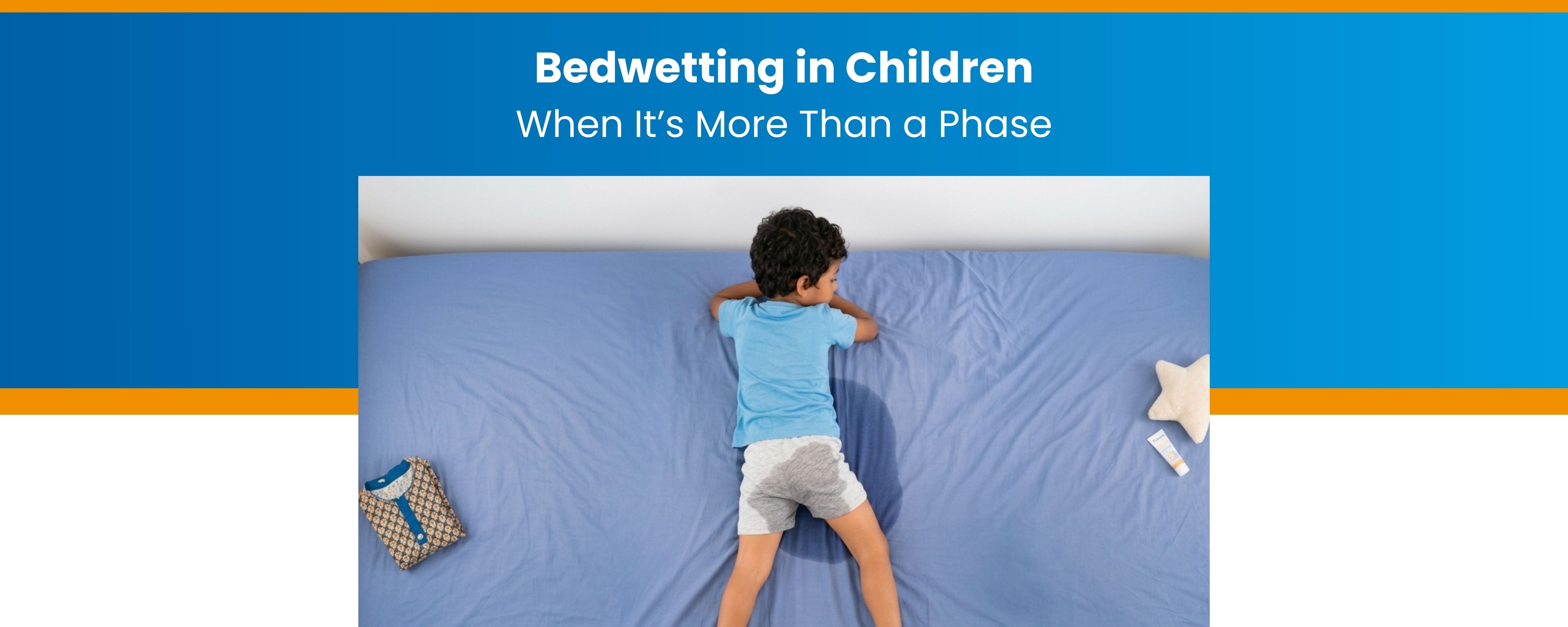
Bedwetting after a certain age can be more than just a phase. Medically known as nocturnal enuresis, this paediatric problem can lead to persistent or late-onset bedwetting. It is usually linked with bladder maturity concerns, emotional health, or other underlying medical issues. For help and clarity on this issue, parents need to understand the causes of childhood bedwetting to respond with the right approach.
Overview:
Nocturnal enuresis refers to a child’s involuntary urination during sleep, even though they are expected to gain control over their bladder. In context, most children achieve this control by age 5; however, for some, bladder control takes longer due to various factors.
Interestingly, child bedwetting can be classified into two different types, which are described as:
1. Primary Nocturnal Enuresis:
When the child has never attained dryness at night, such cases are classified as primary nocturnal enuresis. Child bedwetting of this type is usually linked to developmental issues.
2. Secondary Nocturnal Enuresis:
This is identified as the return of bedwetting after at least six months of continuous dryness. Secondary cases of bedwetting are generally caused by stress, infection, or other paediatric urinary problems.
Understanding both major types of nocturnal enuresis and their causes is important for diagnosing and treating this condition. Moreover, it is important to recognise bedwetting as a medical concern, rather than brushing it off as just a phase.
Child Bedwetting Causes:
Bedwetting is never your child’s laziness or poor habit; instead, it can be a result of one or more physiological or psychological factors, which may include:
Causes |
What It Means |
Delayed Bladder Maturity |
When the bladder fails to mature enough with age, it struggles to hold urine overnight. |
Deep Sleep Patterns |
Deep sleep patterns are those in which a child does not wake up in the night, even when the bladder is full. |
Low ADH Hormone Levels |
ADH (Antidiuretic Hormone) signals the kidneys to reabsorb water, reducing urine output. Therefore, when the levels of this hormone are low, the kidneys begin to produce more and dilute urine. |
Genetic Factors |
A family history of low ADH or delayed bladder maturity is also one of the leading child bedwetting causes. |
Small Bladder Capacity |
A smaller bladder has reduced capacity, leading to difficulty holding urine |
Urinary Tract Infections |
Certain urinary tract infections cause a strong urge to pee at night, which can lead to accidents like bedwetting. |
Emotional Stress |
Emotional stress due to any reason, like anxiety, school changes, or even family issues, can also disrupt your child’s sleep habits. |
Constipation |
Sometimes, pressure on the bladder due to constipation can hinder the normal function of the bladder, eventually causing nocturnal enuresis. |
Diabetes |
Paediatric diabetes makes it harder to hold urine for a long time, eventually becoming one of the major causes of bedwetting in children. |
Can Bedwetting Be Treated?
In one word, yes, bedwetting is treatable. However, given the wide range of causes of nocturnal enuresis, a one-size-fits-all approach is not effective in treating this issue. Eventually, the treatment approach depends on the child's age, the severity of symptoms, and, of course, the underlying cause.
These are some of the most common treatment options used for bedwetting in children:
- Conservative Management: Conservative management involves lifestyle adjustments used to manage this situation through physiological means. These may include:
-
-
Limiting fluid intake before bedtime
-
Encouraging regular daytime urination
-
Ensuring the child uses the bathroom before sleep
-
- Bedwetting Alarms: These are specialised devices designed to sound an alarm as soon as they detect moisture, eventually waking the child. This device helps train the brain to respond to a full bladder over time.
- Medications: Doctors can also prescribe certain medications to help your child reduce urine production or even improve bladder control in older children.
- Treating Underlying Conditions: When the underlying cause of bedwetting is a medical issue, such as constipation, urinary tract infections, or a sleep disorder, treating these conditions is the first-line treatment for nocturnal enuresis.
Supporting Your Child Through Bedwetting Treatment:
Bedwetting treatment is not just about giving medications or treating underlying issues; it is also about supporting your child through this phase. Your child is doing their best to control their sleep habits, and here’s how you can help them do it:
-
Children should know bedwetting is common and it’s not their fault.
-
If you punish your child for something they cannot control, it can make them more afraid to react when an incident occurs, and you don’t want that.
-
Try using positive reinforcement to motivate your child during dry nights.
-
Also, keep a consistent bedtime routine. When a child has an accident.
-
It is good to involve him/her in cleaning up the mess, but don’t turn it into a punishment.
Does Bedwetting Affect Mental Health?
Yes, bedwetting does affect mental health, and the worst part is that this aspect of this condition is often overlooked and ignored. That is, children who go through nocturnal enuresis usually develop a feeling of embarrassment and shame. They reduce self-esteem and always remain anxious about sleepovers or school trips, for fear of being punished or joked about.
Moreover, this emotional burden may get heavier as the child grows with persistent bedwetting issues. This burden can lead them to feel depressed. Therefore, they need a supportive and non-judgemental environment, because physiological issues can be resolved one day, but mental pressure can cause lifelong trauma for a person, especially a child.
This is why parents must follow the above-mentioned tips to support their child through bedwetting to keep their child healthy.
Advanced Paediatric Urology Care: A Specialised Approach
Children with bedwetting issues need something more than management tactics; they need specialised paediatric urology care. Therefore, the Centre of Excellence in Paediatric Urology at Rajajinagar offers the necessary care for bedwetting treatment. That is, it offers advanced diagnosis of the underlying causes of childhood bedwetting and hence treatment accordingly.
In summary, the centre is a centre of excellence because it mainly focuses on:
-
Detailed assessment of bladder maturity and function
-
Identifying specific nocturnal enuresis causes
-
Creating personalised treatment plans
-
Providing behavioural guidance and family counselling
This comprehensive approach to treating nocturnal enuresis ensures both your child's physical and mental well-being.
When Should Parents Consult a Doctor?
Interestingly, most cases of nocturnal enuresis resolve on their own with time and proper management. However, parents should take their child to a doctor for a medical evaluation if:
-
Bedwetting continues after the age of 7.
-
There are times when children have not wet the bed for a long time but begin again.
-
Children have daytime urinary symptoms (urgency or leaks) without an explanation.
-
Pain, burning, or the colour of urine may be different from usual.
-
Children may have excessive thirst or lose weight without an explanation.
-
Sleep problems (snoring or difficulty breathing).
Note that early consultation can help determine whether the underlying causes of bedwetting are minor or more complex child urinary problems.







