 Nephrology
 Urology
 Andrology
 Fertility (IVF)
 General Nephrology
 Paediatric Nephrology
 Dialysis
 Renal (Kidney) Biopsy
 CRRT
 Peritonial Dialysis
 Robotic Surgery
 Urinary Incontinence
 Uro-Oncology
 Laparoscopic Urology
 Reconstructive Urology
 Anaesthesiology
 Radiodiagnosis
 Nutrition and Dietetics
 Pediatric and Immunization
 Cardiology
 Intensive Care Unit





Overview
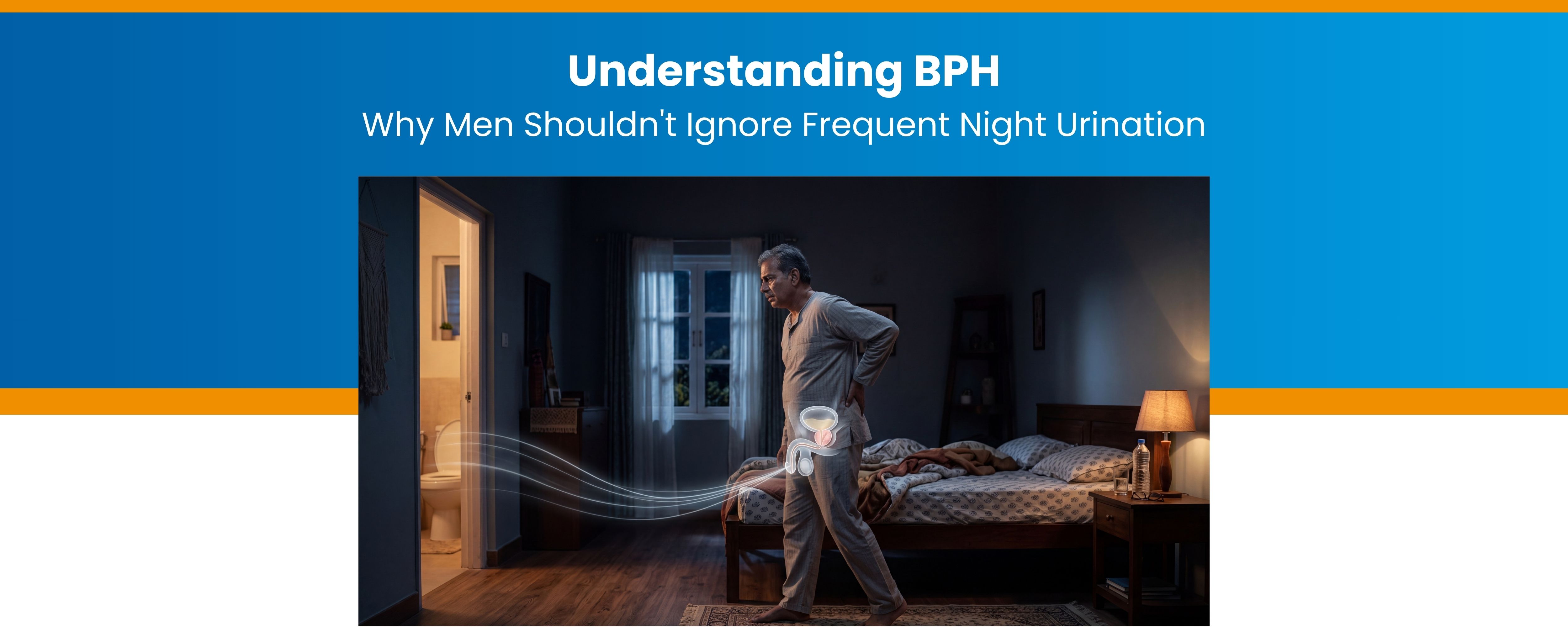
Frequent nighttime urination, also known as 'nocturia', is a common symptom of Benign Prostatic Hyperplasia in men over 50. Simply put, BPH is a non-cancerous enlargement of the prostate gland, which, if left untreated, can lead to complications, including urinary obstruction and poor-quality sleep.
One of the most advanced surgical treatments for BPH available today is HoLEP (Holmium Laser Enucleation of the Prostate), a laser-based procedure that helps by removing the obstructing prostate tissue, with minimal bleeding and supporting a faster recovery. The first step to achieving full recovery is having a good understanding of the symptoms and treatment options for BPH.
At NU Hospitals, Bangalore, HoLEP procedures performed by subspecialty urology experts provide long-term symptom relief for BPH, ensuring that patients not only experience relief from urinary symptoms but also maintain their sexual function.
What is BPH?
BPH stands for benign prostatic hyperplasia, which refers to the enlargement of the prostate gland, which is non-cancerous. The prostate gland in men is approximately the size of a walnut and encircles the urethra. When the gland enlarges, it compresses the urethra, making it difficult for urine to pass through easily.
How common is BPH? The condition is remarkably common in older men. Studies show it can affect 29% to 33% of people over age 65 [source]. Men who are more likely to develop BPH include:
-
Those over the age of 50.
-
Those with a family history of BPH
-
Those who are not physically active
-
Those who have other underlying conditions, such as type 2 diabetes, obesity, chronic kidney disease (CKD), and more.
Recognising BPH Symptoms and Treatment Triggers
At first glance, nothing may seem wrong. However, there are certain symptoms you should watch for. Understanding which symptoms call for medical intervention is the first step toward effective treatment. These include:
-
Trouble urinating - Straining to urinate and taking a long time to finish
-
Weak urine stream
-
Inability to empty the bladder
-
Painful urination
-
Nocturia
-
Urinary urgency and increased frequency
Causes of Benign Prostatic Hyperplasia
There is no exact known cause of BPH. It is believed that, as a man ages, his testosterone levels decrease while oestrogen levels remain the same. This hormonal imbalance could cause prostate cells to grow. On the other hand, older men also have increased levels of Dihydrotestosterone (DHT), which can also increase prostate size. It is important to note that these are simply theories, and scientists have not been able to decipher the true cause of prostate enlargement.
Meanwhile, while BPH is among the most common causes of nocturia in men over 50, a proper medical evaluation is important to rule out other contributors, including the following:
-
An overactive bladder (OAB)
-
Diabetes mellitus or diabetes insipidus
-
Congestive heart failure
-
Sleep apnea
-
Diuretic medications
-
Excessive fluid intake
How to Differentiate Between Prostate Cancer and BPH?
One of the most common fears in men over the age of 50 is whether the changes in their bodies could be a sign of cancer. Understanding the difference between prostate cancer and BPH signs is important, both for your physical and mental health.
BPH and prostate cancer can share a few symptoms, which may cause concern. This includes urinary frequency and a weak urine stream. However, these are clearly two distinct conditions, and BPH does not increase the risk of prostate cancer.
To differentiate:
Feature |
BPH |
Prostate Cancer |
Nature |
Non-cancerous growth |
Malignant tumour |
PSA Levels |
Mildly elevated |
Significantly elevated |
Prostate Texture |
Smooth, uniformly enlarged |
Irregular and nodular |
Spread to Other Organs |
No |
Possible in later stages |
Bone Pain / Weight Loss |
No |
Possible |
Prostate-Specific Antigen (PSA) is a specific protein made by the prostate, and its levels can be measured in the bloodstream. High PSA levels might be a sign of prostate cancer. The range of “normal” PSA levels varies from person to person, but generally speaking,
-
PSA levels in men 59 or younger: Below 2.5 ng/mL
-
PSA levels in men 60 or older: Below 4.0 ng/mL
Anything higher than that may warrant a deep dive into your health.
Why Should Nocturia Not Be Ignored?
Nocturia, or frequent nighttime urination, is rarely just a minor inconvenience. It could be your body’s way of warning you that the prostate is obstructing normal urinary flow, which can cause an average man to lose multiple hours of sleep each night, contributing to serious long-term health consequences over time, including hypertension, impaired glucose regulation, and increased fall risk.
What begins as two nighttime bathroom trips can advance into urinary retention problems, bladder wall thickening, recurrent urinary tract infections, and more. In severe cases, patients may develop kidney damage from pressure on the upper urinary tract.
BPH Symptoms and Treatment
Treatment of BPH depends on the severity of the symptoms, prostate size, age, and overall health of the patient.
Treatment |
Best For |
Mechanism |
Key Consideration |
Watchful waiting |
Mild symptoms |
Lifestyle changes and monitoring |
No medication side effects |
Alpha blockers |
Moderate symptoms |
Relaxes prostate muscles |
Fast relief, but it does not shrink the prostate |
5-Alpha Reductase Inhibitors |
Large prostate |
Reduces DHT, shrinks prostate |
Takes 6-12 months to work |
Combination therapy |
Moderate-severe symptoms |
Relaxes prostate muscles and reduces DHT, shrinks the prostate |
Fast relief and also shrinks the prostate/halts the growth |
TURP |
Moderate-large prostate |
Resects prostate tissue |
Gold standard |
HoLEP |
Large prostate |
Enucleates the entire transition zone |
Superior outcomes |
Urolift |
Smaller prostates |
Mechanical implants |
No tissue removal |
Enlarged Prostate Laser Surgery: HoLEP vs TURP
For men affected with BPH, enlarged prostate laser surgery is the best way to achieve definitive relief. The two most clinically discussed procedures are HoLEP and TURP.
TURP:
Transurethral Resection of the Prostate has been considered the gold standard when it comes to BPH treatment. Here, an electrical loop is used to remove the prostate tissue in small pieces. While TURP has its benefits, it comes with complications like higher blood loss, longer hospital stays, and a risk of retrograde ejaculation.
HoLEP:
Now, Holmium Laser Enucleation of the Prostate is increasingly being used as an alternative to TURP, especially when it comes to larger prostates. Instead of resecting tissue pieces, HoLEP uses a high-powered holmium laser to enucleate, or shell out, the entire obstructing tissue along anatomical planes.
HoLEP holds the following advantages over TURP:
-
Reduced blood loss
-
Reduced catheterisation duration and hospitalisation period
-
Retreatment is rare
-
Can be done on prostates of any size
-
Preserves sexual function better than TURP
-
Improved urinary flow
If you are wondering about the cost of HoLEP vs TURP, remember that the price depends on the hospital and the city you are in. Reach out to the nearest NU Hospital for exact pricing and other procedural details.
Behavioral Modifications & Urotherapy
-
Maintain a daily fluid intake between 1.5 to 2 litres.
-
Restrict all fluid consumption after 6:00 PM. Ensure no food or fluid intake for at least 60-90 minutes before sleeping.
-
Optimized Voiding Posture: When urinating or defecating, sit down completely with your thighs wide apart. Relax your pelvic floor muscles. Use a footstool to elevate your knees.
-
Timed Voiding: Empty your bladder on a fixed schedule every 3 to 4 hours. Do not delay urination until you feel an intense urge
-
Constipation relieving measures. High vegetable fiber in diet. Take laxatives as and when required.
Prostate Care at NU Hospitals, Bangalore
The Urology and Andrology department at NU Hospitals, Bangalore, benefits from the expertise of professionals with the requisite qualifications to address the healthcare needs of elderly males regarding their prostates. The field of specialisation involves not only diagnosis but also surgery, such as HoLEP, which makes the standards of patient-oriented care exceptionally high.







