 Nephrology
 Urology
 Andrology
 Fertility (IVF)
 General Nephrology
 Paediatric Nephrology
 Dialysis
 Renal (Kidney) Biopsy
 CRRT
 Peritonial Dialysis
 Robotic Surgery
 Urinary Incontinence
 Uro-Oncology
 Laparoscopic Urology
 Reconstructive Urology
 Anaesthesiology
 Radiodiagnosis
 Nutrition and Dietetics
 Pediatric and Immunization
 Cardiology
 Intensive Care Unit




Introduction
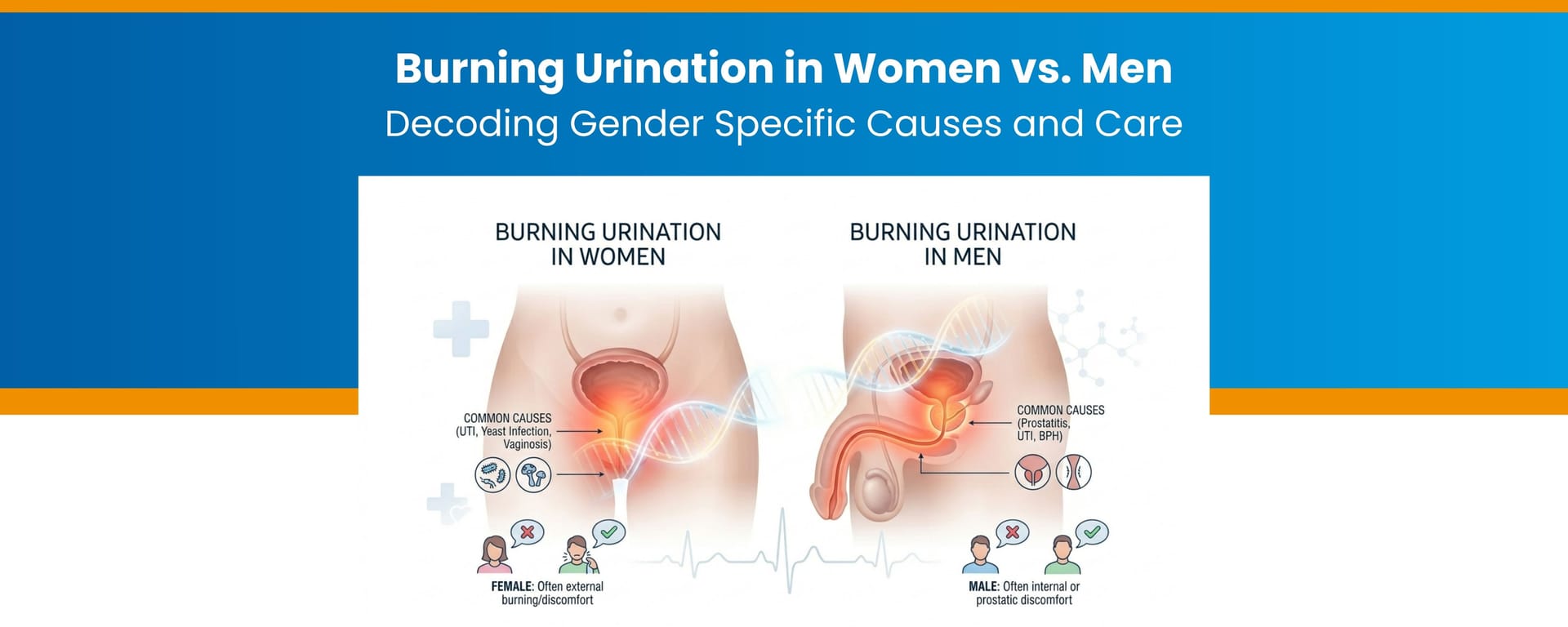
Clinically called dysuria, burning urination is one of the main reasons why individuals experience pain while urinating. While burning urination in women and in men may occur due to the same underlying cause based on their biological differences, it is actually two different conditions with different sets of causes, risk factors, and long-term effects. Women tend to have shorter urethras than men, which makes UTI the most common cause as to why women experience burning when urinating. Further, though women's hormones can vary greatly due to factors such as pregnancy, sexual activity, and menopause, they also play a role in making women more susceptible to UTIs than men.
Another notable difference is that men have a longer urethra than women and are at a greater risk of developing prostatitis, urethritis, and obstructions; therefore, men suffering from the symptoms of burning urination are usually related to these conditions rather than bladder infection. To accurately diagnose dysuria, it’s important to understand the differences between men and women. This article will help readers learn more about why burning urination should be classified differently based on biological makeup, how each type of symptom differs, and why accurate diagnosis is vital to preventing chronic problems with urinary and reproductive organs for both genders.
Why is Gender Consideration Important in Dysuria?
The urinary systems of males and females serve similar functions; however, they differ in structure, which affects infection risk and symptoms.
Physiological Differences Between Males and Females
-
An average female has a urethra of 3–4 cm, while an average male has a urethra of 15–20 cm.
-
The prostate gland is only present in males and produces antibacterial secretions.
-
Estrogen plays a protective role for the female urinary system.
-
There are differences in the female pelvic floor compared to the male pelvic floor, which influence urinary control and the associated pain.
These differences also alter how the bacteria move up the urethra, affect the inflammatory responses to an ascending infection, and determine how the person with dysuria will report their symptoms.
Causes of Burning Urination in Women
Women are much more likely to experience discomfort from dysuria. The most common causes are:
Urinary Tract Infection (UTI):
Bacteria travel up the urinary tract to cause a UTI. The shorter length of the female urethra allows bacteria to enter the bladder more quickly. This type of infection is called an ascending infection.
Vaginitis and external Irritation:
The burning sensation can also arise through external means. Possible external causes include yeast infections, bacterial vaginosis, irritation from chemicals such as soaps and sprays, and allergic reactions. The burning sensation from external causes may worsen with contact or friction.
Burning after intercourse:
Discomfort following intercourse for women is common because of the increase in friction and creation of micro-tears, introduction of bacteria, and use of spermicide.
Atrophic Vaginitis (Post-Menopause):
With the loss of estrogen post-menopause, tissue in the vagina and urethra becomes thinner and less lubricated, resulting in an increased susceptibility to infections and irritation.
Hypertonicity of the pelvic floor:
Chronic stress or trauma can tighten the pelvic floor muscles, causing a burning sensation without infection.
Causes of Burning Urination in Men
Common causes of burning urination in men include:
Prostatitis:
The Prostate is a gland that surrounds the male urethra. Inflammation may cause burning in the male urethra. Prostatitis is frequently associated with either bacterial infection or congestion of the prostate.
Urethritis:
Most frequently caused by a sexually transmitted infection. Urethritis is commonly associated with visible discharge, whereas bladder infections are not.
True UTI in Males:
Men can have UTIs, although they are less common because men have longer urethras and antibacterial secretions from the prostate. When men experience a UTI, physicians often investigate underlying causes such as obstruction or prostate enlargement.
Detrusor–Sphincter Dyssynergia:
It is a neurological disorder where the bladder and sphincter muscles do not work together properly. This results in a burning sensation due to incomplete bladder emptying. It is more frequently seen in men who have a spinal cord injury.
Gender Specific- Anatomical and Physiological Factors Influencing Dysuria
Factor |
Women |
Men |
Urethral length |
Short |
Long |
Infection risk |
High |
Low |
Common cause |
UTI |
Prostatitis |
Age-related factor |
Atrophic vaginitis |
Prostatic enlargement |
Hormonal influence |
Estrogen protective |
Minimum protection |
Post sex dysuria |
Common |
Less common |
Pelvic pain |
Due to pelvic floor hypertonicity |
Prostatic congestion |
When to Get Help for Your Symptoms?
You should see a doctor right away if you have a burning sensation when you urinate and/or you have the following symptoms:
-
Fever
-
Pain in the sides
-
Blood in urine
-
Vomiting
-
Severe pain in the pelvis
Untreated chronic dysuria can lead to a kidney infection, chronic prostatitis, a bladder problem, and pelvic pain.
Testing Approach: The Importance of Testing by Gender
To accurately test and diagnose dysuria by the patient's gender, it is important to do the following:
-
A culture and routine analysis of the urine
-
An ultrasound
-
A prostate examination for men
-
A vaginal examination for women
-
If indicated, testing for a sexually transmitted infection
-
Assessment of the amount of urine left in the bladder after urination
Misdiagnosing dysuria can cause more urinary tract infections, the development of antibiotic-resistant bacteria, and chronic pelvic pain.
NU Hospitals Approach
At NU Hospitals, our dual-speciality approach combines an evaluation of both the urinary and reproductive systems as one system. The reason for combining both specialists (Urologists and Gynaecologists) is that many times a woman's urinary symptoms can be related to gynaecological issues, in the same way that many men's urinary problems can be related to their prostate. Working together, our specialists provide:
-
More precise diagnoses
-
Minimise inappropriate use of antibiotics
-
Identify pelvic floor disorders
-
Detect problems with the prostate or bladder sooner
-
Provide post-menopausal women with hormone-based treatment.
This dual-speciality model provides better long-term outcomes and reduces the chances of chronic complications.








