 Nephrology
 Urology
 Andrology
 Fertility (IVF)
 General Nephrology
 Paediatric Nephrology
 Dialysis
 Renal (Kidney) Biopsy
 CRRT
 Peritonial Dialysis
 Robotic Surgery
 Urinary Incontinence
 Uro-Oncology
 Laparoscopic Urology
 Reconstructive Urology
 Anaesthesiology
 Radiodiagnosis
 Nutrition and Dietetics
 Pediatric and Immunization
 Cardiology
 Intensive Care Unit




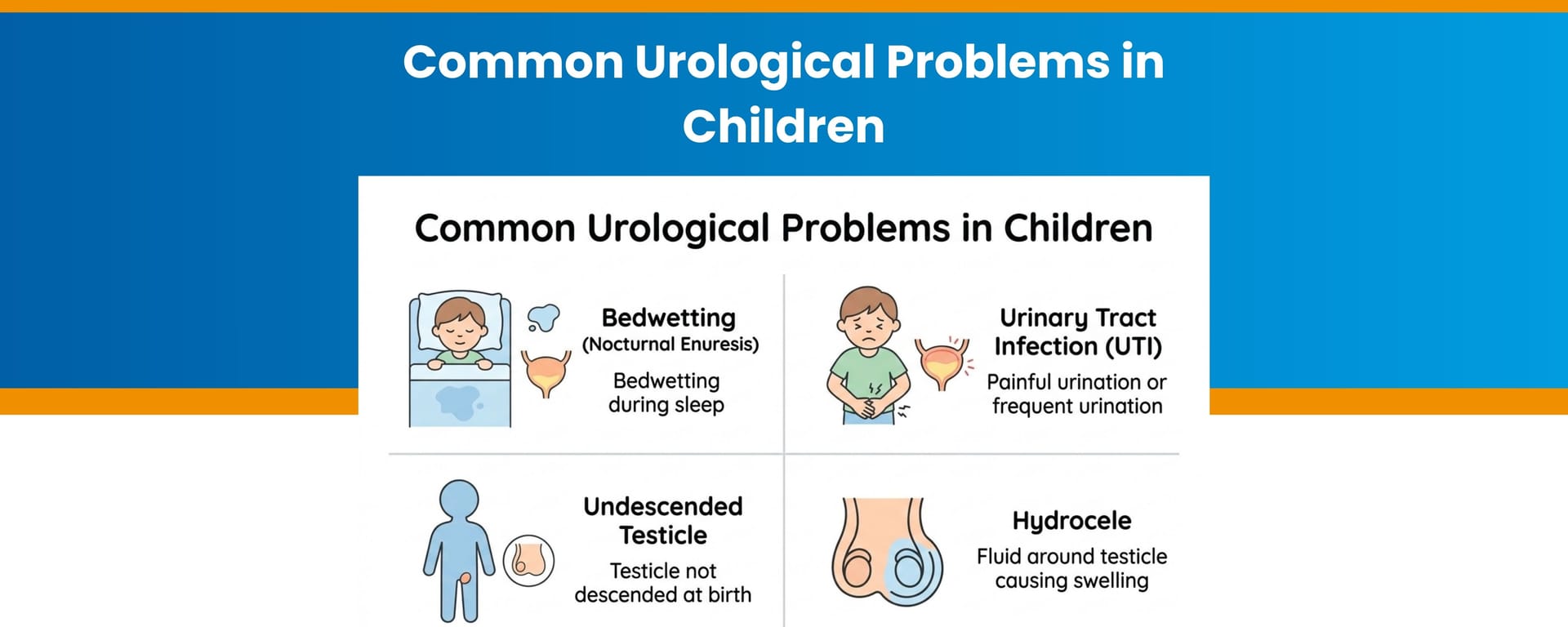
We understand that any health worry regarding your child is difficult. The urinary system, including the kidneys and bladder, is essential for daily comfort and growth. Sometimes it’s hard for a little one to tell us where it hurts, which can feel immensely worrying for a parent. Learning a little bit about common urinary problems in children can help you feel more at peace.
By providing comprehensive information on diagnostic and therapeutic options, we aim to improve urological outcomes. Educating families on available treatments is part of NU Hospital’s commitment to maintaining the highest standards of paediatric urological excellence.
Understanding Paediatric Urological Health
Children’s developing urinary systems require specialised attention. Their increased vulnerability to congenital and acquired conditions is a medical fact, but fortunately, most are treatable. Parents must not ignore persistent symptoms. What looks like a minor inconvenience, such as bedwetting or frequent urination, is often a clear warning sign of an underlying urological disorder.
We advocate for early diagnosis to ensure the best outcomes. If a symptom is recurrent, it is no longer minor. You can trust our specialists to identify the root cause and provide the advanced care your child deserves.
Common Urinary Problems in Children
Caring for your child's health is our priority. Many urinary issues appear in childhood, but with the right professional evaluation, we can manage symptoms early and prevent any long-term health concerns.
-
Urinary tract infections (UTIs):
UTIs are often among the most frequent urological conditions in children. They happen when specific bacteria enter the urinary tract. Recurrent infections may indicate structural abnormalities or bladder dysfunction.
-
Bedwetting:
Bedwetting is common in children under seven. While usually self-correcting, persistent issues may signal delayed bladder development, hormonal factors, or emotional stress. Specialist consultation is advised to identify and manage these underlying causes.
-
Daytime urinary incontinence:
This involves leakage during the day. It may be linked to bladder overactivity, constipation or behavioural habits.
-
Vesicoureteral reflux (VUR):
This is a condition where urine flows backwards into the kidneys. This increases the likelihood of repeated urinary infections and might lead to permanent kidney damage if left untreated.
-
Congenital issues:
Congenital issues like posterior urethral valves or ureteropelvic junction obstructions often block urine flow. Detected through antenatal scans or childhood tests, these conditions are major causes of paediatric urological problems.
Parents and doctors must remain vigilant, as early intervention is essential to manage these serious structural health concerns effectively.
Signs, Symptoms & Causes of Urinary Problems in Children
Get ahead of health issues by knowing what to look for! Signs, symptoms & causes of urinary problems in children are your roadmap to a healthy child.
Common symptoms include:
-
Pain or burning during urination
-
Frequent or urgent need to pass urine
-
Bedwetting beyond the expected age
-
Daytime wetting or urine leakage
-
Cloudy, foul-smelling or bloody urine
-
Lower abdominal or back pain
-
Fever, particularly in infants
-
Poor weight gain or reduced appetite
Babies may just be grumpy or sick. Older kids may feel embarrassed. Causes include germs, birth defects, or bathroom habits. Being constipated can also make the bladder feel full. Stress can make things worse, too. Finding the problem early is the best way to keep your child's kidneys healthy.
How Urological Problems Are Diagnosed
A diagnosis is built layer by layer. It starts with the doctor asking detailed questions about your child's fluid intake, toilet habits, and family history. After a physical exam, a urine test checks for hidden infections or blood. If the problem is recurrent, the doctor moves to imaging. An ultrasound uses sound waves to visualise the kidneys, while a voiding cystourethrogram (VCUG) uses a special dye to assess for reflux. These tests are vital because an early, accurate diagnosis is the only way to prevent permanent kidney scarring and long-term health complications.
Treatment Options for Urinary Problems in Children
Treatment options for urinary problems in children depend on what is wrong and your child's age. In many cases, a combination of medical, behavioural and supportive approaches is used to help them get well.
-
Antibiotics are commonly prescribed for urinary tract infections. The duration of treatment depends on the severity of the infection. Some children might take a small dose every day to prevent infections from recurring.
-
Bladder training is a great way to help children struggling with accidents. By focusing on regular toilet breaks and drinking enough water, these programmes help your child feel more confident and dry, day and night.
-
Lifestyle and behavioural modifications play a significant role in treatment. Managing constipation, encouraging adequate fluid intake and establishing healthy toilet habits can significantly improve symptoms.
-
Medications might be prescribed to relax the bladder or reduce overactivity in selected cases. These are typically used under specialist supervision.
-
Surgical intervention is considered when structural abnormalities obstruct urine flow or when conservative treatments fail. Advances in paediatric urology have made many procedures minimally invasive, reducing recovery time.
Most children respond well to treatment, provided management plans are followed strictly over time.
Long-Term Outlook and Prevention
Achieving normal urological function is the standard outcome for most children when treatment starts early. Prompt medical care is the most effective way to eliminate risks like kidney scarring and infections. Prevention through healthy daily routines is equally crucial for long-term success. Parental awareness and emotional support act as force multipliers for medical treatment. By focusing on early diagnosis and consistent preventative habits, you ensure the best health results for your child, allowing them to lead a life free from chronic urinary problems and complications.
Prevention of Urinary Problems in Children includes:
Start these healthy habits today. It is the most effective way to protect your child’s future.
-
Maintaining good urinary hygiene: Teach cleaning skills immediately to cut infection risks.
-
Encouraging regular toilet habits: We recommend scheduled voiding intervals to prevent bladder dysfunction.
-
Ensuring adequate fluid intake: Optimised hydration is a critical metric for maintaining urinary tract clearance.
-
Managing constipation promptly: Integrated bowel management is essential to mitigate bladder pressure.
-
Providing reassurance and education: Emotional support is a strategic component in improving patient cooperation and control.
Through our commitment to consistent care and preventative measures, we ensure that the majority of children achieve and maintain excellent urological health and overall well-being.
Whom to Consult for Urinary Problems in Children
Knowing whom to consult for urinary problems in children is the most critical decision you can make for your child's urological health. Start with your GP or paediatrician; they have the tools for initial testing and history taking. Many common issues are easily treated at this stage.
If your child needs extra help for recurring problems, a paediatric urologist is there for you. These specialists are experts in complex bladder and kidney concerns and will guide you with specialised tests. Seeking help early is the kindest thing for your child's future health. Finding the right specialist ensures your child gets gentle, age-appropriate care in a very supportive environment.
Conclusion
Urinary problems are more common than you might think, but the good news is they are very treatable. Whether it is an infection or a minor physical issue, knowing what to look for helps you get the best care for your child. By noticing early signs and chatting with specialists, you are doing an excellent job of protecting their health. With the proper care and a little support, most children grow up happy, healthy, and perfectly well.








