 Nephrology
 Urology
 Andrology
 Fertility (IVF)
 General Nephrology
 Paediatric Nephrology
 Dialysis
 Renal (Kidney) Biopsy
 CRRT
 Peritonial Dialysis
 Robotic Surgery
 Urinary Incontinence
 Uro-Oncology
 Laparoscopic Urology
 Reconstructive Urology
 Anaesthesiology
 Radiodiagnosis
 Nutrition and Dietetics
 Pediatric and Immunization
 Cardiology
 Intensive Care Unit




Introduction
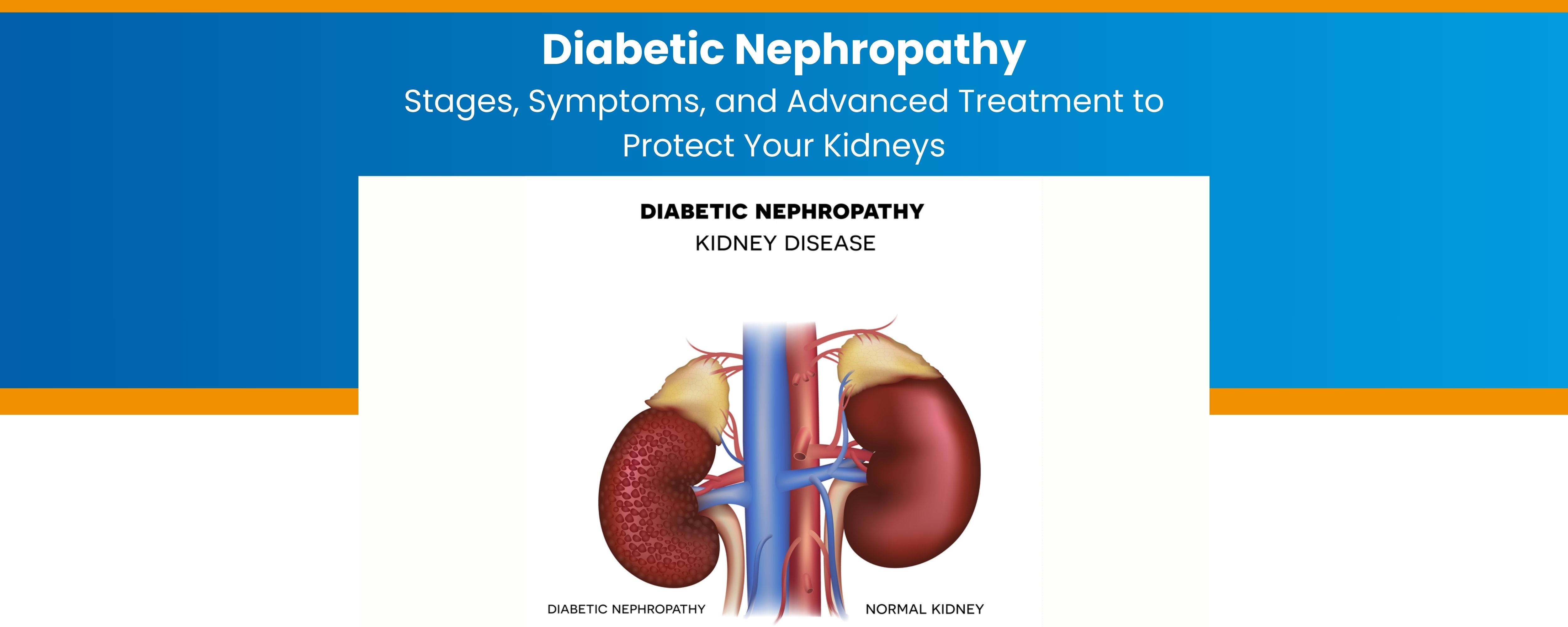
Diabetic nephropathy, also known as diabetic kidney disease (DKD), is a progressive kidney condition that occurs due to high blood sugar levels, resulting in glomerular injury. The disease generally has five stages, starting from hyperfiltration and microalbuminuria to reduced eGFR and ending with end-stage renal disease (ESRD).
Timely detection of the condition is crucial to improving prognosis. Employing the urine albumin-to-creatinine ratio (ACR) and eGFR, diabetic nephropathy can be detected timely manner. Strict glycemic control, RAAS inhibitors (ACE/ARBs), SGLT2 inhibitors, Finerenone and lifestyle changes can effectively delay the progression of the disease and help prevent kidney failure in diabetic patients who are more susceptible to it.
Diabetes is among the major causes of Chronic Kidney Disease across the globe. When blood sugar levels are not managed for a prolonged period, this gradually leads to damage to the kidneys' filtering system. This is referred to as Diabetic Nephropathy.
The concern is not only about the failure of the kidneys because Diabetic Nephropathy also increases the risk of serious conditions like heart disease, hypertension, and premature death. However, with the most recent advances in the treatment of Diabetic Kidney Disease, the progression of Diabetic Kidney Disease can be significantly slowed down.
What Is Diabetic Nephropathy (Diabetic Kidney Disease – DKD)?
Diabetic nephropathy is a microvascular complication of diabetes that affects the glomeruli of the kidneys, which are small filters that remove waste products from the blood. Hyperglycemia causes the following changes:
-
Thickening of the glomerular basement membrane
-
Damage to podocytes and loss of podocytes
-
Accumulation of mesangial cells
-
Increased albumin excretion into the urine
-
Decreased glomerular filtration rate (eGFR)
As a result of these changes, the kidneys become less efficient at filtering out toxins from the blood.
Patients with Type 1 and Type 2 diabetes are more susceptible to this condition. The risk factors generally include:
-
Poorly controlled blood sugar levels
-
Long-standing diabetes
-
Hypertension
-
Family history of kidney disease
-
Smoking
-
Obesity
It is important to note that diabetic nephropathy can be asymptomatic, which means no symptoms can be seen in the patients. This makes the diagnosis even more difficult.
Pathophysiology: How Diabetes Damages the Kidneys
Understanding the underlying mechanisms of diabetic nephropathy explains why controlling the condition early is crucial.
1. Hyperfiltration (Early Stage)
During the early stages of diabetes, the kidneys begin filtering blood at a higher than normal rate. This results in an increase in intraglomerular pressure, which damages the kidney's filtration barrier.
2. RAAS Activation
The Renin-Angiotensin-Aldosterone System (RAAS) becomes hyperactive, further increasing glomerular pressure. This causes excessive protein leakage.
3. Podocyte Injury
Podocytes are part of the filtration barrier. Due to glucose toxicity, podocytes can be lost, and albumin tends to escape into the urine. This can cause podocyte injury.
4. Inflammation and Fibrosis
Inflammatory mediators and oxidative stress lead to scarring (glomerulosclerosis), reducing the kidney's functional mass.
If left untreated, the above processes can result in permanent kidney damage, which can then be very difficult for the patient to recover from. Timely medical intervention thus becomes crucial.
Stages of Diabetic Nephropathy
Diabetic kidney disease has five recognised stages. The early stages of diabetic kidney disease are reversible and can be controlled. However, the later stages of the disease may require dialysis or transplantation. The table below clearly outlines the various stages of diabetic nephropathy and their respective parameters for a concise comparison.
Stage |
Description |
Urine ACR |
eGFR |
Clinical Features |
Stage 1 |
Hyperfiltration |
Normal |
Normal/ High |
No Symptoms |
Stage 2 |
Silent Structural Damage |
Normal or mild |
Normal |
Usually Asymptomatic |
Stage 3 |
Microalbuminuria |
30 - 300 mg/g |
Mild decline |
Mild Oedema Possible |
Stage 4 |
Macroalbuminuria |
>300 mg/g |
Moderate - severe decline |
Swelling, Hypertension |
Stage 5 |
End-stage renal disease |
Very high |
<15 ml/min |
Dialysis required |
Clinical Interpretation
Now, let’s take a look at the clinical interpretation of each stage for a deeper understanding.
-
Stages 1 to 2: In this stage, kidney damage gradually begins but may not show abnormal lab results.
-
Stage 3: Microalbuminuria is the earliest detectable warning sign in patients with diabetic nephropathy.
-
Stage 4: Progressive decline in kidney function starts in this stage. The symptoms become even more noticeable.
-
Stage 5: This stage is characterised by severe kidney failure and requires renal replacement therapy or other advanced procedures.
Early intervention during the early stages, such as stages 1 to 3, offers the best chance of preventing kidney failure in diabetic patients.
Symptoms of Diabetic Kidney Disease
The symptoms tend to develop in the later stages. Some of the common ones that patients usually experience include:
-
Swelling of various body parts, such as legs, ankles, or the face
-
Presence of protein in the urine
-
Weakness and fatigue
-
Consistent high blood pressure
-
Loss of appetite
-
Vomiting
Since the symptoms occur in the later stages, every diabetic patient must undergo annual kidney function tests to ensure the health concern is identified well within time before the condition worsens.
Diagnosis: Essential Tests for Early Detection
Early detection leads to better outcomes and optimised health results. Some of the vital tests involved in the diagnosis of Diabetic Nephropathy include:
1. Urine Albumin-to-Creatinine Ratio (ACR)
ACR tests are used to assess the amount of protein excreted in an individual's urine.
-
Normal: <30 mg/g
-
Microalbuminuria: 30-300 mg/g
-
Macroalbuminuria: >300 mg/g
Sustained levels indicate kidney involvement.
2. Estimated Glomerular Filtration Rate (eGFR) - it is calculated from serum creatinine
eGFR tests help determine whether the kidneys' filtration function is working properly.
-
90 ml/min: Normal
-
60-89 ml/min: Mild impairment
-
<60 ml/min: Chronic kidney disease
Tracking the changes in the parameters is more important than a snapshot of the report.
3. Blood Pressure Measurement
Hypertension is a major factor that contributes to diabetic nephropathy. Aggressive BP management is crucial to prevent this health concern.
Comparison: Evolution of Diabetic Nephropathy Treatment
Over the years, the treatment landscape for diabetic nephropathy has changed significantly. Let us take a deeper look at this evolution using the table below.
Component |
Traditional Care |
Modern Evidence-Based Care |
Glycemic Control |
Basic HbA1c monitoring |
Intensive individualised targets |
Blood Pressure |
General antihypertensives |
RAAS inhibitors (ACE/ARBs) |
Organ Protection |
Limited |
SGLT2i, Finerenone,GLP, RA |
Risk Reduction |
Lifestyle advice |
Integrated metabolic management |
Why Modern Therapy Matters
In the past, treatment approaches focused primarily on managing blood sugar levels. However, current studies have demonstrated that the use of specific protective drugs against the kidneys has been effective in lowering the risk of progression. The introduction of SGLT2 inhibitors has revolutionised the treatment of diabetic nephropathy.
Advanced Diabetic Nephropathy Treatment
Contemporary management practices are directed at multi-organ protection.
1. Glycemic Control
Achieving HbA1c goals decreases microvascular injury.
2. RAAS Inhibitors (ACE Inhibitors/ARBs)
These agents:
-
Decrease intraglomerular pressure
-
Decrease proteinuria
-
Slow disease progression
3. SGLT2 Inhibitors
These agents offer dual benefits of cardiovascular and renal protection by:
-
Decreasing hyperfiltration
-
Decreasing albuminuria
-
Slowing eGFR decline
-
Reducing the risk of hospitalisation
4. Finerenone
5. Blood Pressure Management
Target <130/80 mmHg in most patients.
6. Dietary and Lifestyle Interventions
-
Moderation of protein intake
-
Reduce salt intake
-
Control weight
-
Stop smoking
-
Engage in regular physical activity
A comprehensive lifestyle program, along with pharmacologic management, provides the best renal protection.
Preventing Kidney Failure in Diabetes
Preventive measures should be initiated at the point of diagnosis of diabetes:
-
Annual assessment of ACR and eGFR
-
Tight glycemic control
-
Early use of RAAS inhibitors
-
Evaluation for SGLT2 inhibitors / Finerenone
-
Cardiovascular risk profiling
With active management, the onset of end-stage renal disease can be deferred by many years or even decades.
NU Hospitals’ CardioRenalMetabolic (CRM) Clinic: Integrated Kidney Protection
At NU Hospitals, diabetic kidney disease is treated through the CRM Clinic, a specialised CardioRenalMetabolic clinic where nephrologists and endocrinologists work together to treat individuals. The team follows a unique approach, which includes the following steps:
-
Metabolic profiling
-
Assessment of renal function
-
Individualised pharmacotherapy
-
Cardiovascular risk factor management
-
Dietary counselling
This approach ensures that patients receive a comprehensive treatment programme for their glycaemic and renal protection needs and get optimal benefit and desired outcomes from the procedure.