 Nephrology
 Urology
 Andrology
 Fertility (IVF)
 General Nephrology
 Paediatric Nephrology
 Dialysis
 Renal (Kidney) Biopsy
 CRRT
 Peritonial Dialysis
 Robotic Surgery
 Urinary Incontinence
 Uro-Oncology
 Laparoscopic Urology
 Reconstructive Urology
 Anaesthesiology
 Radiodiagnosis
 Nutrition and Dietetics
 Pediatric and Immunization
 Cardiology
 Intensive Care Unit




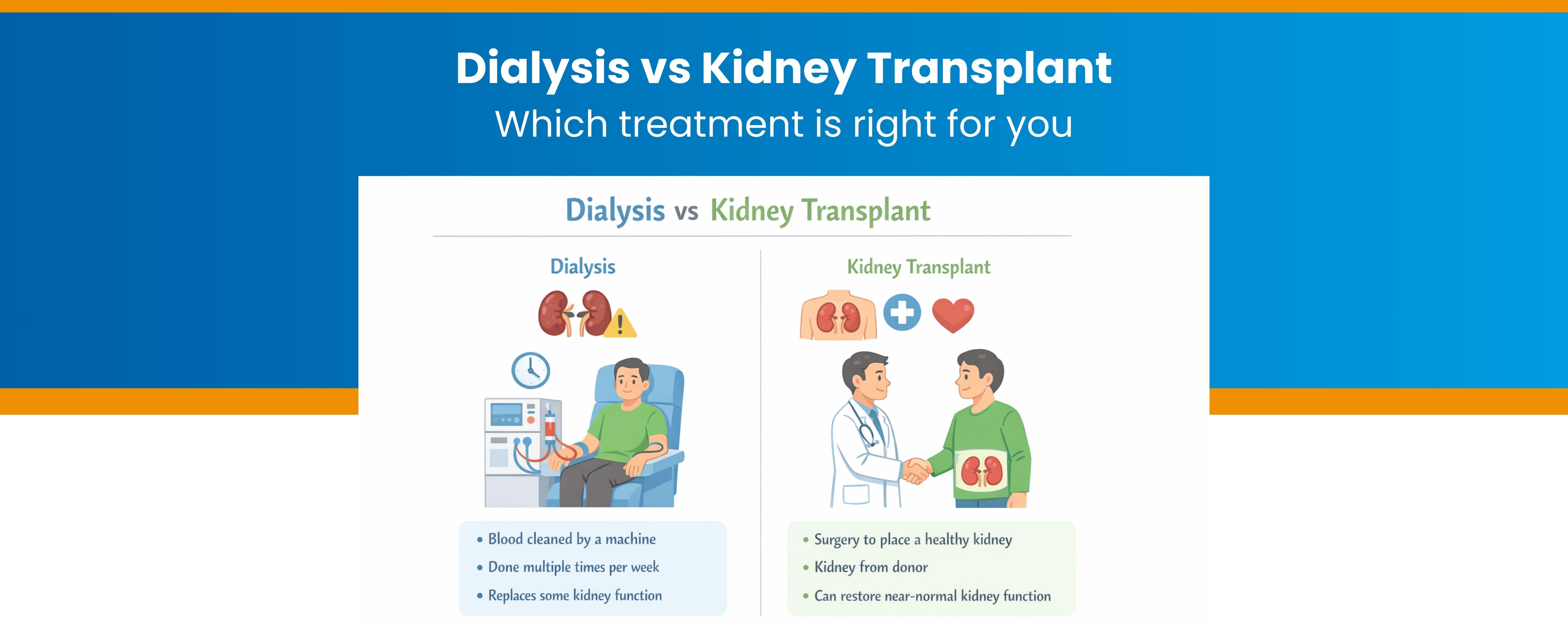
Kidney disease is like a silent epidemic in India, affecting millions across the country. 4% of the adults in Bangalore are affected by kidney disease, with the numbers constantly rising. Chronic kidney disease cases in India have increased from 11.2% (2011–2017) to 16.38% (2018–2023), leading to a growing need for renal disease treatment.
Facing kidney failure is a life-altering moment. With this comes the confusion of choosing between Transplant vs Dialysis. At NU Hospitals, Bangalore, our dedicated team of nephrologists and transplant specialists are committed to providing you with personalized care. We will guide you through every step of your treatment journey.
End-Stage Renal Disease Treatment
End-stage renal disease (ESRD) means your kidneys have failed and can no longer filter waste from your blood. In this case, you will have two major treatment options:
-
Dialysis
-
Kidney Transplant
Both dialysis and kidney transplant have their own pros and cons. Consult a nephrologist to understand which treatment suits your health condition and lifestyle.
Benefits of Transplant vs Dialysis
Being diagnosed with kidney disease can feel scary. At NU Hospitals, our team of nephrologists is here to make the process easier for you. We will guide you in choosing between transplant vs dialysis.
Aspect |
Dialysis |
Kidney Transplant |
Treatment Frequency |
Regular daily sessions are required in peritoneal dialysis. 3 sessions per week are required in haemodialysis. |
One-time surgery with lifelong immunosuppressant medication use |
Lifestyle Flexibility |
Peritoneal dialysis is performed at home by the patient either by manual method or using a machine - connected at nighttime; and needs hospital visits on monthly basis; Hemodialysis requires frequent hospital visits so as to have hemodialysis sessions - each session lasting at least 4hours |
Initially pre-renal transplantation - multiple visits will be required to ensure various tests are completed to look at feasibility of renal transplantation for both the donor and recipient.Recipient will need to undergo regular follow up as per schedule in the initial 3months; thereafter the number of visits can be reduced as per needGreater freedom and fewer hospital visits with fewer restrictions will be feasible at a later dateMore energy, greater freedom to travel and work. |
Long-Term Survival |
Life expectancy with dialysis is 5-10 years, depending on age and associated illnesses; some do live longer with some living 20 years or even 30 years on hemodialysis |
Life expectancy is generally higher post renal transplantation than on hemodialysis - however needs proper care, compliance with medications and regular consultations. Life expectancy after renal transplantation on an average is 15- 20 years. |
Dietary Restrictions |
Requires strict dietary and fluid restrictions |
Fewer dietary restrictions |
Risk of Infection |
Higher than general population due to lesser active immune system |
In view of use of immunosuppressive medication - risk of infections is high and will need to be promptly attended to. |
Emotional Impact |
It can be stressful. |
Offers hope for normalcy |
Cost |
Approximately around INR 50,000 per month. Ongoing significant costs for treatments, medications, and potential complications being excluded(Maybe lower in govt/charity centres) |
Approximately around INR 10-15 Lakh is required for renal transplantation; and cost of immunosuppression medication post transplantation will be between INR 10,000-30,000 per month. If rejections occur, the cost of graft kidney biopsy and immunosuppression will be extra. While initial costs are high, it will be more cost-effective in the long run. |
Factors to Consider When Choosing Between Dialysis vs Kidney Transplant
Deciding between Transplant vs Dialysis is going to be one of the most important decisions of your life.
Here are a few of the factors you must consider before making your decision.
Factor |
Dialysis |
Kidney Transplant |
Age |
Suitable for all ages |
Ideal for younger, healthier individuals |
Overall Health |
It can be used when other health issues exist. |
Requires good general health. |
Availability of Donor |
Not required |
A compatible donor is required or registration has to be made for a deceased kidney donor program |
Financial Resources |
Constant dialysis cost required |
High initial cost, followed by lower long term cost |
Support System |
Regular support is required. |
Post-surgery care and monitoring are needed |
Risks |
Risk of infection and heart strain. |
Surgery risks, rejection risk, and infections. |
Facts on Kidney disease in Bangalore & India
Kidney disease in Bangalore and across India is a growing health concern. Cities like Bengaluru report higher rates due to lifestyle factors such as high blood pressure, diabetes, and pollution.
Diabetes and hypertension are major contributors to this rise. Approximately 1 in 10 adults in India suffers from some form of kidney disorder. Most of the cases go undiagnosed until the disease is in advanced stages, emphasizing the need for regular screenings.
Most patients in rural areas struggle with access to healthcare and specialists. However, with early detection, you can effectively manage your condition.
How does a Kidney Transplant work
Kidney transplant is the natural treatment for ESRD. It is a procedure where the donor's kidney is placed into the recipient's body. The steps of a kidney transplant are:
-
Finding a Donor
Living donors, especially family members, often provide the best outcomes for transplant. Deceased donor transplants may involve a waiting period.
-
Evaluation
Comprehensive tests, including blood work, imaging, and psychological assessment, are done to determine if you are suitable for transplant or not.
-
Surgery
The healthy kidney is transplanted into the recipient.
-
Recovery
Hospital stay of around two weeks with close monitoring for signs of infection or organ rejection.
-
Post-Transplant Care
You will need to go through regular check-ups and adhere to immunosuppressive medications to maintain kidney function and prevent rejection.








