 Nephrology
 Urology
 Andrology
 Fertility (IVF)
 General Nephrology
 Paediatric Nephrology
 Dialysis
 Renal (Kidney) Biopsy
 CRRT
 Peritonial Dialysis
 Robotic Surgery
 Urinary Incontinence
 Uro-Oncology
 Laparoscopic Urology
 Reconstructive Urology
 Anaesthesiology
 Radiodiagnosis
 Nutrition and Dietetics
 Pediatric and Immunization
 Cardiology
 Intensive Care Unit




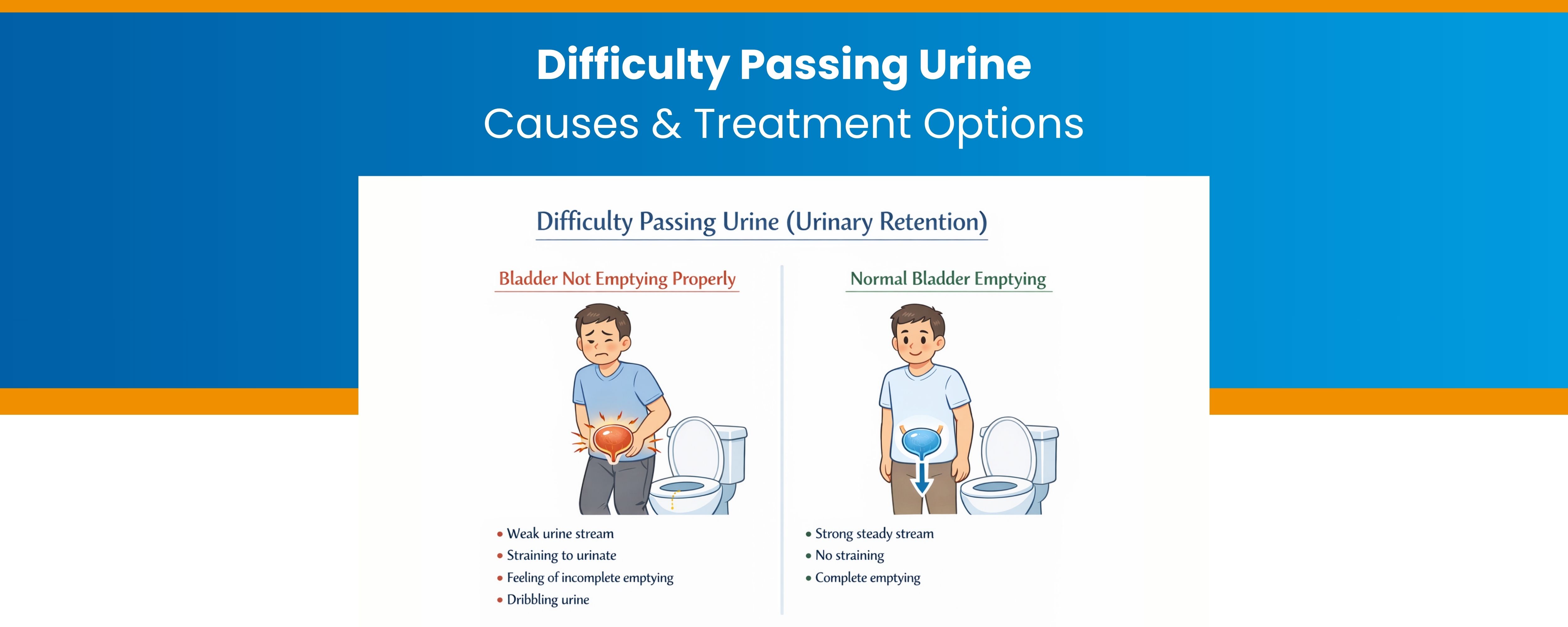
Are you having difficulty passing urine? Has your urine stream become slower than usual? Are you ignoring it, as it may feel too embarrassing to talk about?
Difficulty passing urine is more than an annoyance. It is your body’s way of telling you something is wrong. If you are dealing with this condition, it is not because of old age.
Difficulty passing urine causes can range from a simple infection to prostate enlargement, nerve-related issues, medication side effects, or even pelvic floor weakness in women. Hence, it is important to understand what your body is trying to tell you.
Most people delay the first clinic visit, which delays the treatment.
However, the good news is that most urinary flow problems are treatable. The earlier you get it checked, the easier it is to fix.
At NU Hospitals, Bangalore, you can get expert urology care along with advanced testing and modern treatment options. Whether your condition needs quick relief, long-term medication, minimally invasive procedures, or surgery, our team focuses on the safest and best plan for you.
If your bladder is sending you warning signs, don’t ignore them. Follow this blog to learn more about difficulty passing urine causes, symptoms of urinary retention problems, and treatment.
What Causes Difficulty Passing Urine?
Understanding the difficulty passing urine causes is the first step toward getting relief. It is not just one cause; it is usually a combination of anatomy, lifestyle, and underlying health conditions.
-
Benign Prostatic Hyperplasia (BPH) - Most Common in Men Over 50
For men, your prostate is usually the culprit. As it grows, the enlarged prostate squeezes your urethra. You might feel the pressure. This causes straining and incomplete emptying.
-
Urinary Tract Infections & Inflammation
Infections such as urethritis and prostatitis can swell and irritate your urinary tract. This usually leads to spasms or blockages that can slow or stop your urine flow.
-
Neurological Conditions
Conditions such as diabetes, stroke, spinal injuries, or multiple sclerosis can interrupt your bladder and brain communication. This can cause poor bladder control and difficulty voiding.
-
Medications & Anesthesia
Some medications, such as antihistamines, antidepressants, and painkillers, can reduce your bladder muscle activity. Post-surgery anesthesia can temporarily weaken your urination signals.
-
Women-Specific Causes
Conditions such as pelvic organ prolapse can press on your bladder or urethra. Pregnancy and childbirth can also weaken your pelvic floor muscles, affecting urination.
Symptoms That Signal Urinary Retention Problems
If you are wondering about symptoms of urinary retention problems, look out for these:
-
Weak or interrupted urine stream
Your flow starts and stops, or it feels like a trickle
-
Straining and a feeling of incomplete emptying
You stress or push to begin the stream.
-
Frequent urination with small volumes
Going to the bathroom every hour, but only passing a tiny amount of urine.
-
Overflow incontinence (dribbling after retention)
Your bladder is so full it simply spills over, causing constant dribbling.
-
Acute emergency
A sudden, complete inability to urinate followed by agonizing pain in your lower belly. This is an emergency.
How NU Hospitals Diagnoses Difficulty Passing Urine
At NU Hospitals, we don't guess; we diagnose your condition. Your difficulty passing urine diagnoses will have a mix of high-tech imaging and simple flow tests.
-
Post-Void Residual (PVR) Ultrasound Measurement
It is a quick, non-invasive scan. It measures how much urine stays in your bladder after urinating.
-
Uroflowmetry
This test tracks the speed and pattern of your urine flow.
-
Prostate Evaluation
-
DRE (Digital Rectal Exam): It is a physical exam to check your prostate size and lumps.
-
PSA Test: It is a blood test to screen for inflammation or other risks.
-
Ultrasound: It helps to measure the exact volume of your prostate.
-
-
Cystoscopy
A small camera inspects your urethra and bladder lining.
-
Neurological Assessment
If a nerve condition is suspected, neurologic tests are done.
Immediate Relief Options for Urinary Retention
If you are in pain or discomfort, there are a few ways you can get relief.
-
Catheterization (First-Line Emergency Treatment)
-
A thin, flexible tube is inserted to drain your bladder immediately.
-
In some cases, a suprapubic catheter is used if your urethra is too narrow.
-
-
Alpha-Blockers (Rapid Symptom Relief)
-
Medications such as Tamsulosin or Alfuzosin work quickly.
-
They relax the muscles in your prostate and bladder neck. It helps to improve your flow within 48 hours.
-
-
Trial Without Catheter (TWOC)
-
After a few days of medication, the catheter is removed under supervision.
-
This tests if your body can handle the flow on its own.
-
Long-Term Treatment Options
Once the emergency is over, our doctors will look at permanent solutions. This helps to make sure difficulty passing urine is not a recurring nightmare for you.
-
Medications for Prostate-Related Retention
Our doctors use Alpha-blockers for speed and 5-alpha reductase inhibitors to shrink the prostate over time.
-
Minimally Invasive Procedures
-
UroLift: Tiny implants help to hold your prostate tissue.
-
Rezum: It uses water vapor (steam) to reduce excess prostate tissue.
-
-
Surgical Solutions
-
TURP: This is one of the best treatments.
-
HoLEP (Holmium Laser Enucleation): Laser removal of prostate tissue. NU Hospitals, Bangalore, is a pioneer in laser urology in Bangalore.
-
Bipolar enucleation of prostate (BipoLEP): Bipolar electrical energy is used to remove the prostate. Surgical procedure and results are similar to HoLEP.
-
Robotic Prostatectomy: Very large-sized prostates are removed in total using Robotic surgical system.
-
Open prostatectomy: Very large prostates may require open surgical procedure at times
-
-
Pelvic Floor Therapy (Women)
Biofeedback and Kegel exercises help to strengthen your muscles that are affected by prolapse or childbirth.
When Difficulty Passing Urine Becomes an Emergency
Consult with our experts at NU Hospitals if you experience:
-
Sudden complete inability to urinate
-
Severe lower abdominal pain with bladder distension
-
Fever, confusion, and nausea (signs of kidney backup)
-
Recurrent UTIs or bladder stones
Lifestyle Changes to Improve Urine Flow
Simple habits can support better bladder health:
-
Double voiding technique
Urinate, wait for 30 seconds, and try again to make sure your bladder is empty.
-
Timed voiding schedule
Don't wait for the "urge".Train your bladder with regular intervals.
-
Avoid bladder irritants
Reduce caffeine, alcohol, and spicy foods that irritate your bladder lining.
-
Constipation prevention
Eat more fibre and drink an adequate amount of water.








