 Nephrology
 Urology
 Andrology
 Fertility (IVF)
 General Nephrology
 Paediatric Nephrology
 Dialysis
 Renal (Kidney) Biopsy
 CRRT
 Peritonial Dialysis
 Robotic Surgery
 Urinary Incontinence
 Uro-Oncology
 Laparoscopic Urology
 Reconstructive Urology
 Anaesthesiology
 Radiodiagnosis
 Nutrition and Dietetics
 Pediatric and Immunization
 Cardiology
 Intensive Care Unit




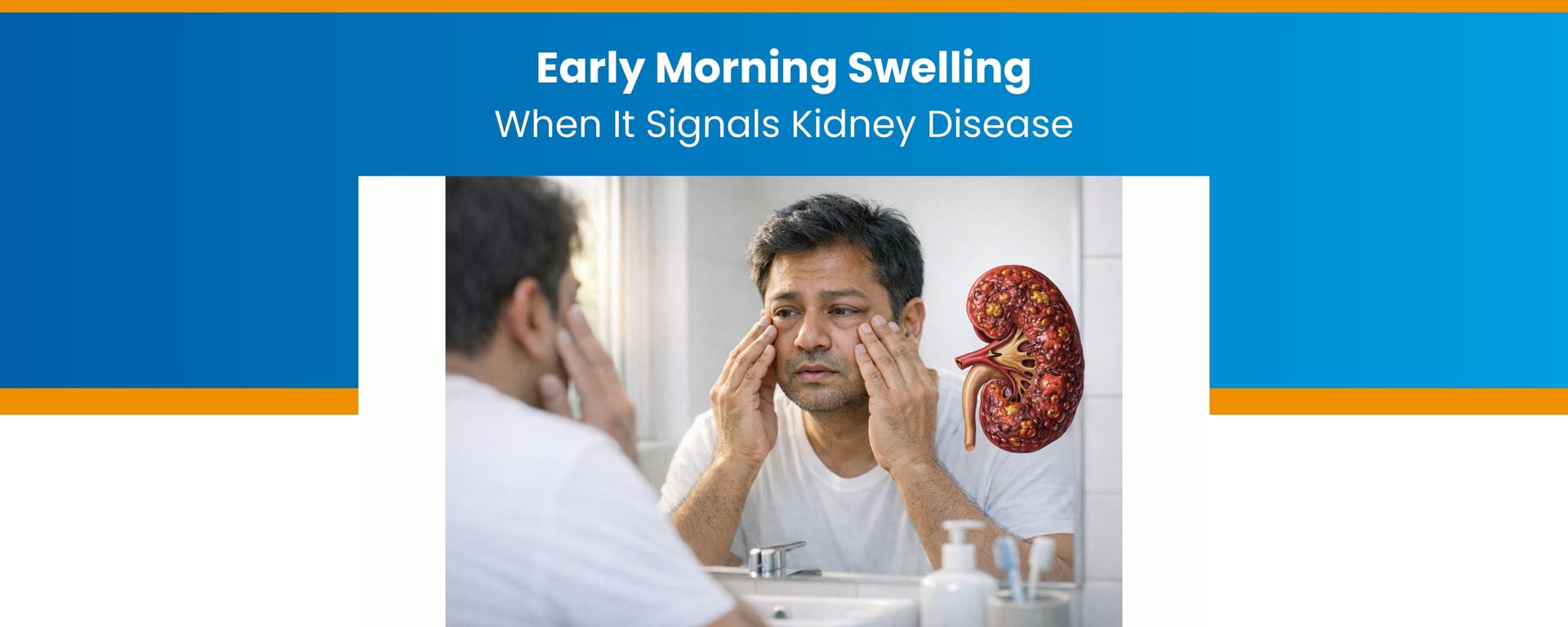
You shouldn't ignore it if your face or hands feel puffy every morning. While occasionally harmless, early morning swelling that is frequent or worsening is a major red flag for kidney disease. If left unchecked, the underlying cause could lead to permanent organ damage.
Your kidneys are your body’s primary filters. When they fail to remove excess water, fluid builds up in your tissues, causing visible oedema. Recognising that your early-morning swelling could be a warning sign of renal distress is vital. See a doctor immediately if this puffiness persists, as early diagnosis is the only way to protect your long-term health.
What Is Early Morning Swelling?
Early morning swelling is fluid retention seen immediately after waking, typically in the face, eyes, hands, or ankles. Usually, this puffiness fades during the day as being upright helps fluid redistribute. If it’s only occasional, it is rarely serious.
Nevertheless, you must not ignore persistent or worsening early morning swelling. Such symptoms suggest that your body is failing to regulate fluid levels correctly. Because this is a primary function of the kidneys, frequent swelling requires a prompt medical check-up to ensure your renal health is not compromised.
Why Kidney Disease Causes Morning Swelling
Healthy kidneys are essential for filtering waste and maintaining fluid balance. They regulate protein levels and hormones that control blood pressure. If kidney function drops, these regulatory processes fail.
You must be aware that facial and eyelid swelling in kidney disease is a primary indicator of renal distress. This symptom arises because damaged filters allow albumin to leak into the urine. When blood protein levels drop, the osmotic pressure fails, causing fluid to leak from the vessels into the tissues.
During the night, fluid moves freely throughout your body. It tends to settle in the soft, loose skin around your eyes, which is why the puffiness is so clear in the morning. Please know that noticing this is the first step toward getting the help and understanding you need for your health.
Causes of Morning Oedema Related to Kidney Problems
Several kidney-related conditions can lead to morning oedema. The causes of morning oedema depend on the underlying kidney disorder and the extent of kidney dysfunction. Common kidney-related causes include:
-
Chronic Kidney Disease (CKD): Declining function means the kidneys cannot adequately filter sodium and fluid. This retention often manifests as periorbital puffiness upon waking.
-
Nephrotic Syndrome: Nephrotic syndrome is characterised by high urine protein levels and low blood protein levels. Facial and eyelid swelling in kidney disease is a classic symptom that requires prompt diagnosis by specialists.
-
Acute Kidney Injury (AKI): If the kidneys are stressed suddenly by infection or dehydration, they may hold onto fluid very quickly, causing a sudden change in how you look and feel.
-
Systemic diseases affecting the kidneys: Long-term conditions such as diabetes, lupus, and high blood pressure can damage kidney structures over time. This damage interferes with normal fluid regulation, contributing to the development of morning oedema.
How Kidney-Related Swelling Differs from Other Causes
Morning swelling is often misdiagnosed as simple fatigue. While allergies and lack of sleep are common causes of puffiness, you must recognise the red flags of kidney-related swelling to prevent serious complications.
Kidney-related swelling is soft, painless, and symmetrical. Critically, it does not resolve as the day progresses; instead, it may migrate to the ankles or abdomen. If your swelling worsens after eating salt and remains visible for hours after waking, it is a significant warning sign.
Allergic reactions are distinguished by itching and watering, and hormonal issues follow a cycle. However, if you have bilateral swelling that persists regardless of posture, you must contact a doctor immediately. Timely intervention is vital to protect your renal health.
Associated Symptoms to Watch For
Staying proactive is your best strategy for a healthy life! While morning puffiness is often just a sign you need more rest, watching for a few other clues can help you keep your kidneys in the best shape.
-
Frothy urine: This is a critical sign of protein loss and kidney damage.
-
Urine output: A significant drop in urine or a dark, tea-like colour requires immediate attention.
-
Weight: A sudden jump in weight is usually just your body holding onto a bit of water.
-
Lethargy: The buildup of waste products can cause chronic fatigue and a loss of appetite.
-
Blood pressure: High readings are often linked to how the kidneys handle fluid volume.
-
Breathlessness: Extra fluid can settle in the lungs, making you feel out of puff.
-
Confusion: Toxin accumulation can cause sudden difficulty with concentration.
Diagnosis and Medical Evaluation
If you think something is wrong with your kidneys, please know that a check-up is a very positive step. Simple tests on your blood and urine can give your doctors a clear picture of how to help you.
An ultrasound might also be used to get a clear picture of your kidneys' structure. Sometimes, a tiny sample called a biopsy is needed for more detail. Detecting things early means you can start treatment sooner, helping to keep swelling down and your kidneys healthy.
Treatment for Kidney-Related Swelling
Treatment for kidney-related swelling manages both the renal condition and excess fluid. Approaches vary by cause and severity.
-
Diet: Reducing salt is vital to limit retention. Some may need adjustments to their protein intake via a renal dietitian.
-
Medication use: Diuretics are essential to prevent fluid overload. If your kidneys are leaking protein, you may need ACE inhibitors or immunosuppressants to prevent further damage.
-
Management of underlying conditions: High blood pressure and diabetes can damage your kidney filters. You must gain total control over these conditions to stop the swelling and prevent total kidney failure.
Management of Oedema in Kidney Disease
You must take the management of oedema in kidney disease seriously to avoid life-threatening fluid overload. This is a critical daily commitment to your survival.
-
Weight monitoring: You must weigh yourself every single morning. A jump of 2lb or more in a day is a red flag for worsening oedema.
-
Lifestyle modifications: Do not ignore the need for compression or leg elevation. Poor circulation leads to skin breakdown and infection.
-
Fluid management: You must adhere strictly to your fluid allowance. Over-drinking can lead to fluid in the lungs.
-
Medication: Never skip a dose. Your diuretics are the only thing keeping your fluid levels safe.
-
Education: You must be able to recognise the early warning signs of renal failure. If you notice swelling getting worse, you need to act immediately.
Your life depends on your ability to follow these protocols and attend every medical appointment without fail.
When to See a Nephrologist
It can be worrying to notice persistent swelling, but knowing when to see a nephrologist can provide the peace of mind you need. If your morning puffiness is getting worse or your test results are a bit concerning, a specialist can offer extra support. This is particularly key for people living with conditions like lupus or diabetes. If you find yourself struggling to breathe or gaining weight quickly, please reach out for urgent help. Early specialist support offers a personal approach, focusing solely on keeping your kidneys healthy and your mind at ease.
Conclusion
Waking up feeling a bit swollen can be worrying, but it is simply your body giving you a helpful sign. Facial and eyelid swelling in kidney disease is a very common early signal that gives us time to act. By understanding the causes of morning oedema and seeking a doctor's help, you are protecting your future. With the right treatment for kidney-related swelling and supportive management of oedema in kidney disease, you can stay in control. Listening to those subtle changes can lead to a much brighter, healthier future.








