 Nephrology
 Urology
 Andrology
 Fertility (IVF)
 General Nephrology
 Paediatric Nephrology
 Dialysis
 Renal (Kidney) Biopsy
 CRRT
 Peritonial Dialysis
 Robotic Surgery
 Urinary Incontinence
 Uro-Oncology
 Laparoscopic Urology
 Reconstructive Urology
 Anaesthesiology
 Radiodiagnosis
 Nutrition and Dietetics
 Pediatric and Immunization
 Cardiology
 Intensive Care Unit




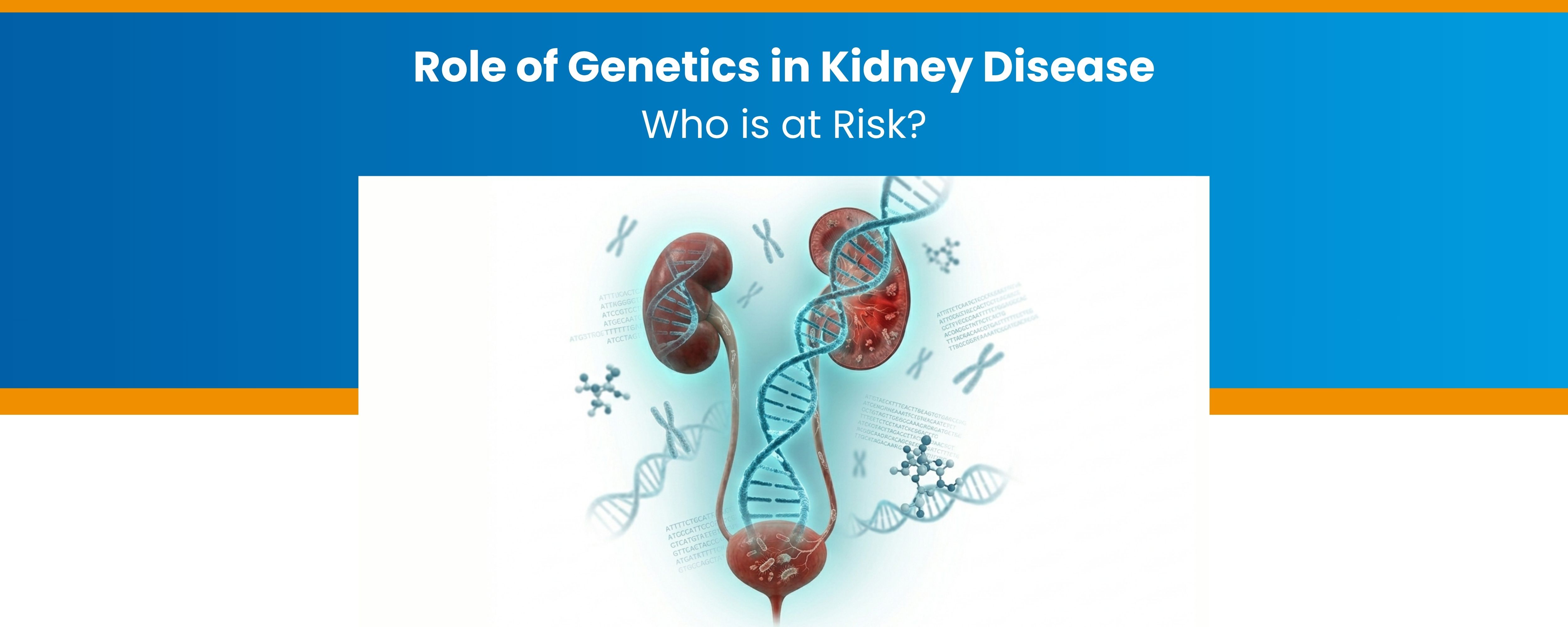
When kidney disease is discussed, attention usually goes to conditions such as diabetes, long-standing blood pressure issues, or medication-related damage. These causes explain many cases, but not all. In clinical practice, some patients develop kidney problems despite the absence of these familiar factors. This often prompts a closer look at less obvious influences.
Genetic factors are one such influence. Their effect is not always clear at the beginning. Some inherited conditions affect kidney health early in life, while others remain unnoticed for a long time and only become apparent when routine tests begin to change. Recognising this pattern helps doctors understand kidney damage that otherwise seems unexplained and helps families plan care more thoughtfully.
How Genetics Influences Kidney Health
The kidneys depend on precise biological instructions to develop and function normally. When certain inherited traits alter these instructions, kidney function may be subtly affected over time. In many cases, the kidneys continue to work adequately for years before signs of strain appear.
Inherited kidney conditions can affect different processes. Some influence how efficiently waste is filtered from the blood. Others affect fluid balance or the formation of urine. These changes may be mild initially and are often picked up only through routine urine or blood testing.
It is also common for inherited kidney conditions to vary from person to person. Even within the same family, one individual may notice changes early while another remains stable for a long period. This variability is one reason genetic causes are not always identified without careful and repeated evaluation.
Types of Hereditary Kidney Disorders
Hereditary kidney disorders do not all present in the same way. In practice, they affect the kidneys through different mechanisms. In some individuals, the kidney tissue gradually changes shape, sometimes forming cysts that interfere with normal function over time. In others, the filtering structures are affected, which may result in ongoing blood or protein loss in the urine.
There are also inherited conditions that interfere with the kidneys' ability to manage salt and water. These patients may experience issues such as frequent urination, dehydration, or shifts in electrolyte levels. In certain cases, kidney problems occur alongside hearing, vision, or bone-related concerns, suggesting a broader inherited condition rather than an isolated kidney issue.
What links these conditions is not how they look on tests, but where they originate. The changes occur at the genetic level, which is why the course of disease often follows a recognisable pattern, even though symptoms may appear at different points in life.
Who is at risk of genetic Kidney Disease?
In clinical settings, inherited kidney conditions are usually suspected based on repeated patterns rather than a single test result.
People more likely to fall into this group include:
-
Those with close family members who developed kidney disease early in life or required dialysis or transplant
-
Individuals whose kidney problems appear during childhood, teenage years, or early adulthood without obvious causes
-
Patients with urine or imaging findings that continue to show unexplained changes over time
-
Families where relatives have married within the extended family, increasing the likelihood of recessive inherited conditions
-
People diagnosed with chronic kidney disease, despite routine tests failing to identify a clear reason
In such cases, considering a genetic contribution often helps explain findings that would otherwise remain unclear.
Why genetic causes are often missed
Genetic kidney conditions do not always stand out in the early stages. In many people, changes happen slowly and resemble common kidney problems that doctors see every day. Because of this, the underlying cause may not be obvious at first.
When kidney function remains stable, the focus is usually on keeping things under control rather than exploring why the problem started. This is a practical approach, but it can delay consideration of inherited factors.
Genetic causes may be overlooked for several reasons:
-
Symptoms overlap with routine chronic kidney disease
-
Changes progress gradually without sudden deterioration
-
Family history may be unclear or incomplete during early visits
-
Doctors may focus first on control and monitoring, with less emphasis on the cause in early stages.
As awareness has increased and diagnostic tools have improved, inherited kidney conditions are now being recognised earlier than before in many patients.
Genetic Testing for Kidney Disease
Genetic testing for kidney disease is not done routinely for everyone. It is usually considered when the overall pattern of kidney disease does not fit common causes, or when inherited factors are suspected.
Testing is simple for the patient and typically involves a blood or saliva sample. Rather than looking broadly, tests focus on genes known to affect kidney development or function.
Doctors may consider genetic testing in situations such as:
-
Kidney disease is appearing earlier than expected
-
Similar kidney problems are seen in close family members
-
Test or scan findings that do not match common diagnoses
-
Loss of kidney function without a clear explanation
When a genetic cause is identified, it can help explain how the condition began and how it may behave over time. The results can help guide future check-ups and determine whether relatives might benefit from screening.
However, genetic testing is not always clear-cut, which is why doctors take time to explain what the results do and do not mean.
Impact on Long-Term Kidney Care
When inherited factors are involved, kidney care often becomes more individualised. Instead of relying on broad treatment pathways, doctors can focus on known risks associated with the condition and adjust monitoring accordingly. In many cases, the emphasis shifts towards preserving kidney function steadily rather than making frequent treatment changes.
Clear information can be helpful for families in different ways. Genetic insight may also be relevant when considering kidney donation or planning future care, particularly when family members are involved.
Kidney Care At NU Hospitals
Kidney care at NU Hospitals is centred on understanding the patient as a whole, not only individual test results. When an inherited kidney condition is suspected, assessments are planned carefully and may include a detailed family history, imaging findings, and targeted investigations where appropriate.
The nephrology team places importance on recognising patterns that may influence long-term care. When genetic testing is considered necessary, patients are guided through the process with clear explanations and ongoing support.
Care plans are tailored to protect remaining kidney function, manage complications as they arise, and support patients through different stages of kidney disease with consistency and continuity.
Conclusion
While not very common, genetic factors may cause kidney issues. Family history, therefore, plays an important role when someone is facing kidney problems. Also, doctors would suspect a genetic role if all other tests remain inconclusive.
However, it is important to understand that even genetic testing has its limitations. Genetic testing does not explain every kidney condition, and some results may be unclear or incomplete. A normal test does not always rule out a genetic cause, may not predict disease progression, and this can sometimes create more confusion for the patients. It is therefore important to have an experienced and supportive medical team to guide you at every step.
Most genetic kidney conditions cannot be cured, but they can usually be managed with regular monitoring, medicines, and lifestyle support. With proper care, many people live well for years, and further treatment options are available if kidney function declines.








