 Nephrology
 Urology
 Andrology
 Fertility (IVF)
 General Nephrology
 Paediatric Nephrology
 Dialysis
 Renal (Kidney) Biopsy
 CRRT
 Peritonial Dialysis
 Robotic Surgery
 Urinary Incontinence
 Uro-Oncology
 Laparoscopic Urology
 Reconstructive Urology
 Anaesthesiology
 Radiodiagnosis
 Nutrition and Dietetics
 Pediatric and Immunization
 Cardiology
 Intensive Care Unit




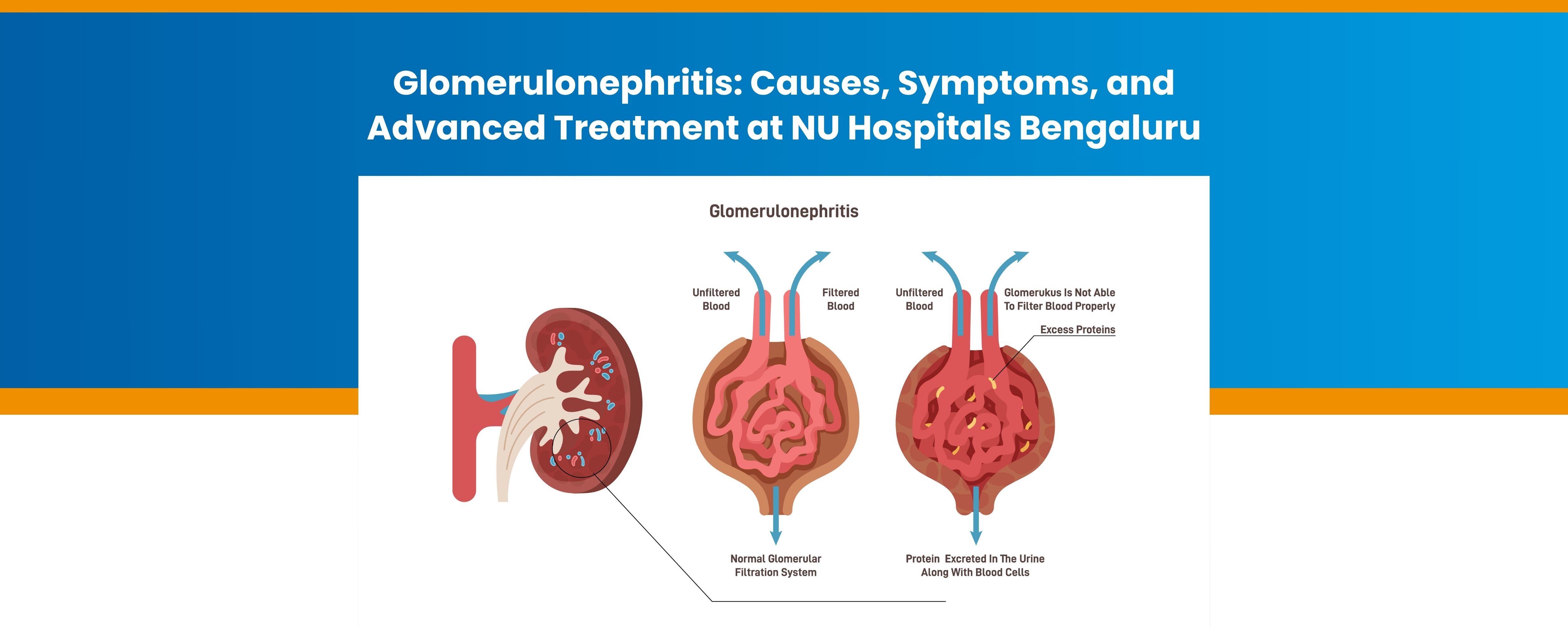
The tiny filters of your kidneys are known as glomeruli. These filtering units are made up of capillaries. Your kidneys have almost a million of them.
Glomeruli help in the removal of waste and excess fluid from your blood.
When these tiny filters are damaged, it hampers the filtration process and kidney functions.
What is Glomerulonephritis?
-
Glomerulonephritis is a serious kidney disease. This involves damage and inflammation of glomeruli. It may be asymptomatic in the early stages.
-
Glomerulonephritis can appear suddenly (acute) or develop over the course of time (chronic).
-
The ongoing severe inflammation can cause serious damage to the kidneys and lead to kidney failure.
As the only dedicated centre of excellence for nephrology in Bangalore, we at NU Hospitals specialise in diagnosing and treating a wide range of kidney diseases. From conditions like glomerulonephritis, chronic kidney disease (CKD), to end-stage renal disease (ESRD).
With advanced diagnostic technology, precise treatment and globally trained doctors who collaboratively work towards the patient’s well-being, we promise to provide you the best care possible.
Glomerulonephritis can be treated well with early and correct diagnosis; the treatment options vary based on the type of glomerulonephritis (GN).
What Causes Glomerulonephritis?
There are several factors and medical conditions that can cause or trigger glomeruli inflammation.
Major causes include:
Infections
-
Infections caused after recovering from a throat or skin infection (post-streptococcal infection)
-
Bacterial endocarditis (an infection of the inner lining of the heart’s chambers and valves)
-
Hepatitis B
-
Hepatitis C
-
HIV
Autoimmune Diseases
-
Lupus nephritis (systemic lupus erythematosus)
A chronic inflammatory disease that affects joints, kidneys, skin, heart and lungs. -
IgA nephropathy (Berger’s disease)
An immunoglobulin is an antibody that fights infections in the body. When these antibody deposits accumulate in the glomeruli, they cause inflammation and glomerulonephritis.
Genetic or Hereditary Conditions
-
Alport syndrome
This is a genetic disorder that has adverse effects on the kidneys, hearing ability and vision. -
C3 glomerulopathy
Vasculitis
Inflammation of blood vessels
-
Polyarteritis
-
Granulomatosis and polyangiitis
Goodpasture’s Syndrome
This is an immune disorder that attacks the lungs and kidneys
Early Signs and Symptoms of Glomerulonephritis
Most acute cases of glomerulonephritis do not showcase any major symptoms until significant kidney damage occurs. The signs vary with acute and chronic conditions.
A few common signs of glomerulonephritis to look for include:
-
Swelling
Face, legs, and around the eyes
-
Blood in urine
Pink, red, or brown coloured urine
-
Foamy/bubbly urine
Indicates protein leak
-
High BP
-
Reduced urine output
Urinating less than usual
-
Fatigue and weakness
-
Nausea/vomiting
-
Loss of appetite
-
Weight loss
-
Fluid retention
-
Muscle cramps
How is Glomerulonephritis Diagnosed?
Our experts would advise a series of tests to diagnose glomerulonephritis, which include clinical evaluation, lab tests and imaging tests.
They might prescribe the following to identify the type and severity of the disease.
-
Urine tests
To check for the presence of abnormal substances, protein, white blood cells, or blood in the urine
-
Blood tests
To detect infections, sugar levels, kidney function, or antibodies in the blood
-
Ultrasound
To check for the size, shape and irregularity of the presence of the kidneys
-
CT
To get a detailed view of the kidneys.
-
Kidney biopsy
A sample is taken from the kidney to test the damage levels.
-
Special tests
-
Autoimmune markers
-
Complement levels
-
Hepatitis screening
-
HIV infection screening
Advanced Treatment Approaches for Glomerulonephritis at NU Hospitals
Based on the type, severity, underlying cause and stage of kidney damage, our expert nephrologists will recommend the suitable treatment option.
Our nephrology specialists tailor treatments to the patients’ unique needs.
Here is the list of treatment options for glomerulonephritis:
Medication
-
Immunosuppressants
To reduce the immune system's attack on the kidneys
-
ACE inhibitors/ ARBs
To control blood pressure and reduce proteinuria
-
Diuretics
To manage and reduce selling and fluid retention
-
Antibiotics
To control bacterial infection
-
Plasmapheresis
Plasma exchange is done to remove harmful antibodies (for conditions like Goodpasture’s syndrome)
Dialysis
If glomerulonephritis has badly affected the kidneys and the kidney function is reduced, dialysis is required to replace kidney function until recovery.
Kidney Transplant
If GN (glomerulonephritis) has progressed to CKD or ESRD, a kidney transplant gives a new hope and is the most effective solution.
Lifestyle Modifications and Diet for Glomerulonephritis
Smart lifestyle changes can aid recovery alongside treatment. They can also help in slowing the progression.
Here are a few things you can do:
-
Follow a low-sodium diet
-
Limit protein consumption
-
Adequate hydration
-
Avoid smoking
-
Avoid drinking
-
Exercise regularly
-
Control of BP and blood sugar
At NU Hospitals, our renal dietician will provide you with a customised diet plan to promote recovery.
Why Choose NU Hospitals for Glomerulonephritis Treatment in Bangalore?
-
No. 1 Hospital for Nephrology In India and Bangalore
-
Pioneers in Glomerulonephritis Treatment in Bangalore
-
Legacy of Innovation and Trusted by Millions
-
Protocolized Evidence-based Care
-
Renowned Team of Experts with a Multi-Disciplinary Approach
-
Exceptional Care and World-class Technology
-
Advanced diagnostic facility








