 Nephrology
 Urology
 Andrology
 Fertility (IVF)
 General Nephrology
 Paediatric Nephrology
 Dialysis
 Renal (Kidney) Biopsy
 CRRT
 Peritonial Dialysis
 Robotic Surgery
 Urinary Incontinence
 Uro-Oncology
 Laparoscopic Urology
 Reconstructive Urology
 Anaesthesiology
 Radiodiagnosis
 Nutrition and Dietetics
 Pediatric and Immunization
 Cardiology
 Intensive Care Unit




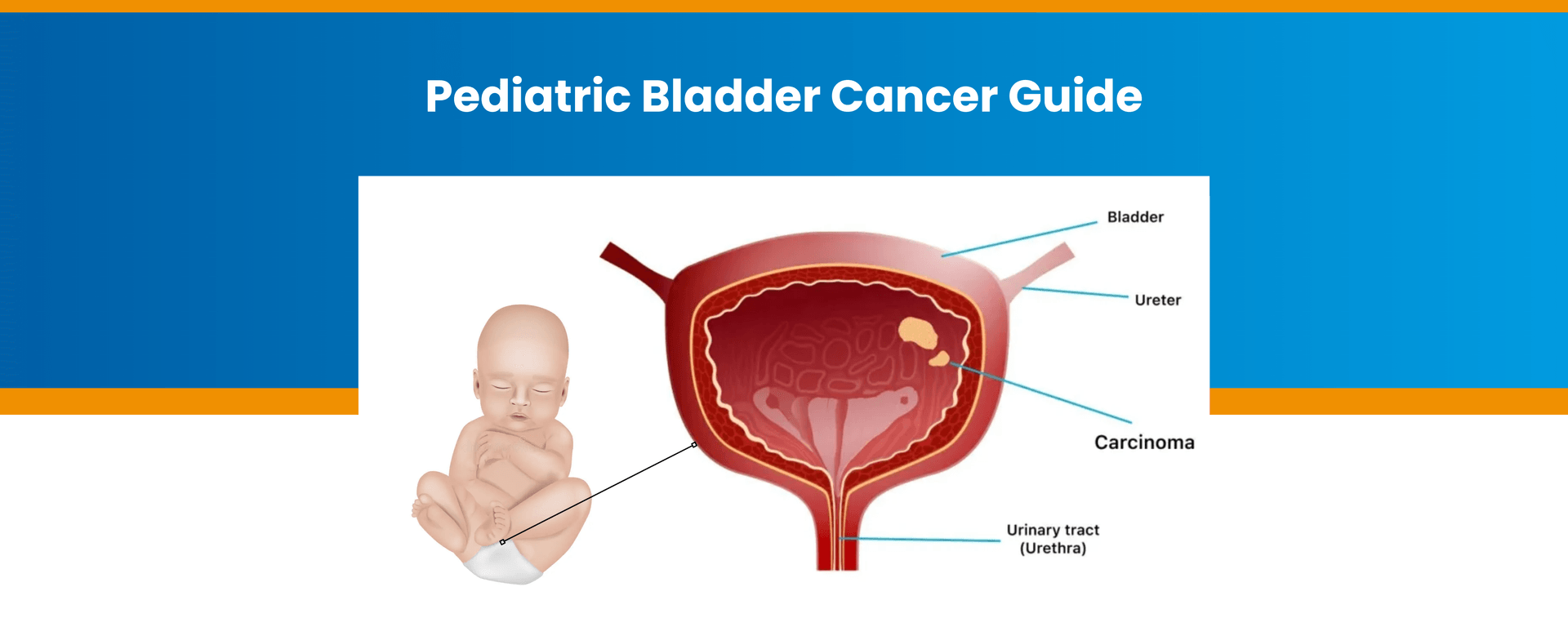
Hearing the word cancer is quite unsettling, especially when you hear it for your little one.
Has your child been diagnosed with pediatric bladder cancer? Parents, we understand this can be quite an overwhelming time for you and your family right now.
Bladder cancer in children is extremely rare. But we at NU Hospitals are here to help your little one fight through this condition.
In this blog, we are here to help you know more about Bladder Cancer in Children, its symptoms, and diagnosis.
How Rare is Bladder Cancer in Children?
Bladder cancer in children is quite rare. It usually affects adults.
Did you know? Less than 1% of all bladder cancer cases occur in patients under 20 years of age.
What are the types of Bladder Cancer in Children?
The most frequently observed bladder cancer in children significantly differs from bladder cancer in adults.
In kids, it's usually:
-
Rhabdomyosarcoma: The most frequently observed kind of sarcoma in children is rhabdomyosarcoma. It develops in the bladder. It is a very aggressive form of cancer.
-
Benign Tumors: Occasionally, a growth that seems to be a tumor is actually non-cancerous. These are frequently innocuous and are referred to as benign bladder polyps.
-
Transitional Cell Carcinoma (TCC): Transitional Cell Carcinoma is quite common in adults. However, low-grade TCC can occasionally be found in children. These are usually less aggressive.
What Causes Bladder Cancer in Children?
To detect the exact cause of Bladder Cancer in Children is usually unknown. However, there are several factors that may play a role.
Genetic and Inherited Factors
-
Genetic mutations: Some children may inherit genetic mutations from their parents. This will increase their risk of developing certain cancers, such as bladder cancer. This is not as common, but it can happen.
-
Syndromes: Certain rare genetic syndromes are linked with an increased risk of several cancers.
-
Family History: A family history of cancer might indicate a slight increase in risk. However, it is less clear for pediatric bladder cancer.
Environmental and Lifestyle Triggers
-
Previous Radiation Exposure: Children who have received radiation therapy for their other cancer treatment may have an increased risk of developing cancer again. This includes bladder cancer.
-
Chemotherapy Drugs: Your little one may be more vulnerable to bladder cancer if they receive certain chemotherapy drugs that are used to treat other childhood cancers.
-
Congenital Abnormalities: Certain birth deformities may put your little one at risk.
-
Infections: In certain cases, bladder problems or chronic infections may also be the cause of pediatric bladder cancer for your little one.
Signs & Symptoms of Pediatric Bladder Cancer
Recognizing the symptoms of pediatric bladder cancer early is very important for effective treatment for your kids. If you notice any of these symptoms, take your little one to the best pediatric urologist.
-
Hematuria (Blood in Urine): One of the most alarming and first sign is this blood in urine. The color of your child's urine may seem as pink, red, or brown. Blood can occasionally be so little that it can only be detected by a urine test.
-
Frequent Urination: Your little one might need to urinate more often than they usually do.
-
Painful Urination (Dysuria): If your child feels a burning sensation or pain during urination.
-
Urgency: if your child has a sudden, strong urge to urinate, even if their bladder is not full.
-
Difficulty Urinating: If they are having trouble starting the urine stream or a weak stream.
-
Abdominal or Pelvic Pain: If your child has constant pain in the lower abdomen or pelvic area.
-
Recurrent UTIs: If your child is getting frequent urinary tract infections.
-
Lump in the Abdomen: In certain advanced cases, your pediatric urologist might feel a lump during a physical examination.
How is Bladder Cancer in Children Diagnosed?
Diagnosing bladder cancer in children requires several steps. Your pediatric urologist will use:
-
Urine tests to check for blood or cancer cells.
-
Ultrasound scan for safe and non-invasive imaging.
-
CT or MRI scan for a detailed look at your child's bladder.
-
Cystoscopy, a thin tube with a camera, is used to see inside their bladder.
-
A biopsy, a small tissue sample, will be checked under a microscope.
Early bladder cancer in children diagnosis helps to get better results for your little one.
Advanced Treatment Options for Pediatric Bladder Cancer
Pediatric bladder cancer treatment for your child is going to be tailored to their cancer type, stage, and child's health. This will help to get the best result for them.
-
Surgery: Surgery helps to remove the tumor. This is often the first choice of pediatric bladder cancer treatment.
-
Chemotherapy: Sometimes chemotherapy is needed for your little one if the cancer spreads.
-
Radiation therapy: Radiation therapy is quite rare in children. However, it may be used in certain special cases.
-
Follow-up care: Regular check-ups for your child are important to make sure the cancer does not return.
When to Consult a Pediatric Urologist
Parent, you may consult a pediatric urologist for your child if you notice the following:
-
Blood in urine more than once
-
Urinary problems
-
Usual infection
Why Choose NU Hospitals for the Best Pediatric Bladder Cancer Treatment
Your child being diagnosed with Pediatric Bladder Cancer is heartbreaking. However, time is of the essence, parents. Therefore, you shall not waste time and bring your child to NU Hospitals, the best hospital for pediatric bladder cancer treatment.
NU Hospitals in Bangalore is one of the renowned facilities for:
-
Expert pediatric urologists and oncologists
-
Child-friendly facilities
-
Advanced technology
-
Minimally invasive surgeries
-
Comprehensive aftercare
-
NABL-accredited labs
Provide the best care to your little one with our experts at NU Hospitals.








