 Nephrology
 Urology
 Andrology
 Fertility (IVF)
 General Nephrology
 Paediatric Nephrology
 Dialysis
 Renal (Kidney) Biopsy
 CRRT
 Peritonial Dialysis
 Robotic Surgery
 Urinary Incontinence
 Uro-Oncology
 Laparoscopic Urology
 Reconstructive Urology
 Anaesthesiology
 Radiodiagnosis
 Nutrition and Dietetics
 Pediatric and Immunization
 Cardiology
 Intensive Care Unit




The scary part of being a parent? Your child’s health concerns! Every parent hopes for a healthy and carefree life for their little ones.
When something as simple as urination itself becomes very difficult, it can be very overwhelming!
PUV (Posterior Urethral Valves) is one such condition affecting kids' urinary system health.
A quick diagnosis, early intervention and holistic care can help your kid get back to a better and healthier life.
A quick takeaway from this blog:
Posterior Urethral Valve (PUV) is a congenital blockage in a boy’s urethra. This can lead to urinary difficulties, bladder pressure, and kidney damage in the long run.
Early detection is critical: Weak urine stream, straining, recurrent infections, poor growth, or unexplained fevers are a few warning signs to watch for.
Diagnosis at NU Hospitals includes child-friendly imaging like ultrasound, VCUG/MCU, and cystoscopy for accurate and timely evaluation.
Modern treatments such as minimally invasive endoscopic valve ablation offer high success rates, minimal pain, and faster recovery.
Ongoing care matters: long-term monitoring of kidney function, bladder rehabilitation, incontinence management, and nutritional guidance help your child grow with better health.
What Are Posterior Urethral Valves and How Do They Affect Your Child?
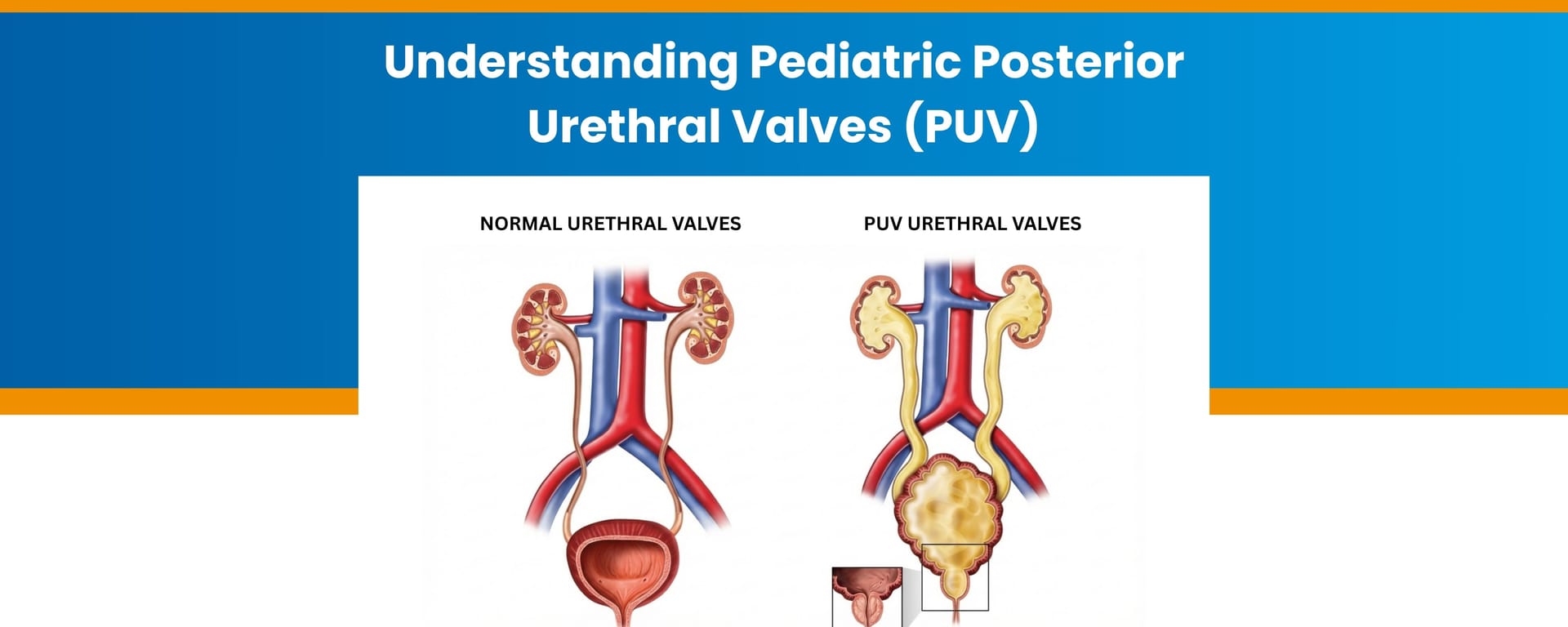
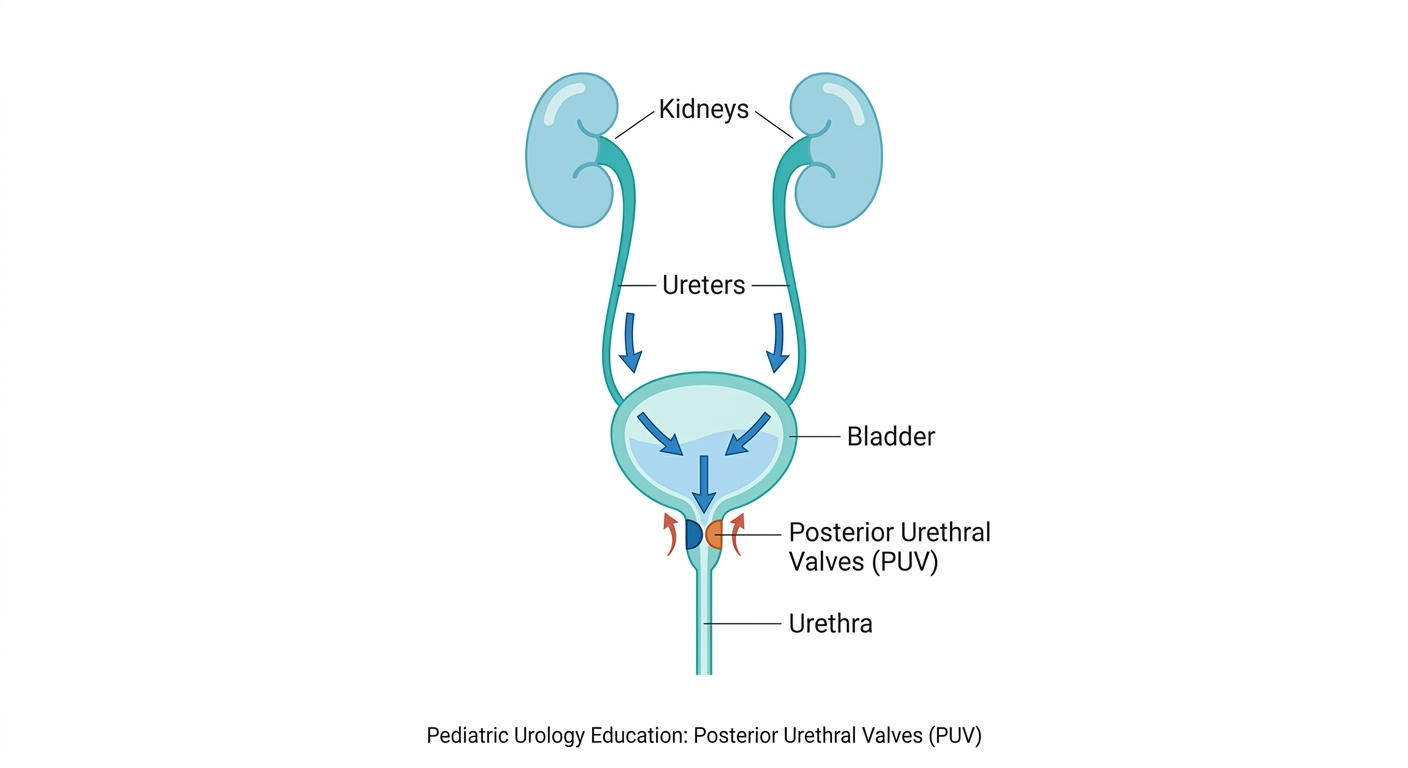
PUV (Posterior Urethral Valves) is a congenital blockage in boys. A small tissue formation in the urethra (the tube which carries urine out of the body), blocking urine flow partially or fully, is called PUV.
With PUV, your baby has to push harder to urinate. The pressure builds up and affects:
-
The bladder
Overworking can lead to thickening of the bladder walls.
-
The kidneys
Urine retention can damage the filters of the kidneys.
-
Overall growth
Growth is hindered by waste accumulation in the body.
PUV is one of the most common causes of severe urinary obstruction in newborn boys.
It affects about 1 in 4000 to 8000 male births.
Without proper treatment, PUV can lead to reduced kidney function.
Exploring the Causes and Risk Factors of PUV in Newborn Boys
Why does PUV occur? We do not have exact causes and a single answer. PUV occurs in the fetal development stage.
The urethral tissue doesn't form/build the way it should, which leaves a small valve that blocks urine.
It is a condition occurring since birth, but understanding the causes and risks can help act fast:
-
Congenital formation
-
Abnormal urethral tissue formation
-
Genetic predisposition/Family history (rare cases)
-
Prenatal urinary tract anomalies
PUV’s Impact on bladder and kidney health
-
Urine backflows into the bladder and kidneys
-
Stretching of the ureters
-
Affects bladder muscles
-
Long-term effects can lead to kidney damage
Early Signs and Symptoms of PUV: Recognizing Indicators in Infants and Children
How to know if your baby is struggling when they can't speak? It can cause subtle symptoms and quiet clues that parents can notice first.
Signs to watch for: weak urinary stream, infections, poor growth
-
Weak/thin urinary stream
-
Straining to urinate
-
Swollen belly
-
Recurrent urinary infections
-
Poor weight gain
-
Fever without a clear cause
-
Dribbling after urination
-
Wet diapers that don't seem full
When parents should seek immediate pediatric urology evaluation
-
When your baby is unable to pee
-
Diagnosed with Repeated UTIs
-
Poor feeding
-
Vomiting
-
Signs of dehydration
How NU Hospitals Bangalore Diagnoses PUV Accurately and Compassionately
At NU Hospitals, we ensure every child is comfortable throughout their treatment journey, starting with diagnostic tests.
Utmost precision is important, as PUV symptoms overlap with other urology conditions.
We Offer:
State-of-the-art imaging: Ultrasound, VCUG, cystoscopy
Test |
Purpose |
Ultrasound |
This is the first line of the imaging tests to check for:Kidney swellingBladder thicknessUrine retention |
Voiding Cystourethrogram (VCUG) /Micturating Cystourethrogram (MCU) |
A special X-ray to view:Urine flowBlockage |
Cystoscopy |
To directly see and confirm PUV |
Tailored diagnostic approach for young patients
NU Hospitals stands out for our tailored approach and child-friendly diagnostic environment.
Your kid will benefit from:
-
Paediatric radiology, urology and nephrology experts
-
Minimal radiation techniques
-
Accurate and faster reports
-
Timely intervention
-
Tailored treatment
-
Education for parents and caregivers at every step

Modern and Personalized Treatment Approaches for Posterior Urethral Valves
Are you wondering if your child has to undergo big surgeries? Large cuts? His future health? Worry not, we offer advanced treatment options for posterior urethral valves.
Minimally invasive endoscopic valve ablation
This is the gold standard for PUV (posterior urethral valves) treatment.
A small endoscope is used by our expert pediatric urologist. They remove or open the obstructing valve.
-
No big cuts
-
Minimal discomfort and pain
-
Faster recovery
Valve ablation has high success rates (over 90%)
Prevention of recurring infections with proactive antibiotic care
Post-surgery, your kid might require thorough monitoring to reduce infections.
Our expert pediatric nephrologist will prescribe a few proactive antibiotic medications to heal.
Long-term monitoring of kidney function and bladder rehabilitation
Surgery is not the end; it is not just about fixing the blockage. It is about protecting kidney function for the future.
Your child requires:
-
Periodic kidney function tests
-
Regular ultrasound monitoring
-
Bladder rehabilitation plans
-
Management of urinary leaks
-
Continued consultations with experts
Supporting Families: Managing Long-Term Outcomes and Preventing Kidney Damage
We understand that you are worried about your child’s future health. You are not alone. But be assured that timely treatment can help your kid lead a normal, active life.
But long-term support helps them stay healthy.
Strategies for urinary continence and quality of life
We help every pediatric patient with:
-
Bladder training
Training helps your child understand and function better with urine storage and emptying.
-
Kidney function test
KFT is essential on regular intervals post-surgery. Get a test done as advised by the doctor.
-
Incontinence management
If the ureters were stretched and there are signs of incontinence (urine leak). It requires special attention.
-
Nutritional guidance
We have expert renal nutritionists who help with curating healthy meals for your child, which are nutritious.
Multidisciplinary support including nephrology and physiotherapy
NU Hospitals offer a great blend of:
-
Pediatric Urologists
-
Pediatric Nephrologists
-
Nutrionists
-
Physiotherapists
We work together to provide the best care for your child.








