 Nephrology
 Urology
 Andrology
 Fertility (IVF)
 General Nephrology
 Paediatric Nephrology
 Dialysis
 Renal (Kidney) Biopsy
 CRRT
 Peritonial Dialysis
 Robotic Surgery
 Urinary Incontinence
 Uro-Oncology
 Laparoscopic Urology
 Reconstructive Urology
 Anaesthesiology
 Radiodiagnosis
 Nutrition and Dietetics
 Pediatric and Immunization
 Cardiology
 Intensive Care Unit




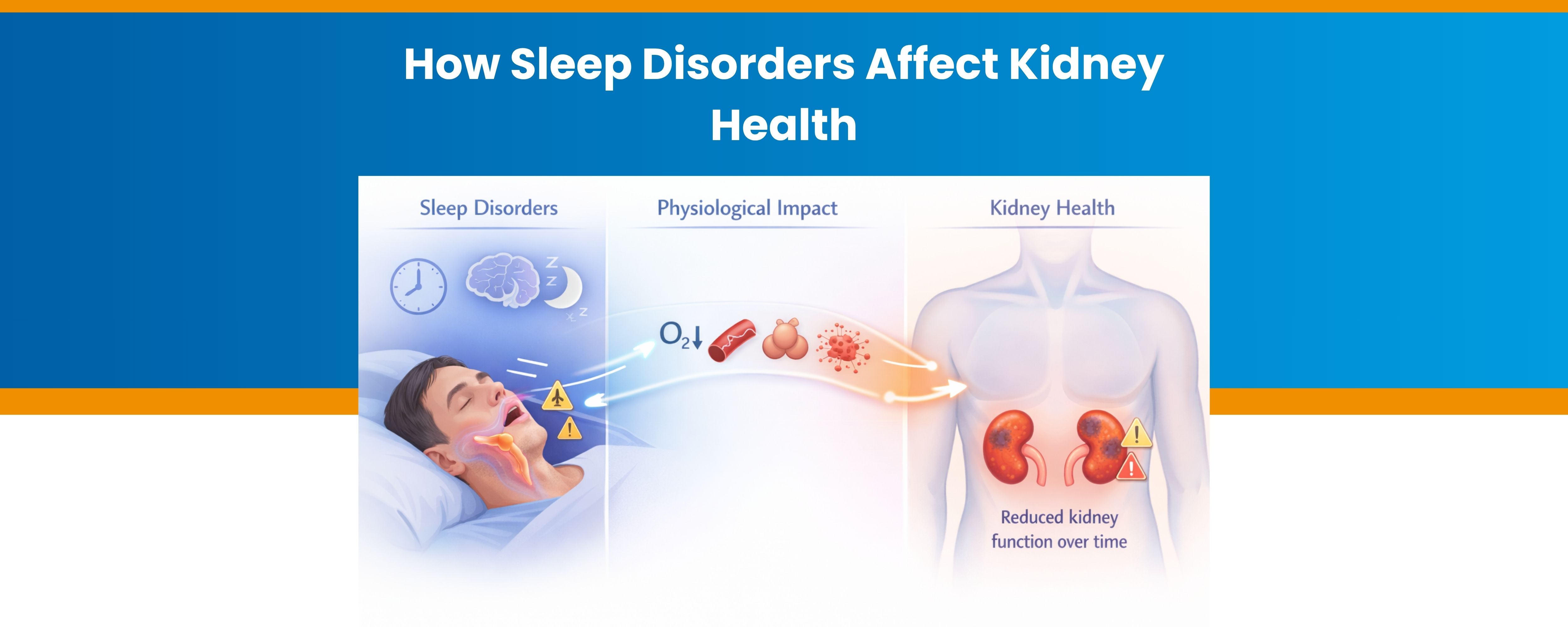
Sleep is often treated as something easy to compromise on. Many people feel that sleeping less is manageable as long as work gets done or daily routines continue. In medical practice, however, long-term sleep problems are rarely harmless. Over time, disturbed sleep can affect several organs, including the kidneys.
Doctors are now paying closer attention to the link between sleep disorders and kidney health. Poor sleep can quietly influence heart health, blood pressure, hormone balance, oxygen delivery, and inflammation. At the same time, kidney disease itself can interfere with normal sleep cycles. This two-way relationship often goes unnoticed until kidney function has already started to decline.
Understanding this connection helps explain why sleep complaints should not be ignored, especially in people with diabetes, high blood pressure, or known kidney problems.
What Sleep Does for the Kidneys
The kidneys work continuously, but their workload changes across the day. During normal sleep, the body enters a state that protects blood vessels and organs.
Blood pressure usually falls at night. Stress hormone levels reduce. The nervous system shifts away from constant alertness. These changes reduce strain on the small blood vessels inside the kidneys that handle filtration.
If sleep is continually interrupted, the usual nighttime recovery process does not occur fully. Instead of slowing down, the kidneys keep dealing with higher pressure even at night. When that keeps happening year after year, it can slowly wear them down.
Sleep Apnea and Kidney Function
Among different sleep conditions, the strongest evidence exists for sleep apnea and kidney function.
Obstructive sleep apnea causes repeated pauses in breathing during sleep. Oxygen levels fall, and the brain briefly wakes the body to restart breathing. Many people are unaware that this is happening.
Each breathing pause triggers a stress response. Blood pressure rises suddenly. Heart rate increases. Oxygen delivery to organs drops. When this happens repeatedly each night, the kidneys are under ongoing strain.
Medical studies show that untreated sleep apnea is associated with protein leakage in urine, faster decline in kidney function, and poorer outcomes in people who already have chronic kidney disease. This risk is higher when sleep apnea exists alongside diabetes or hypertension.
Poor Sleep and Kidney Disease Risk
The connection between poor sleep and kidney disease risk is not limited to sleep apnea.
-
When sleep is short or fragmented, blood pressure may remain higher throughout the night. The normal drop in blood pressure that occurs during sleep may be missing, which can put extra strain on the kidneys.
-
Poor sleep can make the body less responsive to insulin. Over time, this raises the risk of diabetes, which is a common cause of kidney disease.
-
Long-term sleep disruption can increase inflammation in the body. This inflammation can affect the small blood vessels inside the kidneys.
In short, when poor sleep continues for years, the combined stress can gradually affect kidney function.
How Kidney Disease Disrupts Sleep
Sleep often changes as kidney disease progresses, even though many people do not link the two. Lighter sleep, frequent waking, or feeling tired despite spending enough time in bed are common.
As kidney function declines, fluid balance becomes harder to manage. When lying down, some fluid can move upward in the body, interfering with breathing at night. Snoring or brief breathing pauses may appear, which helps explain why sleep apnea is more common in kidney disease.
Many patients also experience leg discomfort at night. There may be restlessness, tingling, or an urge to move when trying to relax. Walking around can bring short relief, but symptoms often return once resting again. Changes in iron levels and nerve signals are believed to contribute.
In addition, waste products that are not cleared effectively can affect how the brain controls sleep. Sleep may feel light or broken, and waking up feeling unrefreshed is common.
Sleep Problems in Advanced Kidney Disease
Sleep issues tend to become more noticeable as kidney disease advances, especially for people on dialysis.
Problems patients often mention include:
-
Trouble falling asleep
-
Waking up again and again during the night
-
Waking up too early and not being able to fall back asleep
-
Feeling unusually sleepy during the day
-
Uncomfortable or restless legs at night
-
Loud snoring or breathing pauses during sleep
-
Sleep that feels poor even after spending enough time in bed
These problems go beyond discomfort. Poor sleep can leave people tired, unfocused, and low in mood. Blood pressure control worsens, the heart works harder, and kidney disease becomes more difficult to manage.
Treating Sleep Disorders to Protect Kidney Health
There is growing evidence that treatment of sleep disorders to protect kidney health can make a meaningful difference. Treating sleep problems can actually help reduce some of the strain on the kidneys.
In cases of obstructive sleep apnea, CPAP is often used to support breathing at night. By keeping the airway open, oxygen levels remain steadier, and the body is under less stress during sleep. With regular use, some people find their blood pressure easier to manage and notice fewer kidney-related changes on tests.
Insomnia is usually addressed without medication at the very beginning. The focus is on improving sleep routines and habits rather than beginning a dependency on sleeping pills. When sleep quality improves, the body tends to better handle stress and inflammation.
Restless legs syndrome may improve with the correction of iron deficiency, medication adjustment, and structured physical activity.
Managing Kidney Health Through Sleep Therapy
Managing kidney health through sleep therapy means recognising sleep as part of medical care, not just a lifestyle choice.
As sleep improves, many people notice they have more energy and can focus better during the day. Blood pressure may also become easier to manage. Sleep therapy will not cure kidney disease, but it can reduce the ongoing burden on the kidneys and help slow progression in some cases.
Checking sleep becomes especially important when blood pressure remains high despite treatment, protein appears in the urine without a clear cause, or kidney function worsens rapidly.
Practical Steps That Support Better Sleep
A few routine changes may help. Sleeping and waking at similar times, eating lighter in the evening, and limiting fluids late at night can make sleep more comfortable. Reducing caffeine or nicotine later in the day may also help with falling asleep.
Loud snoring, restless legs, repeated night waking, or ongoing daytime tiredness should not be ignored. If these keep happening, it is best to talk to a doctor.
People with kidney disease should avoid self-medicating sleep problems, as some medications can worsen kidney function or electrolyte balance.
When Medical Evaluation Is Important
Medical assessment should be considered if there is persistent poor sleep, loud snoring, breathing pauses during sleep, morning headaches, or worsening kidney test results.
Early recognition allows targeted treatment and may prevent avoidable kidney stress.
A Broader View of Kidney Care at NU Hospitals
Sleep problems are often overlooked in kidney care, even though they can quietly add stress on the kidneys. Addressing sleep early can support kidney health alongside routine treatment and monitoring.
If kidney problems are affecting your sleep, or sleep issues are making kidney health harder to manage, NU Hospitals offers care that considers both.
People choose NU Hospitals because kidney care here does not ignore sleep problems that affect day-to-day health.
What patients usually find helpful:
-
Kidney doctors who listen to sleep-related complaints as part of the visit
-
Assessment of snoring, poor sleep, or daytime tiredness when it seems relevant
-
Sleep therapy is planned together with kidney treatment, not as a separate issue
-
Follow-up visits that focus on what is actually improving over time
For many patients, working on sleep along with kidney care makes treatment feel easier and daily health steadier.








