 Nephrology
 Urology
 Andrology
 Fertility (IVF)
 General Nephrology
 Paediatric Nephrology
 Dialysis
 Renal (Kidney) Biopsy
 CRRT
 Peritonial Dialysis
 Robotic Surgery
 Urinary Incontinence
 Uro-Oncology
 Laparoscopic Urology
 Reconstructive Urology
 Anaesthesiology
 Radiodiagnosis
 Nutrition and Dietetics
 Pediatric and Immunization
 Cardiology
 Intensive Care Unit





What is Hyperkalemia?
Understanding High Potassium Levels in the Blood
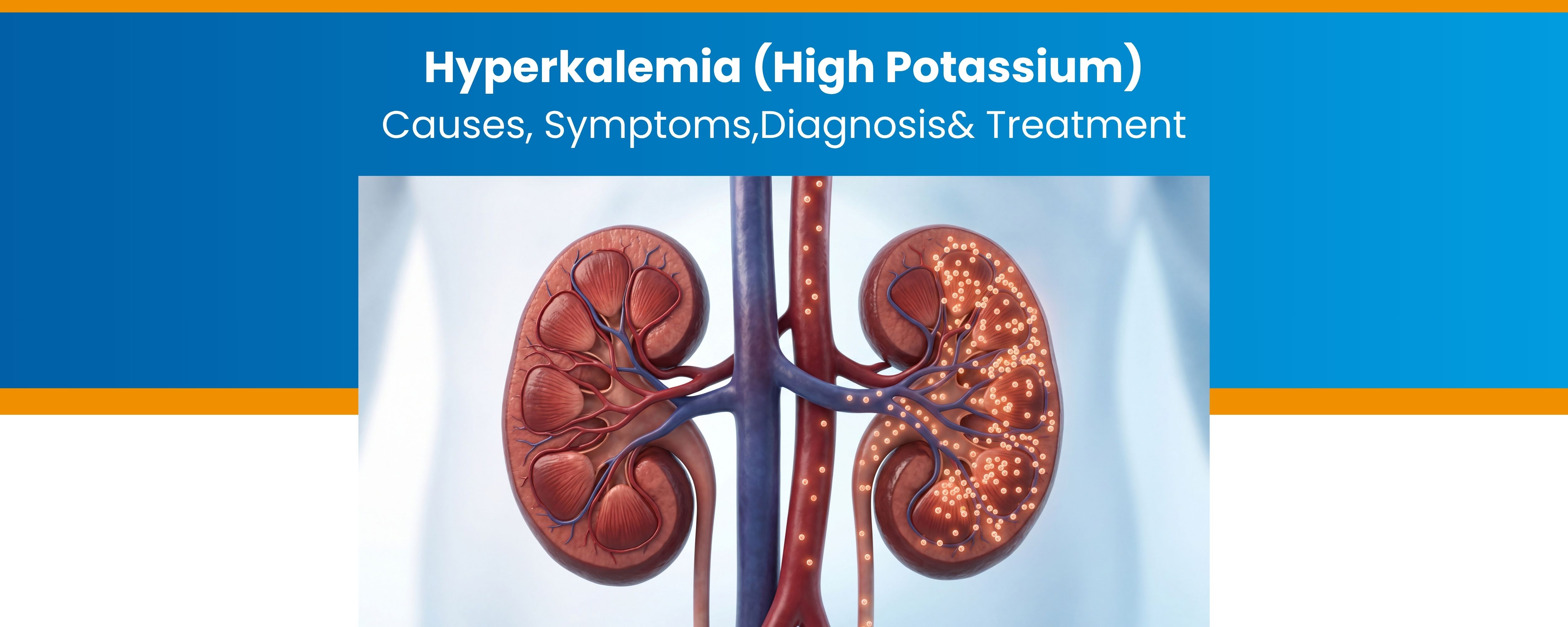
Potassium is important for normal body function. However, high blood potassium levels are dangerous. Doctors call this condition hyperkalemia.
Why Potassium is Essential for the Body?
Potassium is an essential mineral and an electrolyte. It supports healthy heart, muscle and nerve function. It helps maintain the optimum internal condition of all your cells and other internal body milieu, and along with sodium maintains blood pressure.
When Does High Potassium Become Dangerous?
The body takes only the potassium it needs, and the kidneys remove the rest through urine. But when the kidneys can’t remove excess potassium, it builds up in the blood. This causes serious heart, breathing, or muscle problems. It can also paralyse the muscles.
What Causes Hyperkalemia?
Chronic Kidney Disease (CKD)
A slow and progressive kidney condition prevents the kidneys from removing waste.
Acute Kidney Injury (AKI)
It develops suddenly and affects the kidneys’ ability to filter waste. This increases potassium levels in the blood.
Medications that Can Raise Potassium Levels
Certain drugs or potassium supplements can be the leading causes of hyperkalemia, and they commonly include:
-
Angiotensin-converting enzyme (ACE) inhibitors
-
Angiotensin receptor blockers (ARBs)
-
Water pills that keep potassium in the body
-
Nonsteroidal anti-inflammatory drugs (NSAIDs) (painkillers)
Diabetes, Adrenal Disorders, and Other Medical Conditions
Diabetes can cause dangerously high blood potassium levels. It can leak out of cells into the bloodstream. Addison’s disease can significantly reduce aldosterone levels that control potassium balance.
High-Potassium Diet: Can Food Alone Cause Hyperkalemia?
Healthy kidneys can effectively remove excess potassium. Hence, consuming high-potassium foods alone doesn’t cause hyperkalemia. However, avoid consuming too many potassium supplements.
Symptoms of Hyperkalemia You Should Never Ignore
Muscle Weakness and Fatigue
High potassium levels can reduce muscle function. They can also cause extreme weakness and persistent fatigue.
Numbness, Tingling, and Muscle Paralysis
Elevated potassium levels can disrupt normal nerve functioning, causing persistent tingling or numbness and even muscle paralysis.
Heart Palpitations and Irregular Heartbeat
High potassium directly affects heart rhythm. It can also cause shortness of breath, chest pain, or tightness.
When High Potassium Becomes a Medical Emergency
If the potassium level in the blood is greater than 6.0 mEq/L, it's a medical emergency. Seek medical care immediately.
Who is Most at Risk of Hyperkalemia?
People with Chronic Kidney Disease
In people with chronic kidney disease, the kidneys cannot remove extra potassium, leading to a buildup.
Patients on Dialysis
Dialysis can help remove excess potassium. Skipping, delaying, or shortening dialysis can cause potassium levels to rise rapidly.
Individuals with Diabetes or Heart Disease
Diabetes or heart disease can significantly reduce kidney function. It increases the risk of hyperkalemia.
Older Adults Taking Multiple Medications
Kidney function declines with age. Many older adults take medications for heart conditions, blood pressure, and other age-related health.
How Hyperkalemia is Diagnosed at NU Hospitals, Bangalore
Blood Tests to Measure Potassium Levels
A blood test helps diagnose hyperkalemia only for that moment. It does not show potassium levels over a prolonged period.
Electrocardiogram (ECG) to Detect Heart Changes
An electrocardiogram (ECG) detects changes in heart rhythm accurately.
Kidney Function Tests (Creatinine & eGFR)
A serum creatinine test measures creatinine in your blood. It helps determine how well your kidneys are working.
An eGFR test measures how well your kidneys filter waste. An eGFR below 30 mL/min/1.73 m2 increases the risk of hyperkalemia.
Identifying the Underlying Cause
Blood potassium test: To verify hyperkalemia and determine severity
ECG: High potassium has dangerous effects on the heart
Creatinine & eGFR: Consider reduced kidney function as a possible underlying cause
Treatment Options for Hyperkalemia
Emergency Treatment for Severe Hyperkalemia
-
Calcium Gluconate: Protects the heart rhythm from getting dangerous, but doesn’t lower hyperkalemia.
-
Insulin with Glucose: Moves potassium out of the bloodstream and into the cells to prevent low blood sugar
-
Beta-2 Agonists: Help shift potassium back into the cells.
-
Sodium Bicarbonate: Balances acid levels in your blood and moves potassium into cells.
Medications that Lower Potassium Levels
Water pills (diuretics): Your doctor will give specific pills to help your body eliminate extra potassium.
Medicines that remove extra potassium: Potassium-lowering powders bind to potassium in the gut. They help the body remove it through bowel movements.
Dietary Changes and Potassium Restriction
Include low-potassium fruits like berries, grapes, pears, peaches, and pineapple. Include vegetables like cabbage, cauliflower, cucumbers, lettuce, onions, green beans, and bell peppers.
Limit or avoid foods high in potassium like bananas, oranges, avocados, and dried fruits. Cut down or avoid consuming vegetables like tomatoes, potatoes, sweet potatoes, spinach, beans, and lentils. Also avoid foods with potassium additives or potassium chloride.
Dialysis for Life-Threatening Hyperkalemia
Severe or life-threatening hyperkalemia may require dialysis, especially if potassium levels remain dangerously high after medications.
How to Prevent Hyperkalemia
Following a Kidney-Friendly Diet
Apart from the right fruits and vegetables, add whole grains or refined grains. Rice, pasta, and bread are also good options. Lean proteins like skinless chicken, fish, eggs, and tofu are also good to eat.
Regular Monitoring of Potassium Levels
If you have kidney disease or diabetes, or you take certain medicines, your doctor will check your potassium often.
They will do this with regular blood tests.
Safe Use of Medications
Take medications as your doctor prescribes them, and do not self-medicate.
Managing Chronic Kidney Disease and Diabetes
Control your diabetes and chronic kidney disease. Adhere to your treatment plan and have regular medical checkups.
Why Choose NU Hospitals, Bangalore for Hyperkalemia Management?
Expert Nephrologists and Critical Care Specialists
Our nephrologists and critical care physicians are highly experienced in accurately diagnosing and providing evidence-based treatment of hyperkalemia.
Advanced Kidney Function Testing
We use state-of-the-art diagnostic tools to assess kidney function and track potassium levels. Based on the results, we develop a tailored treatment plan.
Comprehensive Dialysis and Emergency Care
Our state-of-the-art dialysis units provide treatment for severe hyperkalemia. Our 24/7 emergency team manages life-threatening cases.
Personalised Treatment for Kidney Disorders
Based on kidney health, medical history, and potassium levels, we design tailored treatment plans to provide holistic care.







