 Nephrology
 Urology
 Andrology
 Fertility (IVF)
 General Nephrology
 Paediatric Nephrology
 Dialysis
 Renal (Kidney) Biopsy
 CRRT
 Peritonial Dialysis
 Robotic Surgery
 Urinary Incontinence
 Uro-Oncology
 Laparoscopic Urology
 Reconstructive Urology
 Anaesthesiology
 Radiodiagnosis
 Nutrition and Dietetics
 Pediatric and Immunization
 Cardiology
 Intensive Care Unit





Overview
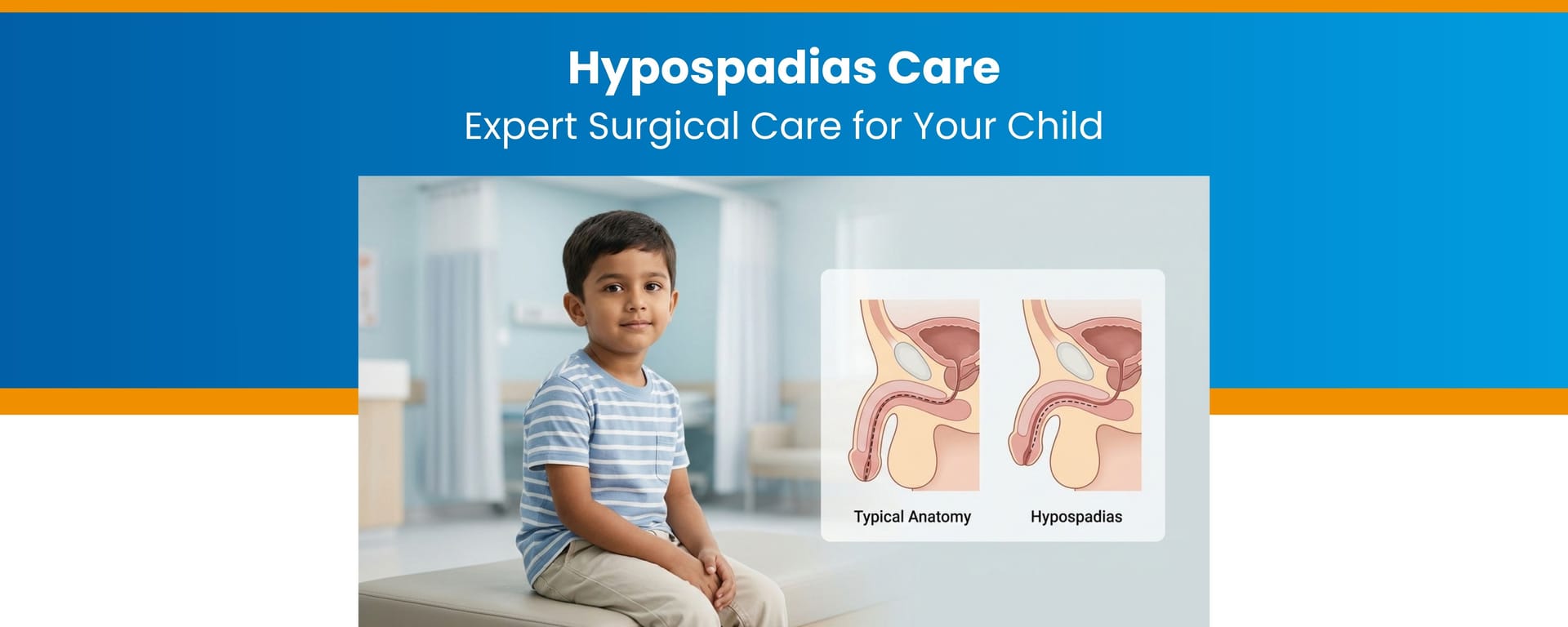
Finding out that your newborn has a structural difference in their anatomy can be overwhelming for any parent. Hypospadias is one of the most common congenital conditions that affect the male urinary tract. The question is, can it be corrected? Fortunately, hypospadias surgery in children is a common paediatric urological procedure, and with the right surgical expertise, outcomes can be excellent.
That being said, correcting hypospadias requires high surgical skill. NU Hospitals, recognised as a Centre of Excellence in Paediatric Urology, focuses on functional success and cosmetic excellence for your child.
Understanding Hypospadias
Hypospadias is a congenital condition seen in male children where the urethral opening is not located at the tip of the penis, as it should be. The urethra is a tube that carries urine out of the body. Instead of the usual placement, the opening known as the “meatus” is positioned somewhere on the underside of the penis. It can also be located on the scrotum or on the perineum in rare cases.
After cryptorchidism, hypospadias is the most common congenital disorder seen in males. One out of every 250 males is reported to have hypospadias. [source].
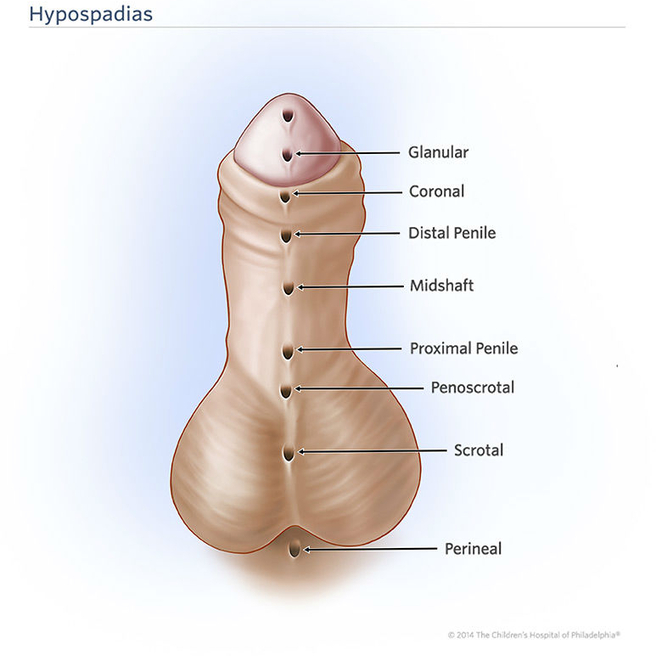
Types of hypospadias include:
-
Glanular: While the meatus is located at the head of the penis, it is not exactly at the tip.
-
Coronal: The meatus is found just below the head, or where the penis joins the shaft. Coronal hypospadias is the most common form of the disorder.
-
Midshaft: As the name suggests, the meatus is positioned at the halfway mark on the penis.
-
Penoscrotal: The meatus is located where the penis joins the scrotum.
-
Scrotal/Perineal: The meatus is seen on or below the scrotum. This type of hypospadias is the most severe.
Hypospadias Severity Types
Here is a table to simplify the types of hypospadias.
Type |
Meatus Location |
Surgical Complexity |
Glanular/Coronal |
Near the tip of the glans |
Low |
Midshaft |
Along the shaft of the penis |
Moderate |
Penoscrotal |
At the junction of the penis and the scrotum |
Higher |
Scrotal |
On the scrotum |
High |
Perineal |
Behind the scrotum |
Highest |
Distal or anterior types of hypospadias are more commonly found in male children and often have the highest single-surgery success rates. On the other hand, proximal or posterior types of the disorder need more complex planning and procedures for correction,
The Role of Chordee Correction
This is yet another congenital condition seen in males. Also known as congenital penile curvature, Chordee is a condition that causes the penis to bend downward, especially during erections. While it can be noticed early on, it is usually only discovered after the child has reached puberty and has an erection.
While most curvatures do not call for medical intervention, severe cases can cause pain and affect sexual function in men. It may also decrease a person’s self-confidence. Chordee can occur on its own or alongside other conditions, such as hypospadias.
During hypospadias repair, the surgeon releases and excises the abnormal fibrous tissue present on the underside of the penis, thus straightening it. Chordee correction is an important component of hypospadias surgery, not a secondary or optional step. Simply moving the urethral opening without addressing the underlying issue may hinder assessment of how much urethral reconstruction is needed.
Hypospadias Surgery For Kids
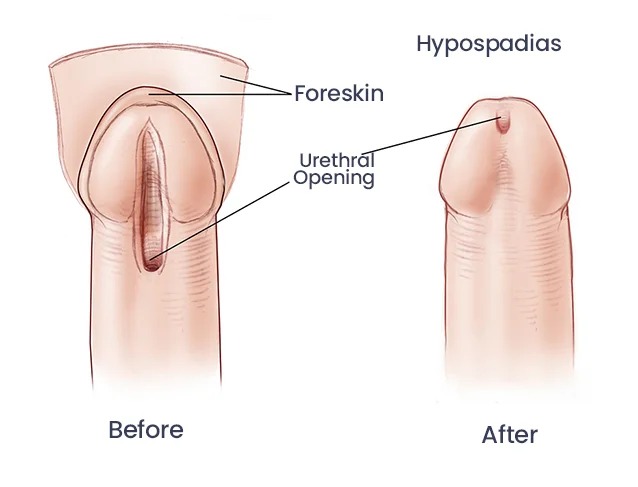
Treatment for hypospadias involves the patient undergoing surgery to move the meatus, or the urethral opening, to the tip of the penis. In cases of chordee, surgery to straighten the shaft will also be performed. Hypospadias surgery for kids usually takes place between 6 and 18 months of age.
In most cases, only a single surgery is needed. However, other times, the patient may need more than one surgery. Before the procedure, the child is placed under general anaesthesia, after which the paediatric urologist uses a sterile scalpel to remove a portion of the foreskin. That piece of foreskin is then used to create a tube, which is attached to the child’s urethra. This results in a longer urethra, which allows surgeons to move the meatus to the tip of the penis.
The urologist also places a catheter into the urethra, which helps the tube heal and maintain its shape. It also helps drain urine. The catheter may remain in place for about two weeks after the surgery.
Difference Between Before and After the Surgery
Surgery shows significant improvement in children. Before hypospadias surgery, the child may experience difficulty directing their urine stream and may face fertility or psychological challenges in the future. After a successful hypospadias repair, though, the urethral opening is moved to its proper place, the curvature is resolved, and physical appearance is normalised, allowing children to grow up without the stigma of a genital abnormality.
Hypospadias repair usually has a high success rate, and these corrections can last a lifetime, allowing the penis to be healthy and function normally.
The Road to Recovery
Sleeping is the best way to help your child recover more quickly, as children are usually quite tired after the repair. Recovery times can vary from person to person as each child is different. Remember, one size does not fit all. As for swelling and bruising, they should improve after the two-week mark. Children usually take around six weeks to fully recover.
As a parent or guardian, make sure to keep the child’s penis clean to avoid the possibility of infections. Keep your hands clean while handling the bandages. If dirt, urine, or stool gets on the bandages, clean them with warm, soapy water, but be gentle when handling them.
While children can resume their daily activities after two weeks or so, it is important to have them avoid things like swimming or playing in the mud until recovery is complete.
Why Choose NU Hospitals?
NU Hospitals is known as a Centre of Excellence in Paediatric Urology, focusing on providing comprehensive treatment for children with various urogenital abnormalities. NU Hospitals provides specialised paediatric operating rooms equipped with child-friendly instruments, staffed by paediatric urologists, and offering a friendly atmosphere for children.
NU Hospitals provides various paediatric urology services, including surgery for congenital malformations of the urinary and genital organs. We believe that every child deserves a confident future.
Conclusion
A hypospadias diagnosis may cause alarm bells to go off in your mind, but you can find comfort in knowing that it is a highly correctable condition. With the right expertise, outcomes can be extremely positive. From chordee correction to precise urethral reconstruction, hypospadias surgery for kids requires surgical precision, and for that, parents need to make sure they choose the right medical professionals for the job.







