 Nephrology
 Urology
 Andrology
 Fertility (IVF)
 General Nephrology
 Paediatric Nephrology
 Dialysis
 Renal (Kidney) Biopsy
 CRRT
 Peritonial Dialysis
 Robotic Surgery
 Urinary Incontinence
 Uro-Oncology
 Laparoscopic Urology
 Reconstructive Urology
 Anaesthesiology
 Radiodiagnosis
 Nutrition and Dietetics
 Pediatric and Immunization
 Cardiology
 Intensive Care Unit




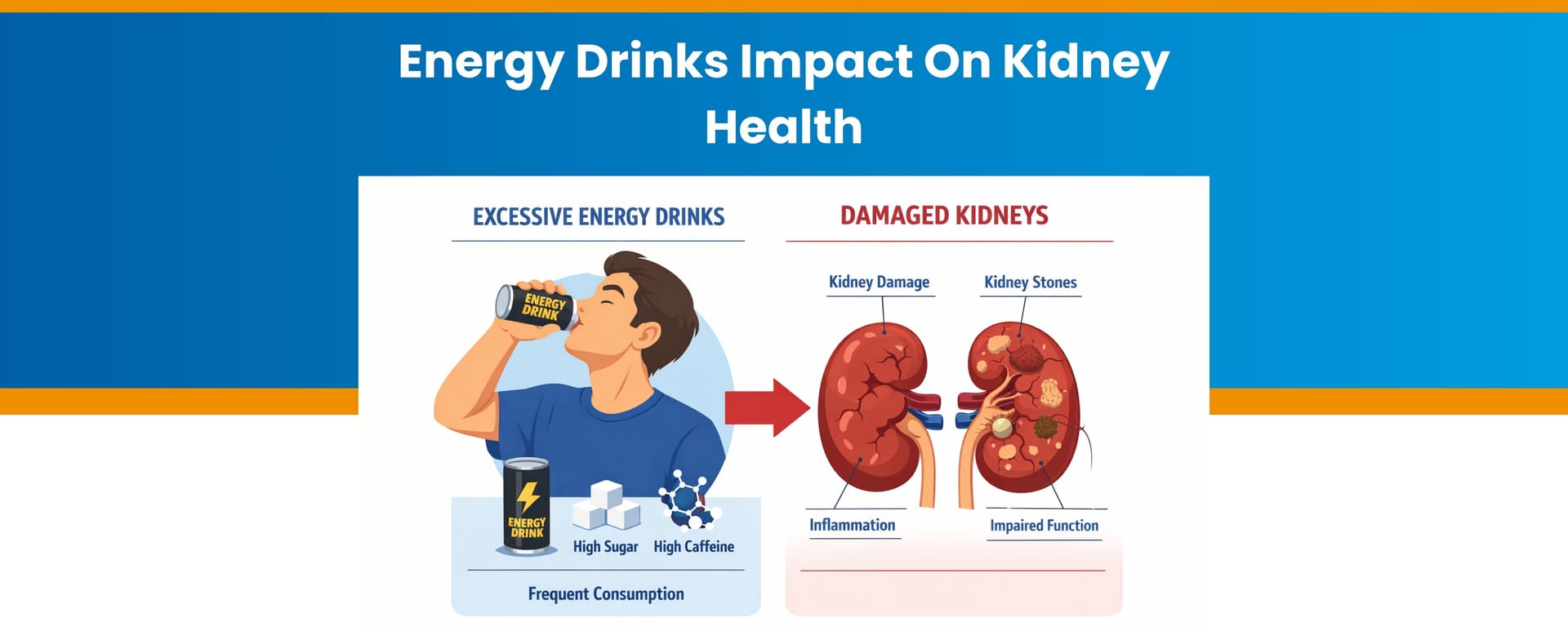
Are energy drinks the only thing helping you get through your day? Do you find yourself opening a can almost every day?
You are not alone. The global energy drink market is projected to reach USD 85.25 billion by 2025, reflecting how common these beverages have become. While energy drinks may give you a temporary mental boost, their long-term effects on kidney health are often overlooked.
Your kidneys work silently and tirelessly to keep your body healthy. Regular consumption of energy drinks—high in caffeine, sugar, and additives—can place unnecessary stress on these vital organs.
This article explains how energy drinks affect kidney health, who is at higher risk, and how you can make safer choices.
What does an energy drink contain?
Have you ever checked the label of your energy drink? Most energy drinks contain a combination of stimulants and additives that can burden the kidneys when consumed frequently.
Common Ingredients Include:
-
Synthetic Caffeine
Often two to three times the caffeine found in a regular cup of coffee.
-
Sugar
Some brands contain up to 60 grams of sugar per can, equivalent to 12 teaspoons.
-
Taurine
An amino acid involved in mineral balance; excessive amounts may strain kidney function.
-
Guarana
A plant extract that adds additional, often unrecognized, caffeine.
-
B-Vitamins
Frequently present in doses far exceeding daily requirements.
-
Ginseng and L-Carnitine
Herbal stimulants that may interact with certain medications.
Benefits of Caffeine on Kidney Health
Caffeine itself is not inherently harmful when consumed in moderation.
Potential Benefits of Moderate Caffeine Intake:
-
Anti-inflammatory Effects
Caffeine contains antioxidants that may help reduce systemic inflammation.
-
Reduced Risk of Kidney Stones
Its mild diuretic effect can promote urine flow, potentially helping flush minerals.
-
Improved Blood Flow
Caffeine may enhance nitric oxide production, which relaxes blood vessels and improves kidney perfusion. However, effects vary between individuals.
That said, energy drinks are not simply caffeinated beverages. The combination of high caffeine, sugar, and additives changes how they affect the body.
Energy Drinks' Impact on Kidney Health
Let's get real about the risk of the high-octane energy drinks on kidney health. Frequent consumption of energy drinks can contribute to several kidney-related problems.
-
Increased Blood Pressure
High caffeine levels stimulate the heart and raise blood pressure. Over time, hypertension damages the kidneys’ filtering units.
-
Dehydration
Caffeine has a diuretic effect. Without adequate water intake, dehydration thickens the blood and makes filtration more difficult for the kidneys.
-
Calcium Imbalance
High caffeine and sugar intake can increase calcium excretion, raising the risk of kidney stones.
-
Kidney Hyperfiltration
Stimulants force the kidneys to work harder, leading to long-term wear and reduced function.
WHO IS AT HIGHER RISK?
Certain individuals are more vulnerable to kidney damage from energy drinks:
- Slow caffeine metabolizers due to genetic factors
- People with pre-existing high blood pressure
- Athletes or individuals performing intense exercise, especially without adequate hydration
- Those who mix energy drinks with alcohol, increasing dehydration and kidney stress
In these groups, energy drinks can increase the risk of Acute Kidney Injury (AKI).
Are Sugar-Free Energy Drinks Safer?
Sugar-free does not necessarily mean kidney-safe.
Concerns Include:
-
Artificial Sweeteners
Substances such as aspartame or sucralose may alter gut bacteria and contribute to inflammation.
-
Phosphoric Acid
Commonly found in energy drinks and sodas, it is associated with kidney stones and chronic kidney disease.
-
High Caffeine Content
Even without sugar, caffeine-induced dehydration remains a concern.
Kidney-Friendly Alternatives for Energy
If you are looking for safer ways to stay energized, consider the following:
-
Natural Caffeine Sources
Green tea or matcha provides a slower, steadier energy release.
-
Coconut Water
Supplies electrolytes that help counteract dehydration.
-
Low-Oxalate Options
Important for individuals prone to kidney stones. Avoid drinks that contain added Vitamin C, and too many artificial food additives, concentrated beet juices.
-
Hydration First
Plain water remains the best “energy drink.” Well-hydrated kidneys function more efficiently.
Protect your Kidneys
Your kidneys filter 120–150 quarts of blood every day, removing waste and maintaining fluid balance. While an occasional energy drink may not cause harm, regular and excessive consumption can have serious long-term consequences.
Before reaching for an energy drink during an all-nighter or a busy day, consider healthier alternatives that support both energy levels and kidney health.
Regular kidney health check-ups can help detect early signs of stress or damage. When to See a Doctor
If you consume energy drinks frequently or experience symptoms such as fatigue, swelling, high blood pressure, or reduced urine output, it is advisable to get your kidney function evaluated.
At NU Hospitals, Bengaluru, our experienced nephrologists provide comprehensive kidney health assessments and guidance tailored to your needs.








