 Nephrology
 Urology
 Andrology
 Fertility (IVF)
 General Nephrology
 Paediatric Nephrology
 Dialysis
 Renal (Kidney) Biopsy
 CRRT
 Peritonial Dialysis
 Robotic Surgery
 Urinary Incontinence
 Uro-Oncology
 Laparoscopic Urology
 Reconstructive Urology
 Anaesthesiology
 Radiodiagnosis
 Nutrition and Dietetics
 Pediatric and Immunization
 Cardiology
 Intensive Care Unit




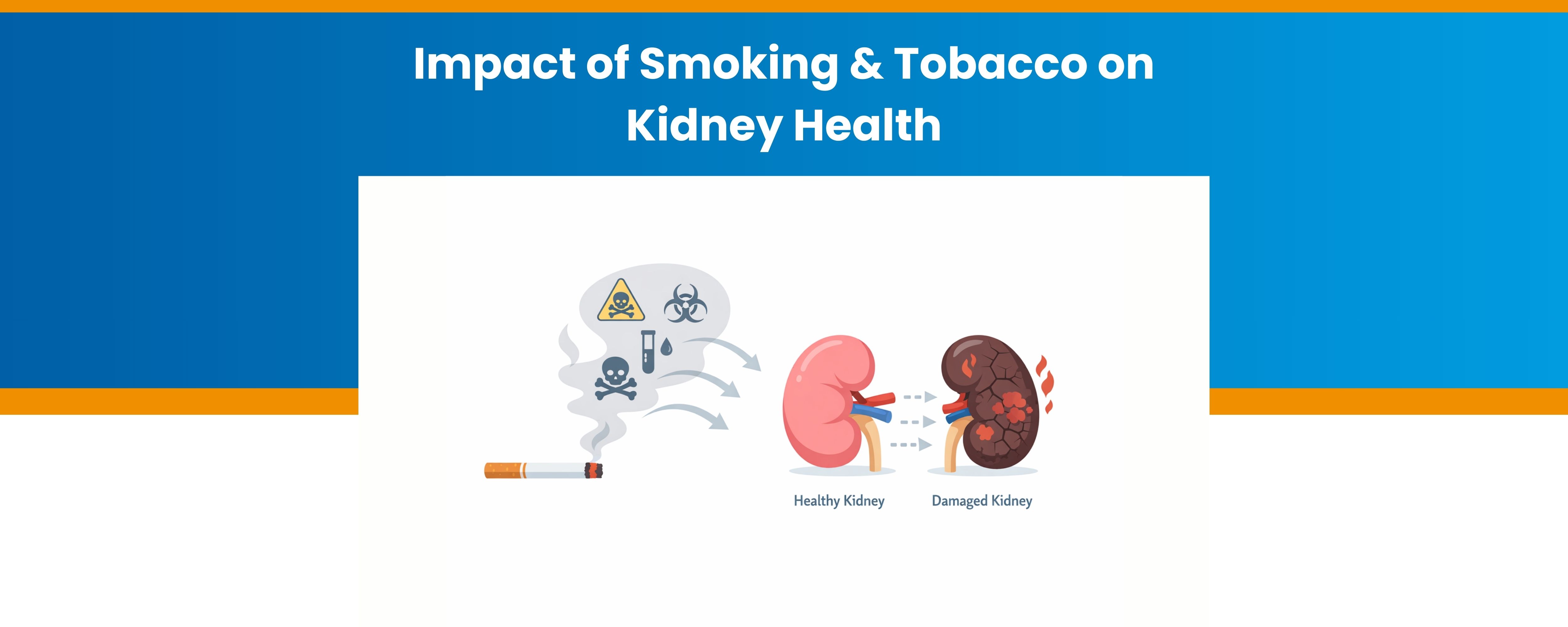
Tobacco is a known driver of heart and lung disease, but its contribution to smoking and kidney disease is often ignored. Tobacco use is a leading preventable cause of kidney damage. The kidneys are vital for filtering waste and regulating pressure, yet they are easily damaged by the toxins in smoke, which cause function to fail quietly over time.
The kidneys are highly responsive to changes in blood chemistry and oxygen saturation. Tobacco smoke introduces harmful substances, such as nicotine and heavy metals, into the blood. These compounds circulate through the kidneys, placing a constant strain on the nephrons. Prolonged exposure to these toxins disrupts the kidneys' filtration processes and accelerates the progression of chronic kidney disease.
Objectively, the most effective way to safeguard the kidneys is to eliminate the source of these toxins by quitting tobacco use, thereby reducing the metabolic and chemical stress on the organ.
How Tobacco Affects Kidney Function
Understanding the tobacco effects on kidney health requires examining how smoking interferes with blood vessels and cellular processes. The kidneys depend on a rich blood supply to filter waste products efficiently.
Smoking causes blood vessels to narrow and stiffen, reducing blood flow to kidney tissue. This limits oxygen delivery, resulting in chronic stress and damage to kidney cells. Nicotine raises blood pressure, damaging the tiny vessels essential for kidney filtration, preventing the effective filtration of toxins and leading to dangerous waste buildup.
Understanding how smoking damages kidneys also requires looking at increased inflammation and oxidative stress. This imbalance between free radicals and the body’s defences causes permanent scarring and a steady decline in filtering power. These combined factors illustrate why smoking is so harmful to renal health, leading to tissue damage and functional loss even in individuals who seem healthy.
Smoking and Chronic Kidney Disease
Smoking is a major cause of kidney damage. Research shows that smokers are significantly more likely to develop chronic kidney disease (CKD). CKD causes a slow loss of function that you may not notice until it is advanced. Smoking speeds this up by damaging your blood vessels and causing protein to leak into your urine, which is called proteinuria.
Proteinuria is a sign that your kidneys' filters are damaged. If you have diabetes or high blood pressure, smoking makes the damage to your kidneys even worse. If you already have CKD, smoking will make your condition get worse much faster. Smokers with CKD often need dialysis or a kidney transplant much sooner than people who don't smoke.
To protect your kidneys, it is essential to stop smoking. Quitting helps slow the decline in function and gives your kidneys a better chance of staying healthy for longer, reducing the risk of total kidney failure.
Risk of Kidney Failure in Smokers
One of the most serious consequences of tobacco use is the increased risk of kidney failure in smokers. Kidney failure, also known as end-stage renal disease, occurs when the kidneys can no longer perform their essential functions. Dialysis or a transplant is required for survival.
Smoking contributes to kidney failure by accelerating the destruction of nephrons and increasing scarring in kidney tissue. It also raises the risk of complications such as cardiovascular disease, which is a leading cause of death in people with kidney failure.
It also heightens the risk of heart disease, which is the top cause of death for renal patients. For those needing a kidney transplant, smoking is particularly dangerous. It is closely linked to organ rejection and serious post-operative infections.
To safeguard the success of these procedures, many transplant programmes require patients to be smoke-free before surgery. Understanding these risks highlights why quitting smoking is essential for anyone at risk of, or currently managing, chronic kidney disease.
How Smoking Damages Kidneys at a Cellular Level
The process of how smoking damages kidneys starts with the blood vessels. Tobacco toxins hurt the endothelial cells that line these vessels, making it harder for the body to control blood flow and prevent clots. This leads to poor circulation and inflammation.
Inside the kidneys, smoking damages the tiny filters called glomeruli. When these filters are broken, they let protein leak into the urine and keep harmful waste in the blood. Over time, this damage cannot be fixed, leading to permanent kidney failure.
Smoking also makes the body less sensitive to insulin, which can lead to diabetes. Since diabetes is the main cause of kidney disease, smoking is a major indirect risk factor. Maintaining healthy insulin sensitivity is also a key factor in long-term renal preservation for those at risk.
Interaction with Other Risk Factors
The harmful effects of smoking on the kidneys are compounded by obesity, diabetes, and hypertension. These conditions place the kidneys under constant stress; tobacco use adds a significant burden, speeding up the progression of chronic kidney disease.
-
Diabetes and Smoking
Diabetic smokers are highly susceptible to diabetic nephropathy. This involves serious, long-term damage to the kidneys' filtration units, increasing the risk of failure.
-
High Blood Pressure and Smoking
Smokers with high blood pressure experience rapid renal decline. The combination of chemical toxins and mechanical pressure causes continuous injury to the blood vessels within the kidneys, necessitating early intervention.
-
Combined risk factors
When smoking is added to other conditions such as obesity, diabetes, or high blood pressure, the risk of chronic kidney disease and kidney failure rises sharply.
-
Medical advice
Because of this dangerous interaction, quitting smoking is one of the first and most important recommendations doctors make for people who already have kidney disease or are at high risk of developing it.
Benefits of Quitting Smoking for Kidney Health
-
Boost Your Blood Flow
Stop smoking to see immediate benefits. Within weeks, your blood pressure drops and circulation improves, taking the pressure off your kidneys and helping them filter waste better.
-
Calm the Inflammation
Smoking causes constant internal swelling. By quitting, you lower this inflammation, allowing your kidney tissue a chance to settle and heal.
-
Protect Your Kidney Function
Staying smoke-free slows down the natural decline of your kidneys. Those who quit keep their kidney function longer than those who don't.
-
Make Your Medicine Work
Quitting helps your blood pressure and diabetes meds work harder. Since these conditions damage kidneys, better control means better protection.
-
Stop Kidney Failure
If you have early-stage disease, quitting is a vital tool to stop or delay the move toward total kidney failure.
-
Better Transplant Results
If you’ve had a transplant, quitting ensures your new kidney lasts longer and reduces your risk of complications.
-
Total Body Protection
You aren't just saving your kidneys; you're lowering your risk of stroke, heart disease, and cancer.
Conclusion
Smoking hurts the kidneys by damaging blood vessels and causing inflammation. This makes kidney disease and cancer much more likely. The good news is that the benefits of quitting smoking for kidney health start almost immediately. When you quit, your blood flow improves, inflammation goes down, and any existing kidney disease slows down. Choosing to stop smoking is one of the best ways to protect your kidneys. It offers a clear path to protecting renal function and improving a patient's long-term health prospects and quality of life.








