 Nephrology
 Urology
 Andrology
 Fertility (IVF)
 General Nephrology
 Paediatric Nephrology
 Dialysis
 Renal (Kidney) Biopsy
 CRRT
 Peritonial Dialysis
 Robotic Surgery
 Urinary Incontinence
 Uro-Oncology
 Laparoscopic Urology
 Reconstructive Urology
 Anaesthesiology
 Radiodiagnosis
 Nutrition and Dietetics
 Pediatric and Immunization
 Cardiology
 Intensive Care Unit




Introduction
Interstitial Cystitis, or the Painful Bladder Syndrome, can be challenging for individuals. Bladder pain without infection can be very frustrating, confusing, and emotionally draining. Interstitial cystitis (IC), also known as Painful Bladder Syndrome (PBS), is a chronic bladder condition characterised by pelvic pain, urinary urgency, & frequent urination in the absence of a bacterial infection.
Patients may have had multiple negative tests for urinary tract infections (UTIs) yet continue to experience debilitating bladder pain. This may result in delays in diagnosis and treatment. It is essential to note the distinction between infection and sterile inflammation in the diagnosis of IC/PBS.
What is Interstitial Cystitis?
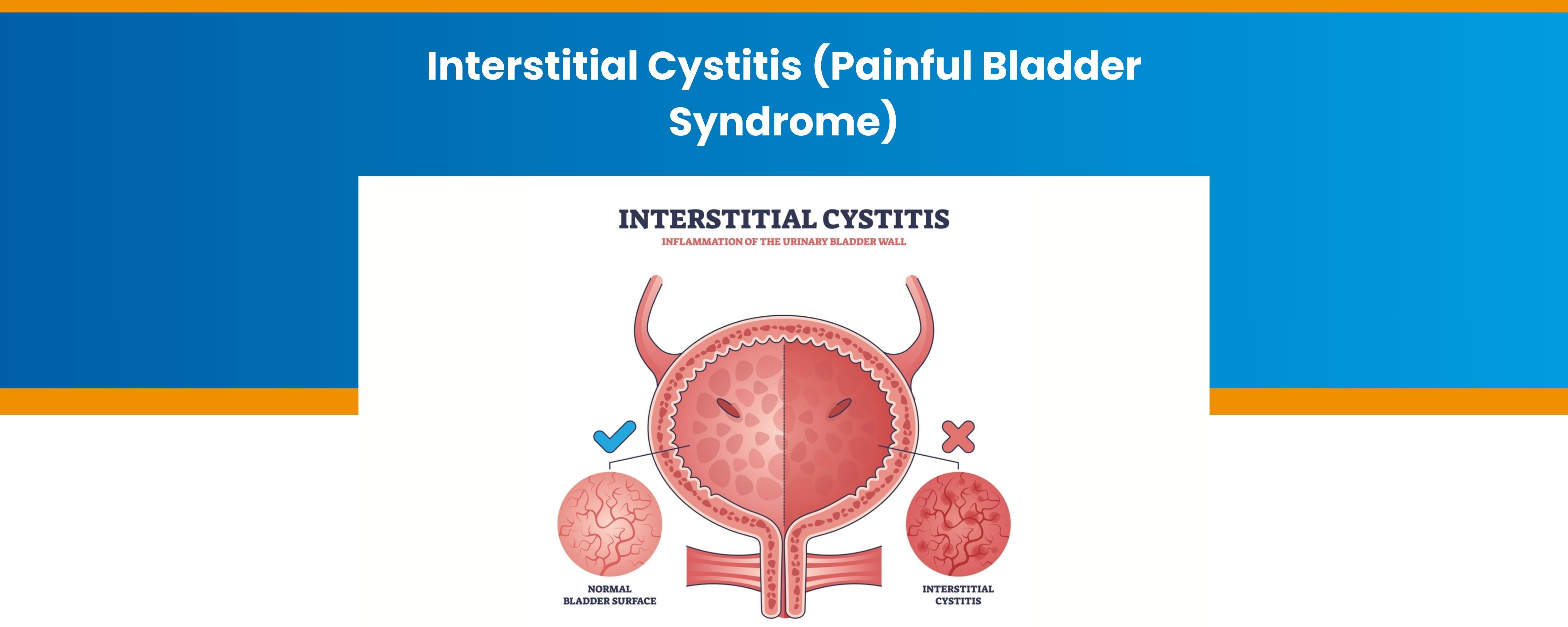
Interstitial cystitis can be defined as a chronic inflammatory condition of the bladder. Unlike UTIs, IC is not caused by bacteria and does not require antibiotic therapy.
The primary pathophysiology of IC is the loss of the bladder’s protective GAG layer, which shields the bladder from irritating substances in the urine. This leads to the bladder’s nerves being overly sensitive, causing pain and urgency.
Some patients with IC have typical cystoscopic changes, which include:
-
Hunner’s lesions (inflamed areas on the bladder wall)
-
Glomerulations (bleeding points following bladder distention)
Not all patients with Interstitial cystitis have lesions; thus, the diagnosis is made on clinical grounds.
Painful Bladder Syndrome Symptoms
The symptoms could range from mild to severe and often include:
-
Suprapubic or pelvic pain
-
Pain that increases as the bladder fills
-
Almost complete relief after urination
-
Increased frequency of urination (sometimes as often as 20-40 times a day)
-
Urinary urgency without infection
-
Pain during intercourse
The symptoms may vary and can go into remission, but may recur due to diet, stress, or hormonal changes.
Interstitial Cystitis vs Chronic UTI
Patients frequently ask why their UTI test is negative despite persistent symptoms.
IC vs Chronic UTI Comparison Table
Differentiating between the two key conditions is essential and helps in improving the efficiency of the treatment procedure.
Feature |
Interstitial Cystitis |
Chronic UTI |
Urine Culture |
Negative |
Positive for bacteria |
Pain Pattern |
Worse with bladder filling |
Burning during urination |
Fever |
Rare |
Possible |
Response to Antibiotics |
No improvement |
Improves |
Inflammation Type |
Sterile inflammation |
Bacterial infection |
If urine tests are repeatedly negative and antibiotics do not yield results, interstitial cystitis should be considered.
How is Interstitial Cystitis Diagnosed?
The diagnosis of IC/PBS is primarily a diagnosis of exclusion. Studies may include:
-
Urine analysis to rule out infection
-
Ultrasound to rule out stones.
-
Cystoscopy with hydrodistension to evaluate the bladder mucosa
-
Evaluation for Hunner’s lesions
-
Pelvic examination
There is no specific diagnostic test. The diagnosis is often based on a symptom complex and exclusion of other diagnoses.
Interstitial Cystitis Diet: Identifying Triggers
Diet is a significant factor in symptom flare-ups. Certain foods can irritate the bladder lining. Therefore, it becomes important to identify these foods and avoid them.
IC Diet Matrix
Let’s take a look at the most common trigger food items and their bladder-safe alternatives for Interstitial Cystitis patients.
Trigger Foods |
Bladder-Safe Alternatives |
Coffee & caffeine |
Herbal tea |
Citrus fruits |
Pears, bananas |
Spicy food |
Mild seasonings |
Tomato products |
White sauces |
Carbonated drinks |
Plain water |
Artificial sweeteners |
Natural sweeteners (limited intake) |
An elimination diet and avoiding all trigger foods help immensely in identifying personal triggers. Patients are advised to reintroduce foods gradually to assess tolerance.
Treatment Options for Interstitial Cystitis
Management for Interstitial Cystitis needs a multidisciplinary approach. Various methods can be used to treat the patient. Some of them include:
1. Oral Medications
Pentosan polysulfate can be administered to support the GAG layer. Antihistamines are sometimes suggested for mast cell activation. Other medications for neuropathic pain, as prescribed by the healthcare expert, should be incorporated.
2. Bladder Instillations
Bladder instillations are a helpful technique for relieving inflammation and restoring the bladder lining. It might be very effective in relieving pain and treating the condition in urgent cases.
3. Pelvic Floor Therapy
Pelvic pain can cause dysfunction of the pelvic floor muscles. Specialised pelvic floor therapy can help relax tight muscles and relieve pressure and pain in the pelvis.
4. Stress Management
Stress may be a major contributing factor in worsening IC symptoms by increasing nerve pain. Behavioural therapy, relaxation, and mindfulness can help reduce symptom severity.
Can Interstitial Cystitis Be Cured?
As of now, there is no known cure for Interstitial Cystitis. No treatment option can fully treat it; with appropriate strategies, it can be managed properly. A combination of lifestyle, dietary, physical, and medical changes, along with the right procedures, can help patients get relief from the condition. The emphasis is on long-term management rather than finding the cure. Early treatment always makes a significant difference in improving the treatment outcomes.
Does Stress Worsen Interstitial Cystitis?
Yes, stress can be bad for health, especially in cases of Interstitial Cystitis patients. It triggers inflammatory responses and increases patients' nerve sensitivity, worsening symptoms. Psychological care and structured pain management, along with adopting suitable stress management strategies, can help lower flare episodes and prevent the health from worsening.
NU Hospitals Pelvic Pain Program
At NU Hospitals, the treatment of interstitial cystitis involves a comprehensive Pelvic Pain Program that incorporates:
-
Advanced cystoscopic assessment
-
Specific intravesical bladder instillations
-
Pelvic floor rehabilitation
-
IC diet counselling
-
Strategies for managing chronic pain
The urology team at NU Hospitals collaborates with pain management specialists and physiotherapists to offer a comprehensive treatment approach to patients.
Conclusion
Interstitial cystitis (IC) or painful bladder syndrome is a severe chronic inflammatory bladder disease, which is marked by symptoms of pelvic pain, urgency, and frequency without evidence of infection. It is associated with defects in the GAG layer of the bladder and the presence of Hunner’s lesions on cystoscopy. It also needs to be ruled out for infection and structural causes. The treatment options include avoiding dietary triggers, taking oral pharmacotherapy with pentosan polysulfate, following pelvic floor physical therapy, and undergoing procedures such as bladder instillations.