 Nephrology
 Urology
 Andrology
 Fertility (IVF)
 General Nephrology
 Paediatric Nephrology
 Dialysis
 Renal (Kidney) Biopsy
 CRRT
 Peritonial Dialysis
 Robotic Surgery
 Urinary Incontinence
 Uro-Oncology
 Laparoscopic Urology
 Reconstructive Urology
 Anaesthesiology
 Radiodiagnosis
 Nutrition and Dietetics
 Pediatric and Immunization
 Cardiology
 Intensive Care Unit




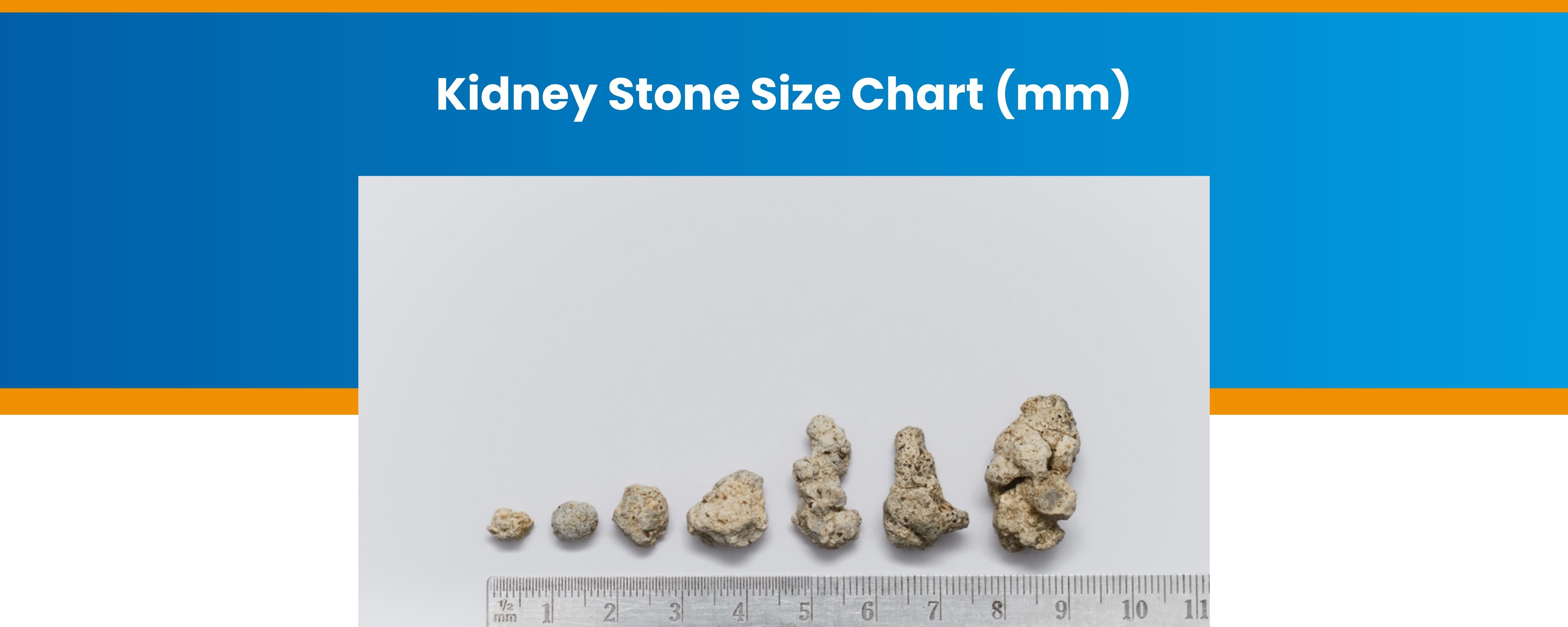
Kidney stones are among the most common urological conditions, and their severity is mostly determined by the stone's size and location. Smaller stones can pass through the urinary system, but larger ones can become lodged in the urinary tract, causing pain, infection, or even kidney damage. A clear kidney stone size chart in mm helps clinicians evaluate the likelihood of spontaneous passage rate and choose the safest treatment pathway. When guided by accurate imaging and clinical assessment, treatment decisions balance watchful waiting with timely intervention to prevent complications, such as hydronephrosis and infection.
The Urological Precision Protocols at NU Hospitals are based on high-resolution imaging, specifically Non-Contrast Computed Tomography of the Kidney, Ureter, and Bladder (NCCT KUB). This method accurately detects stone burden to 1 mm. Kidney stones of different sizes can be treated differently, and each patient is treated based on their individual needs. This personalised view not only prevents unnecessary procedures but also ensures early screening in the event that a stone endangers kidney function.
Understanding Why Size Matters?
The ureter is a narrow muscular tube that connects the kidney to the bladder. Usually, a normal ureter is about 3-4mm in diameter. This small tube plays a vital role in figuring out whether a kidney stone can pass on its own. If the stone is smaller than the ureter's internal diameter, it should pass through without issue. However, if it's larger, it might get stuck in tighter areas, such as the Ureteropelvic Junction (UPJ) or mid ureter or near the bladder. As the stone navigates this area, it can trigger muscle spasms and inflammation. The larger the stone, the greater the chance it will become lodged and cause pain.
The Definitive Size-to-Treatment Matrix
The size of kidney stones is classified into three major groups - those likely to pass, those that may require assistance, and those that demand immediate action - by urologists using a kidney stone size chart in mm to simplify the decision-making process.
Stone Size (mm) |
Likelihood of Natural Passage |
Treatment Approach |
Notes |
< 4 mm |
High (up to 80%) |
Hydration, pain relief, observation |
Often passes within weeks |
4–7 mm |
Moderate (up to 70%) |
Medical Expulsive Therapy (MET), monitoring |
Medication may aid in ureter relaxation |
7–10 mm |
Low (up to 50%) |
ESWL or Laser Lithotripsy |
Active treatment is usually recommended |
> 10 mm |
Very Low (up to 10%) |
Surgical removal |
Higher risk of obstruction |
Large/complex stones |
Minimal (almost 0) |
Advanced procedures |
Includes Staghorn Calculus |
When is a Kidney Stone Too Large to Pass?
Generally, when a kidney stone is too large to pass, it is considered to be 6 mm to 7mm. Although some individuals have successfully passed larger stones, the risk of complications increases significantly once stones exceed 7 mm.
Surgical intervention for a 7 mm stone may be considered if the stone fails to progress after four weeks or causes persistent pain or fever. Prolonged "watchful waiting" for a large stone can lead to infections or a decline in kidney function. So, the treatment of the kidney stone depends not only on the diameter of the stone, but also on its position and the extent to which it is obstructing the flow of urine.
Kidney Stone Size and Risk Factors
The size of kidney stones directly influences the risk, symptoms, and treatment. The ureter's normal width is substantially less than a 7 mm stone, which would be difficult to pass without surgical assistance. Within a kidney stone size chart in mm, this size falls into the category where active monitoring or intervention may be required.
Key risk factors linked with a 7 mm stone include:
-
Higher risk of blockage: Stones are larger and can cause a blockage in urine flow, increasing the risk of infection and hydronephrosis.
-
Increased pain intensity: The presence of such large stones usually causes ongoing flank or abdominal pain due to ureteral pressure and spasm.
-
Impact on kidney function: Chronic obstruction can impair urine drainage and, in some cases, lead to kidney damage.
Timely assessment of kidney stones by size helps prevent complications and treat the condition early.
Kidney Stone Treatment by Size
Stones Under 4 mm
Small stones frequently pass naturally. Pain treatment, hydration, and monitoring are the three main components of the procedure. Unless the symptoms worsen, doctors advise patients to observe.
Stones Between 4–7 mm
These stones can be passed, but they typically require medicine. Medical Expulsive Therapy (MET) causes ureteral muscular relaxation and increases the rate of spontaneous transit.
Stones Larger Than 7 mm
These stones are extremely difficult to move without assistance. Shockwave therapy and laser lithotripsy, which tear the stone into tiny bits, are examples of such methods.
Stones Above 10 mm
When evaluating whether a kidney stone is too large to pass, this range usually indicates the need for active removal. Endoscopic or minimally invasive methods can be used to achieve successful clearing.
Complex Stones
At the end of the kidney stone size chart in mm is the Staghorn Calculus. These are massive stones that can occupy the entire renal collecting system. These stones never pass naturally. They pose a major health risk because they often harbour bacteria, requiring specialist surgical procedures to be fully cleaned.
Conclusion
Understanding the kidney stone size chart for surgery empowers patients to make informed choices alongside their urologist. While larger stones can be removed via endoscopy and laser lithotripsy, smaller stones may naturally pass through the urinary tract. Kidney stones can be treated based on size, which helps with recovery, pain reduction, and the prevention of complications.
NU Hospitals combine precision imaging, evidence-based protocols, and expert urological care to guide each patient through safe and effective stone management. Early consultation will help obtain a correct diagnosis, plan individual treatment, and prevent long-term kidney damage.








