 Nephrology
 Urology
 Andrology
 Fertility (IVF)
 General Nephrology
 Paediatric Nephrology
 Dialysis
 Renal (Kidney) Biopsy
 CRRT
 Peritonial Dialysis
 Robotic Surgery
 Urinary Incontinence
 Uro-Oncology
 Laparoscopic Urology
 Reconstructive Urology
 Anaesthesiology
 Radiodiagnosis
 Nutrition and Dietetics
 Pediatric and Immunization
 Cardiology
 Intensive Care Unit




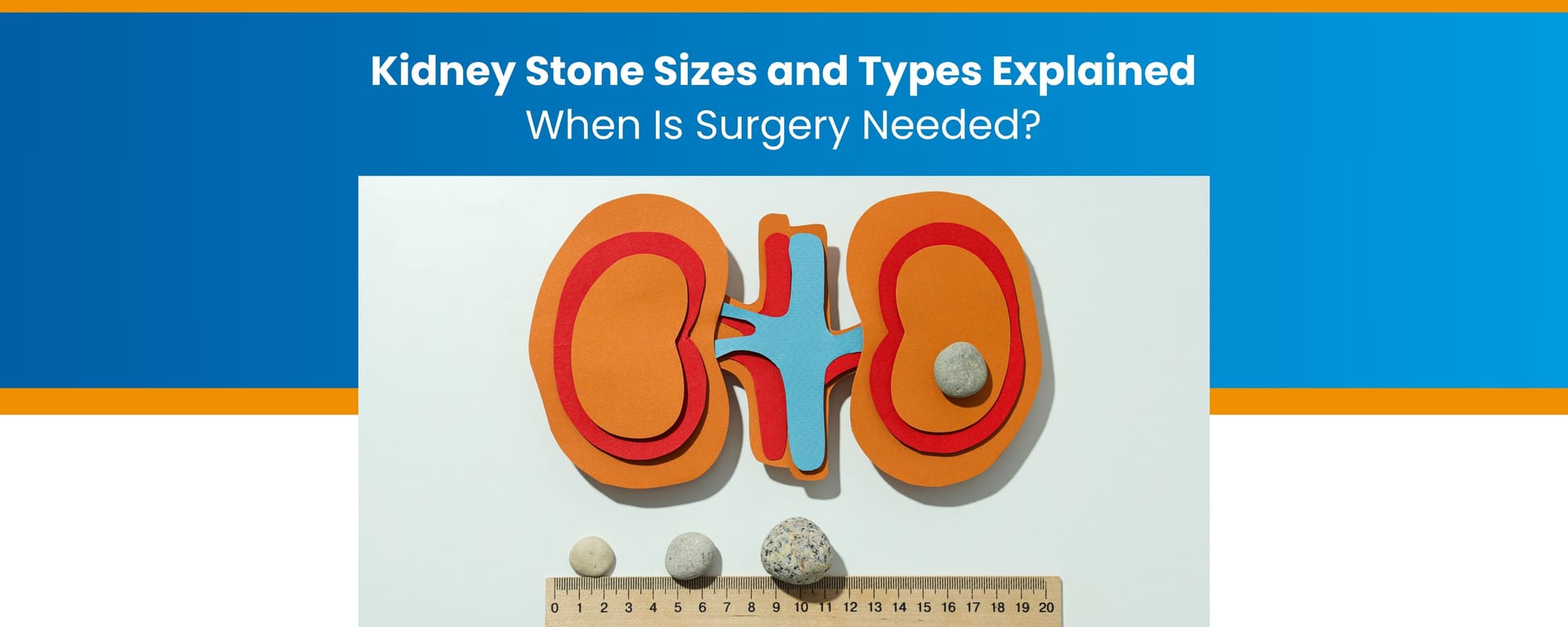
Millions across the globe suffer from kidney stones, making them a prevalent concern in urologic health. Understanding their size and type is crucial for knowing when surgery is necessary. This comprehensive guide provides a detailed size chart, explains the surgical options, examines when ureteroscopy is indicated, and offers an FAQ for patients and families seeking reliable, practical information.
Kidney Stone Size Guide: What Size Requires Surgery?
Kidney stones differ widely in size, ranging from tiny grains similar to sand to large deposits that can surpass 2 centimeters in diameter. Size is one of the most important factors influencing both symptoms and treatment decisions. The location of the stone also makes a difference. Stones more than 7 mm in the ureter and more than 10 mm in the kidney are more likely to require surgical removal
Kidney Stone Size Chart: Chances of Passing and Treatment Options
Stone Size |
Chance of Passing Naturally |
Common Symptoms |
Treatment/Management |
Less than 2 mm |
85%-90% |
None or mild |
Hydration, Pain relief |
2–4 mm |
80% |
Flank pain |
Medication |
4–6 mm |
60%-70% |
Moderate pain |
Medication, possible procedures |
6–10 mm |
30%-50% |
Severe pain |
ESWL, ureteroscopy, and possible surgery |
>10 mm |
<10% |
Obstruction, hematuria |
ESWL, URSL, PCNL, RIRS |
>20 mm (2cm+) |
Almost 0% |
Severe, persistent |
ESWL, URSL, PCNL, RIRS, ECIRS |
-
ESWL: Extracorporeal Shock Wave Lithotripsy (Non-surgical method, but Stone clearance rate 60-70%)
-
URSL: Ureteroscopic Stone Removal (Stone clearance rate: 90-94%)
-
PCNL: Percutaneous Nephrolithotomy (Stone clearance rate: 94-96%)
-
RIRS: Retrograde Intrarenal Surgery (Stone clearance rate: 85-90%)
-
ECIRS: Endoscopic Combined Intrarenal Surgery (combined PCNL with RIRS) (Stone clearance rate: 98-100%)
Kidney Stone Types and Their Significance
Kidney stones are classified based on their chemical composition, which can influence treatment:
Type of Stone |
Typical Causes |
Recurrence Risk |
Treatment Notes |
Calcium Oxalate |
High protein and salty diet with inadequate veg fibre intake, Dehydration, and rarely genetics |
High |
A smaller size needs observationLarger stones need surgical Rx |
Uric Acid |
High purine diet, dehydration |
Moderate |
May dissolve with meds |
Struvite |
Urinary tract infection |
Very High |
Often large, require surgery and complete clearanceTreat the underlying cause of UTI |
Cystine |
Genetic disorder (rare) |
High |
Difficult to dissolve, often surgery is needed |
When Is Surgery Needed for Kidney Stones?
General Indications for Surgery
-
Stone Size: Stones exceeding 7 mm in size in the ureter and 10 mm in the kidney often need surgical intervention, as their likelihood of passing by themselves is very low.
-
Obstruction with kidney damage: Stones blocking urine flow and causing hydronephrosis with deranged kidney function.
-
Recurrent Urinary Tract Infections: From stone-induced blockages.
-
Uncontrolled Pain or Bleeding
-
Failed Medical Therapy: No movement with medications for 2-4 weeks.
Ureteroscopy: Indications, Procedure, and Recovery
What Is Ureteroscopy?
Ureteroscopy (URS) is a minimally invasive endoscopic technique to treat stones in the ureter or kidney, where a thin scope passes through the urethra and bladder to the affected ureter or kidney.
When is Ureteroscopy Needed?
-
Stones between 5-20 mm: Especially if located in the ureter or renal pelvis.
-
Stones that do not respond to ESWL or other minimally invasive methods typically require more advanced surgical procedures for removal.
-
Patients With Bleeding Disorders: URS is preferred over ESWL and PCNL in those who must remain on anticoagulation therapy.
-
Pregnant Patients: When other procedures are unsafe.
Ureteroscopy Step-by-Step
-
Anesthesia: General or spinal.
-
Scope Insertion: A narrow medical scope is gently passed through the urethra, then through the bladder and ureter, to access the kidney for examination and treatment purposes.
-
Stone Identification: Direct vision or X-ray guidance.
-
Treatment:
-
Small stones: Snared and removed.
-
Large stones: Fragmented with laser and then the pieces extracted.
-
Stent Placement: Sometimes a temporary stent is placed to prevent obstruction post-op.
-
Simple Procedure: Most patients go home the next day, some need 48 hours of stay.
Recovery After Ureteroscopy
-
Mild blood tinged urine and mild discomfort for a few days are common.
-
Temporary stent may remain for 1–2 weeks and removed after 2 weeks
-
Return to normal activity usually in less than a week.
-
Risks: Small chance of infection, bleeding, or ureteral injury.