 Nephrology
 Urology
 Andrology
 Fertility (IVF)
 General Nephrology
 Paediatric Nephrology
 Dialysis
 Renal (Kidney) Biopsy
 CRRT
 Peritonial Dialysis
 Robotic Surgery
 Urinary Incontinence
 Uro-Oncology
 Laparoscopic Urology
 Reconstructive Urology
 Anaesthesiology
 Radiodiagnosis
 Nutrition and Dietetics
 Pediatric and Immunization
 Cardiology
 Intensive Care Unit





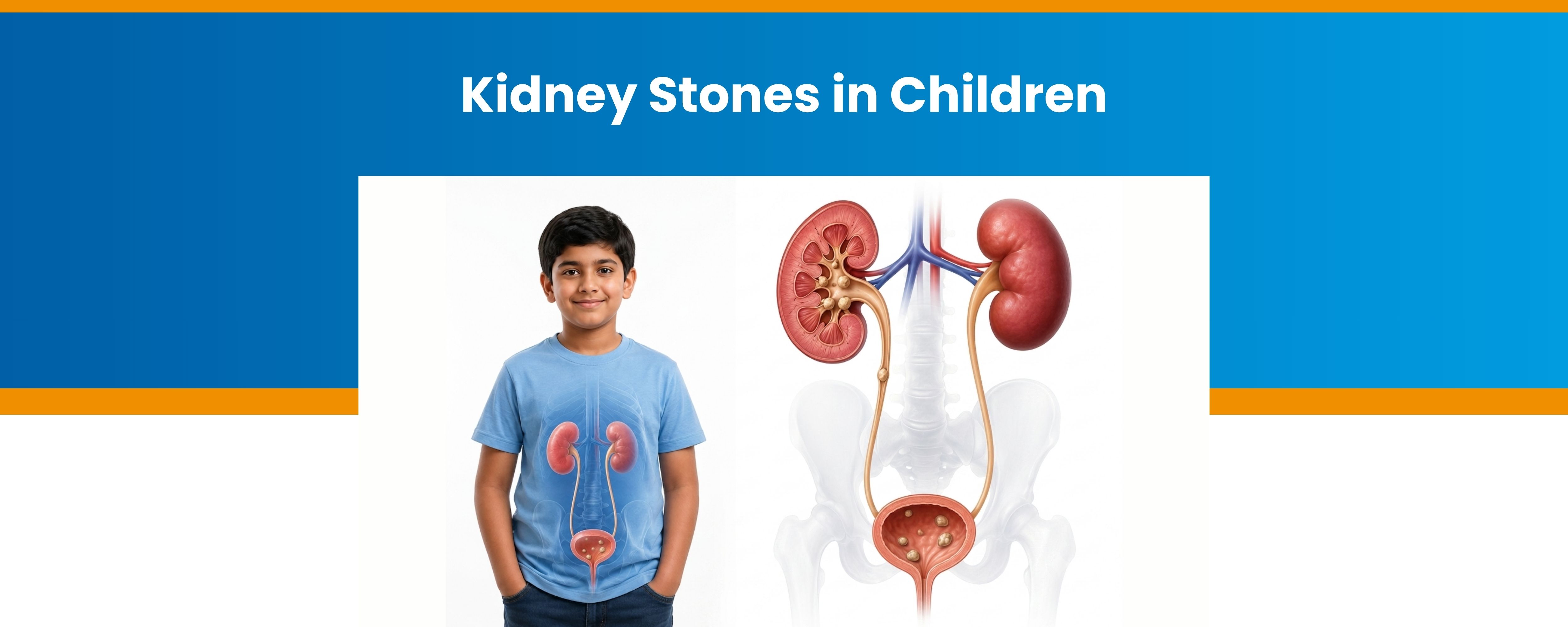
A kidney stone is a pebble-like solid that can form inside a kidney when minerals in the urine are too high. Also known as renal calculi or nephrolithiasis, kidney stones are more common in adults but can also affect children and babies. Kidney stones in kids form when there is a surplus of certain substances in urine, such as calcium, oxalate, uric acid, phosphate, or cystine, and not enough water. These substances can crystallise and gradually form kidney stones.
While kidney stones rarely result in permanent damage to a child’s health, they can cause discomfort, including sharp pain in the back, sides, lower abdomen, or groin. Some may even notice blood in the urine.
Smaller stones can easily pass through the urinary tract without causing symptoms, while larger ones can become lodged in the ureter, obstructing urine flow and causing intense, spasmodic pain known as renal colic.
It is important that a child receives appropriate medical attention so that they can pass the stones safely and manage the pain.
Types of Kidney Stones in Children
Children may develop four types of kidney stones:
Calcium Stones: The most common type of kidney stones are formed from calcium. This includes calcium oxalate and calcium phosphate, with the former being more common than the latter.
Uric Acid Stones: These kidney stones are formed when a child’s urine contains excessive amounts of uric acid. Inherited disorders and medical conditions may cause a buildup of uric acid.
Struvite Stones: Struvite stones are rather uncommon and are linked to bigger complications, like chronic urinary tract infections. These stones usually affect children whose urinary tracts haven’t developed normally, thus blocking the normal flow of urine. They are much larger in size and may have to be removed surgically.
Cystine Stones: Cystine stones occur in children with cystinuria, a genetic disorder affecting amino acid transport.
Causes of Stones in Children
Understanding juvenile kidney stone causes is essential for long-term prevention. There are a few reasons a child or teenager may develop stones:
High-Sodium Diet: This occurs when children consume food items with high levels of sodium, such as fast food, processed food, and packaged items, without checking the nutritional labels.
Medications: Urinary citrate is a natural substance found in urine that prevents the formation of kidney stones. However, certain medications can lower urinary citrate levels in a child’s body.
Medications, antibiotics, excess calcium or vitamin D supplements, and laxatives can also result in the formation of kidney stones. Make sure to consult your doctor before taking any medicine.
Pre-existing Medical Conditions: Conditions like hyperparathyroidism, cystinuria, hyperoxaluria, and hypercalciuria can cause kidney stones in children. Moreover, gastrointestinal and bowel conditions like Crohn’s disease may result in paediatric kidney stones due to excessive loss of fluid.
Low Urine Volume: When a child refuses to drink enough fluids, urine becomes concentrated as well as dark in colour. Ensuring your child is adequately hydrated reduces the risk of kidney stones forming.
Paediatric Kidney Stone Symptoms
Symptoms of kidney stones in kids and toddlers may include:
- Sharp pains in the back, side, lower abdomen, and/or groin
- Hematuria: presence of pink, red, or brown blood in a child’s urine
- Constant need to urinate
- Pain or burning sensation during urination
- Cloudy or bad-smelling urine
- Irritability
- Inability to urinate or low amounts of urine
- Fever
- Urinary tract infection
- Nausea and vomiting
Age Group |
Pain Pattern |
Urinary Signs |
Behavioral Clues |
Toddlers |
Vague abdominal pain is often described as “tummy aches.” |
Blood in the diaper or strong-smelling urine |
Irritability, excessive crying during urination, and unexplained vomiting |
School-Age |
Pain in the side or lower belly |
Visible blood in urine, frequent trips to the bathroom |
Restlessness, inability to sit still |
Teenagers |
Sharp, stabbing pain in the back or groin. |
Burning sensation or cloudy urine |
May mimic appendicitis symptoms, intense nausea |
It is important to keep an eye on your child if they show one or more of these symptoms, as early detection is key to preventing further complications such as scarring or chronic infections.
How to Prevent Kidney Stones in Kids
Drinking enough liquid, especially water, every day will prevent kidney stones in the future. When a child develops stones, healthcare professionals may prescribe certain medicines to prevent the same from happening later in life. Always consult a healthcare professional before giving your child any medicine.
Diet for Kidney Stones in Kids
Parents will have to focus on introducing lifestyle changes in their child’s routine, one of them being adequate intake of water and other liquids in order to prevent complications. For teenagers, the recommended amount of water intake is 6-8 glasses a day. Younger children may ask their trusted healthcare professional how much liquid to consume per day. Water is easily the best drink for kids with kidney stones. Other than that, cranberry juice, carrot juice, and beet juice can also be given.
It is also important to avoid foods that may result in kidney stones in children. To reduce oxalate in the body, avoid items like nuts and nut products, legumes like peanuts, spinach, and wheat bran. Consume calcium foods like milk, yoghurt, and some low-sodium cheeses. The myth that calcium-rich foods cause kidney stones in kids is a myth.
In fact, dietary calcium binds to oxalates in the gut, thereby preventing crystal formation. Consume calcium and oxalate-rich foods so that they bind to each other in the stomach before entering the kidneys. Cut back on sodium, instead. Regulate sodium intake by restricting salt consumption, especially in canned and packaged foods and fast food.
Red meat, organ meats, and shellfish increase the chances of uric acid stones as they are rich in purines. Eliminate alcohol, caffeine, salty snacks, and sugary foods like chocolate from your child’s diet.
A diet for kids is less about restriction and more about substitution. Here is how you can help your child fulfil their dietary requirements without causing them to make a fuss:
Instead of... |
Try… |
Why does it help? |
Potato chips or pretzels |
Fresh cucumber slices or unsalted air-popped popcorn |
Lowers sodium intake while keeping the child’s stomach full |
Sugary sodas and juices |
Water with squeezed lemon/lime |
Citrate naturally inhibits the growth of stones |
Spinach |
Romaine lettuce or kale |
Reduces the risk of developing calcium-oxalate stones |
Processed deli meats |
Grilled chicken or plant-based proteins |
Lowers acid load on the kidneys |
Make sure to consult a dietitian before making any changes to your child’s diet.
Treatment for Children
While some small kidney stones don’t require treatment and can pass through the urinary tract easily, larger stones require urgent treatment, especially if the child is dehydrated or vomiting. A pediatric urologist is the best choice for diagnosing and treating kidney stones.
Treatment options may include:
- Shock wave lithotripsy
- Percutaneous nephrolithotomy
- Cystoscopy and ureteroscopy
After kidney stones are removed, parents or guardians should collect urine for 24 hours to measure how much is produced in a day and determine its mineral levels.
How NU Hospitals Can Help
NU Hospitals offer a wide range of services, including diagnosis, management, and treatment of urinary and genital problems in children. We offer dedicated treatment and less-invasive methods for handling kidney stones in kids.
You may choose NU Hospitals for your children as we provide specialised care, equipment specifically designed for children, and believe in clear communication between doctors and parents regarding treatment options. Our paediatric urologists are skilled in recognising children’s needs and use child-friendly methods to reach a diagnosis.
The Nutrition and Dietetics department at NU Hospitals focuses on family-centred dietary counselling and on what can be done to achieve long-term stone prevention.







