 Nephrology
 Urology
 Andrology
 Fertility (IVF)
 General Nephrology
 Paediatric Nephrology
 Dialysis
 Renal (Kidney) Biopsy
 CRRT
 Peritonial Dialysis
 Robotic Surgery
 Urinary Incontinence
 Uro-Oncology
 Laparoscopic Urology
 Reconstructive Urology
 Anaesthesiology
 Radiodiagnosis
 Nutrition and Dietetics
 Pediatric and Immunization
 Cardiology
 Intensive Care Unit




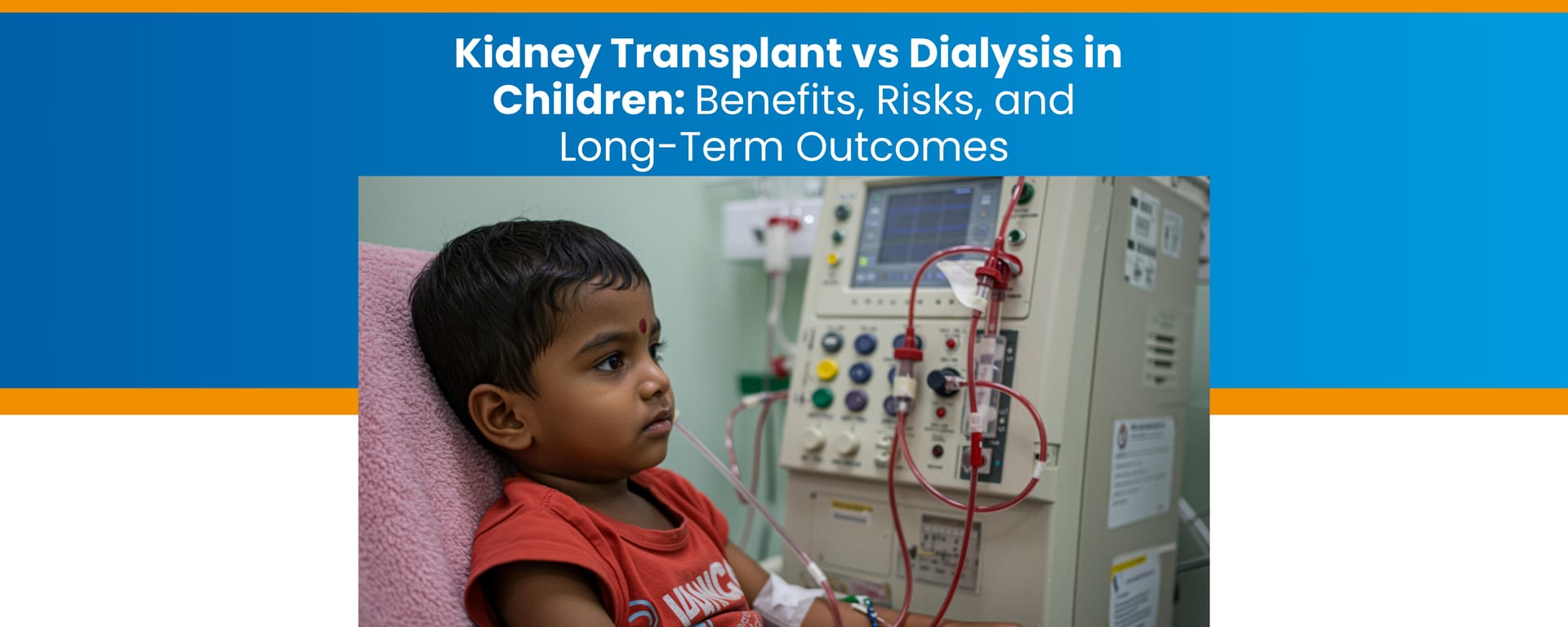
Being diagnosed with kidney disease as an adult is tough. But when it is your child who is diagnosed, it is even more difficult. As a parent, you have to make the biggest decision. That's choosing between a kidney transplant vs dialysis in children. This is one decision that is going to have an impact on you and your little one for a lifetime.
Parents, are you in that dilemma right now? Wondering what the best kidney treatment is for children? Then you are not alone.
Every parent desires their little one to live, grow, and have a happy life. While both of these treatments are life-saving for your little one, they have different results and impacts for them.
Visit NU Hospitals, Bangalore, to help you make the best decision for your little one. Our paediatric neurologists will walk you through the benefits, risks, and long-term outcomes of both these procedures for your little one.
What’s the Best Kidney Treatment for Children: Transplant or Dialysis?
Every child is different. What works for one child might not work for your baby.
Choosing between a kidney transplant vs dialysis in children will depend on several factors, such as:
-
Age
-
Overall health
-
Medical history
-
Availability of a donor kidney
To know more about each of these treatments, visit NU Hospitals and consult with Bangalore's best pediatric nephrologist & pediatric urologist.
Kidney Transplant vs Dialysis in Children: Key Differences Explained
When your child’s kidneys stop working, there are two main treatments dialysis and kidney transplant.
1. Dialysis
Dialysis is a treatment that filters waste and excess fluid from your child's blood when the kidneys are no longer working.
-
Types:
Haemodialysis:
In Haemodialysis, the blood is pumped out of the body to an artificial kidney machine and then returned again. This takes place in a hospital or clinic several times a week.
Peritoneal Dialysis:
In peritoneal dialysis, a cleaning solution is put into your child's abdomen through a catheter. The lining of your child's abdomen then filters the blood, and the fluid is drained out later. This can often be done at your home, usually overnight.
-
Frequency: Regular sessions, often 3-4 times a week for hemodialysis. Daily for peritoneal dialysis.
-
Lifestyle Impact: Major restrictions on diet and fluid intake. Frequent medical appointments. It can interfere with the school and social activities of your child.
-
Nature: Dialysis is a lifelong treatment. However, it does not cure kidney failure. It replaces some kidney functions.
2. Transplant
A kidney transplant involves surgically placing a healthy kidney from a healthy donor into your child's body.
-
Donor Types:
Living Donor:
A healthy kidney from a family member or friend is taken for this transplant.
Deceased Donor:
Here, a kidney from someone who has recently died is used for the transplant.
-
Procedure: It is a major surgery. The new kidney is placed in your child's lower abdomen and then connected to your child's blood vessels and bladder.
-
Lifestyle Impact: After recovery, your little one will typically have fewer dietary restrictions and can lead a much more active life. Regular medication (immunosuppressants) is also required to prevent rejection of the new kidney.
-
Nature: A kidney transplant is considered the closest thing to restoring most kidney functions for your little one.
Now, let us compare the two treatment procedures:
Factor |
Dialysis |
Kidney Transplant |
Process |
Machine filters waste |
A healthy kidney is placed through surgery |
Hospital Stays |
Frequent for hemodialysis, less for PD |
Initially longer for surgery, then routine checks |
Frequency |
Several times a week |
One-time surgery with follow-ups |
Lifestyle |
Several restrictions |
More freedom |
Activity |
Restricted due to fatigue and appointments |
Minimal restrictions after recovery |
Cost |
Ongoing costs |
Higher initially, eventually lower |
Emotional Impact |
Can cause anxiety, mood changes |
Better mental well-being |
Long-Term Outcomes |
Temporary solution |
Better growth & quality of life |
Long-Term Benefits and Risks of Kidney Transplant vs Dialysis for Children
The long-term outcomes of the procedure are where they differ.
How Each Treatment Affects Growth, Development, and Quality of Life
1. Growth and Development:
-
Dialysis: Children who go through dialysis often experience growth failure and delayed puberty. Your childs energy levels will often be low, which will impact their physical activity.
-
Kidney Transplant: A successful transplant will significantly improve your childs the growth and development.
2. Quality of Life:
-
Dialysis: Life on dialysis is quite challenging for children. They will have to spend several hours connected to machines, miss school, and social events. Most of the time, the constant medical routine can lead to anxiety and depression.
-
Kidney Transplant: Post-transplant, the quality of life for your little one will improve a lot. Your child will be able to attend school regularly, participate in sports, and enjoy a more normal childhood.
3. Long-Term Health:
-
Dialysis: Dialysis usually comes with its own set of complications. Over time your child may get bone disease, heart problems, anemia, or repeated infections.
-
Kidney Transplant: A transplant offers your child a longer and healthier life expectancy in comparison to long-term dialysis.
Did you know? The success rate of kidney transplants in children is quite high. It is often over 90% for one-year graft survival.
Consult Bangalore's Best Pediatric Nephrologist & Pediatric Urologist at NU Hospitals Bengaluru
Making the right decision for your child’s kidney health is one of the most important decisions you’ll ever make as a parent.
Therefore, it is important that you choose Bangalore's best pediatric nephrologist & pediatric urologist. They will help you make the right decision.
At NU Hospitals Bangalore, we will answer all your questions on kidney transplant vs dialysis in children.








