 Nephrology
 Urology
 Andrology
 Fertility (IVF)
 General Nephrology
 Paediatric Nephrology
 Dialysis
 Renal (Kidney) Biopsy
 CRRT
 Peritonial Dialysis
 Robotic Surgery
 Urinary Incontinence
 Uro-Oncology
 Laparoscopic Urology
 Reconstructive Urology
 Anaesthesiology
 Radiodiagnosis
 Nutrition and Dietetics
 Pediatric and Immunization
 Cardiology
 Intensive Care Unit





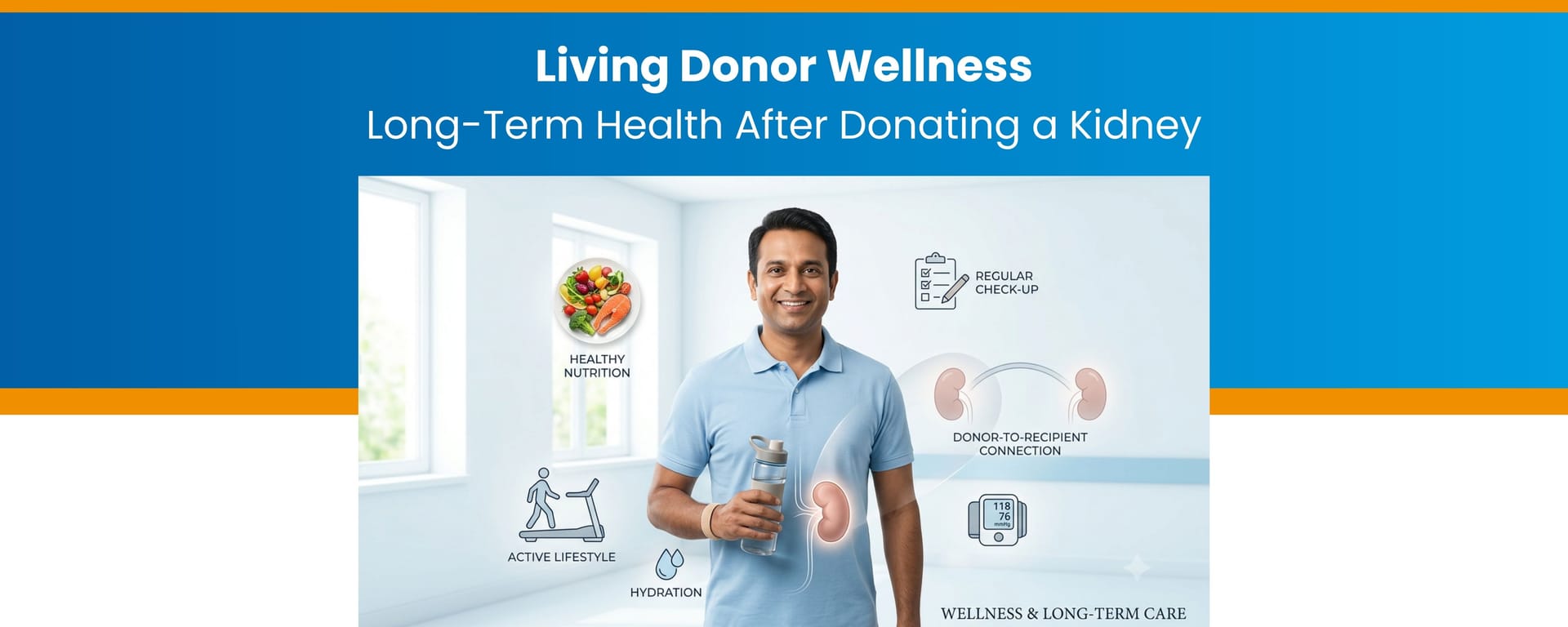
The success of kidney transplantation relies heavily on the health and availability of living donors. From a professional medical perspective, maintaining the donor’s safety is the highest priority. Investigating long-term health after kidney donation is a prerequisite for any transplant program. This article walks through the stages of donor wellness and what life looks like after the hospital. By focusing on the benefits and the simple routine of follow-up care, we show how you can stay healthy after giving.
Understanding Living Kidney Donation
Living kidney donors are healthy people who choose to donate a kidney to help a transplant patient. Since humans can live perfectly well with just one kidney, this procedure is possible without compromising the donor's survival. Before the operation, every donor must pass several strict medical, mental health, and lifestyle checks. These tests ensure that the donor will remain healthy right after surgery and for the rest of their life.
The thoroughness of this screening process is why donors usually have such positive outcomes. Only the healthiest candidates with very low risks are cleared to donate.
Long-Term Health After Kidney Donation
It is common to feel cautious about your future health after becoming a donor. Please be at ease knowing that extensive studies consistently show long-term health after kidney donation is comparable to that of the general population. This is because your body is smart. After you give one kidney away, the one you keep grows a little and works harder. This allows it to do the work of two kidneys and keep you healthy.
Studies show that donors do not die younger than people who have both kidneys. Most donors maintain healthy kidney function for the rest of their lives. You just need to take care of yourself by watching your weight and your blood pressure. This research shows that you can be a donor and still live a long, healthy, and happy life, knowing your body can handle the change.
Life After Donating a Kidney
After you donate a kidney, life usually goes back to the way it was. You will stay in the hospital for a few days and then rest at home. In about two months, you will feel strong enough to do everything you did before. You can work, go on trips, and exercise. Your life will be very normal, and you can be happy knowing you did something very kind for someone who was sick.
Taking care of yourself is part of living kidney donor wellness. Being a donor makes many people feel proud and happy. To keep your one kidney healthy, you should eat good food and drink lots of water. Exercise is also essential for your body. It is best to never smoke. If you do these simple things, you will stay healthy for a long time. This allows you to enjoy your life while knowing you saved another person's life.
Risks and Benefits for Kidney Donors
Every candidate should weigh the risks and benefits for kidney donors before proceeding with surgery.
Potential Risks
Immediate risks include infection and bleeding, but these are rare in experienced centres. Long-term, there is a little possibility of high blood pressure or a slight dip in kidney function. Protein in the urine may also occur in some cases. However, the absolute risk of significant kidney disease remains very low. Most donors live long, healthy lives without substantial medical issues resulting from their choice, provided they continue to follow a healthy lifestyle and attend their scheduled medical check-ups for years to come.
Key Benefits
While you don't get a physical health boost from the surgery, the mental and emotional rewards are life-changing. Most donors feel a tremendous sense of fulfilment and pride in their decision. If you are donating to someone you know, the relief of seeing them recover is an incredible benefit that lowers your own stress. From a broader view, your choice helps everyone by taking a person off the long waiting list and increasing the chances of a successful transplant. Being direct about these facts ensures you can make a choice based on truth and feel good about your future health and your generous gift.
Living Kidney Donor Wellness and Lifestyle Choices
To protect your health, maintaining kidney donor wellness is a lifelong commitment. While your remaining kidney is strong enough to power your body, you must take active steps to prevent unnecessary strain on it.
We advise all donors to:
-
Manage their weight effectively
-
Limit salt and processed food intake
-
Exercise regularly and moderately
-
Drink plenty of fluids daily
-
Avoid NSAID medications/painkillers
Following these rules reduces stress on your remaining kidney. Because kidney function and heart health are closely linked, these habits protect your entire body from future complications.
Follow-Up Care for Kidney Donors
To stay healthy, you need a plan. Follow-up care for kidney donors is a straightforward checklist of actions to protect your remaining kidney. Follow-up appointments typically include:
-
Blood pressure monitoring
-
Blood tests for kidney function
-
Urine tests for protein
-
Check-ups for sugar and cholesterol
Following this routine helps you detect potential issues early so you can take action. Most programs encourage donors to continue these annual check-ups with a doctor for life. Consistent follow-up care for kidney donors ensures any health changes are addressed promptly.
Addressing Common Myths
Several misconceptions exist regarding life after donating a kidney. Many believe donors must follow a strict lifestyle permanently. In reality, donors live everyday, active lives. Common misconceptions include:
-
Permanent restrictive living
-
No participation in sports
-
No strenuous exercise
-
Limited physical activity
Once recovered, donors return to running, swimming, and strength training. Evidence-based information dispels these myths. This allows potential donors to decide based on facts rather than fear. Clear communication ensures that the reality of post-donation life is understood by everyone involved in the process.
Conclusion
Giving a kidney is a big choice. Most people find that their long-term health after kidney donation stays excellent. If you are healthy and get regular check-ups, you can continue to live a whole life. Staying active and eating well are the best ways to protect your health. Donation is a way to help others while staying healthy yourself.







