 Nephrology
 Urology
 Andrology
 Fertility (IVF)
 General Nephrology
 Paediatric Nephrology
 Dialysis
 Renal (Kidney) Biopsy
 CRRT
 Peritonial Dialysis
 Robotic Surgery
 Urinary Incontinence
 Uro-Oncology
 Laparoscopic Urology
 Reconstructive Urology
 Anaesthesiology
 Radiodiagnosis
 Nutrition and Dietetics
 Pediatric and Immunization
 Cardiology
 Intensive Care Unit




Are you experiencing a burning sensation while urinating? Are you having constant back pain? Has your urine been smelling a little strange? Are you ignoring all these symptoms and things that will pass with time?
You are not alone.
It often starts small. You experience little discomfort and a slight urgency. Most people think it is a simple urinary infection. You wait for it to pass; however, sometimes, it does not. Instead, the infection travels upward and reaches your kidneys, turning into something much more serious that requires proper treatment for Acute Pyelonephritis.
A severe kidney infection is your body’s way of asking for attention. You can experience symptoms such as high fever, chills, sharp back (more specifically flank) pain, and even nausea or vomiting. Ignoring these warning signs can lead to long-term issues such as renal scarring and other serious kidney infection complications.
However, the good news is that with the right care, it is completely treatable. Early diagnosis and timely medication can help you recover quickly and safely.
When it comes to treating serious conditions such as a kidney infection, the quality of care you choose matters. NU Hospitals is known for its specialised approach to urology and nephrology. We offer personalised care for conditions that need timely and precise treatment.
Our team of experienced urologists and kidney specialists is trained to handle everything from early-stage infections to severe cases. At NU Hospitals, every patient receives the right Acute Pyelonephritis treatment based on their condition. Our doctors not only focus on treating the infection but also on preventing long-term conditions such as renal scarring and other kidney infection complications.
Follow this blog to learn more about severe kidney infection symptoms and pyelonephritis treatment options.
What is Acute Pyelonephritis?
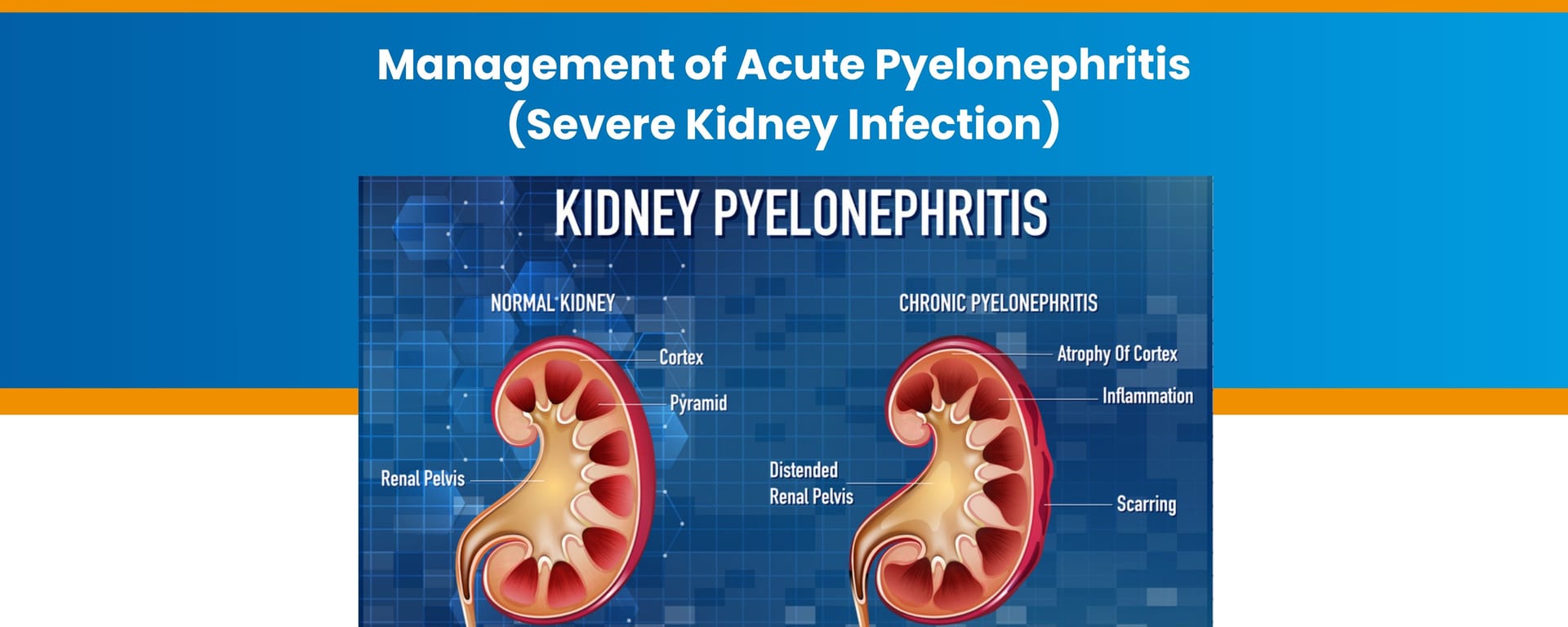
Acute Pyelonephritis is a sudden and severe infection of the kidneys. It usually starts as a urinary tract infection (UTI) and travels upward.
It is a type of upper urinary tract infection. It affects one or both of your kidneys and requires urgent medical attention.
This condition requires more aggressive acute pyelonephritis treatment than a UTI. If left untreated, it can also lead to permanent damage to your kidneys or life-threatening blood infections.
Severe Kidney Infection Symptoms
Understanding the severe kidney infection symptoms early can make all the difference.
-
Flank Pain
This is the main symptom. It is a deep, throbbing ache in your side or mid-back.
-
High Fever
You may experience a high fever, such as 101°F (38.3°C) or higher.
-
Chills and Shaking
You may experience intense chills that may make your teeth chatter.
-
Nausea and Vomiting
You may not be able to keep food down.
-
Urinary Distress
Burning when you urinate, or a constant feeling that you want to urinate.
-
Pus or Blood
Your urine might look cloudy, smell strange, or have a pinkish tint.
-
Confusion
In adults, mental fog or delirium is a major warning sign.
If you are experiencing these symptoms, don’t wait. Early treatment can prevent complications such as renal scarring.
What are the causes of Acute Pyelonephritis?
The infection usually begins in your bladder and moves upward. It may happen due to:
-
Bacteria are moving "upstairs" from your bladder.
-
Rarely, an infection elsewhere in your body travels through the blood to your kidneys.
-
Kidney stones or an enlarged prostate can trap urine, creating a breeding ground for bacteria.
-
Conditions such as diabetes make it harder for your body to fight off invaders.
-
Some people are born with conditions that lead to renal scarring over time if infections happen.
Other Risk Factors of Kidney Infection are:
-
Women (shorter urethra)
-
Pregnancy
-
Diabetes
-
Catheter use
-
Frequent UTIs
Kidney Infection Complications
Ignoring your symptoms or delaying care can lead to serious kidney infection complications.
Complications:
-
Renal scarring (permanent kidney damage)
-
Chronic kidney disease
-
Kidney abscess
-
Sepsis (life-threatening infection)
-
Recurrent infections
These complications are the reason why Acute Pyelonephritis treatment should never be delayed.
How is Kidney Infection Diagnosed?
Our doctors at NU Hospitals conduct several tests to diagnose you with a kidney infection. This helps to make sure you get the best treatment for your condition.
-
Urinalysis
This helps to check for white blood cells, bacteria, and nitrites.
-
Urine Culture
It grows the bacteria in a lab to see which antibiotic kills it best.
-
Blood Tests
This helps to check for a high white blood cell count or bacteria in the blood.
-
Imaging
A CT scan or Ultrasound helps to check for stones or existing renal scarring.
Differences between Cystitis (Bladder) and Pyelonephritis (Kidney)
Feature |
Cystitis (Bladder Infection) |
Pyelonephritis (Kidney Infection) |
Location |
Bladder |
Kidneys |
Severity |
Mild to moderate |
Severe |
Fever |
Rare |
Common (high fever) |
Pain |
Lower abdomen |
Back/flank pain |
Nausea/Vomiting |
Rare |
Common |
Risk |
Low |
High (can lead to sepsis) |
Treatment |
Oral antibiotics |
Oral or IV antibiotics for kidney infection |
How is Kidney Infection Treated?
Our doctor at NU hospitals will choose a proper treatment plan for you according to your condition.
1. Home Care (for mild cases)
If you can keep fluids down and don't have a high fever, you might get oral antibiotics. You will need to take the full course, usually 7 to 14 days.
2. Hospitalization (for severe cases)
You may need to be admitted if you are dehydrated, pregnant, or if you show signs of sepsis.
-
IV Antibiotics for kidney infection: This is the fastest way to get medication into your system to stop the damage.
-
Pain Management: Medicines to manage the flank pain.
-
Fluid Replacement: IV fluids to flush your kidneys and prevent dehydration.
3. Follow-up
You are not done after the pain stops. A follow-up urine culture is often needed to make sure the bacteria are totally gone. This also helps to prevent kidney infection complications.
Recovery and Follow-Up
Your recovery will depend on the severity of your condition.
What to Expect:
-
Your symptoms will improve within 2–3 days of treatment
-
Full recovery may take 1–2 weeks
-
Follow-up urine tests may be required
Important:
-
Complete the full course of antibiotics
-
Do not stop medication early
How to Prevent Kidney Infections
Here is how to keep your kidneys healthy:
-
Drink an adequate amount of water to flush bacteria out of your urinary tract.
-
Don't hold your urine when you feel the urge.
-
Wipe from the front to back. This is important for women to prevent the transfer of E. coli bacteria.
-
Urinate after intercourse. This helps to flush out any bacteria that has entered your urethra.
-
Managing diabetes and keeping your blood sugar in check, helps your immune system to stay strong.
Why Choose NU Hospitals for Acute Pyelonephritis Treatment?
When it comes to something serious as a kidney infection, you need care that is precise and reliable. NU Hospitals is known for its specialised expertise in urology and nephrology, making it a trusted choice for acute pyelonephritis treatment.
At NU Hospitals, you get:
-
Expert specialists
-
Early & accurate diagnosis
-
Advanced treatment protocols
-
24/7 emergency care
-
Focus on preventing long-term damage
-
Personalised patient care








