 Nephrology
 Urology
 Andrology
 Fertility (IVF)
 General Nephrology
 Paediatric Nephrology
 Dialysis
 Renal (Kidney) Biopsy
 CRRT
 Peritonial Dialysis
 Robotic Surgery
 Urinary Incontinence
 Uro-Oncology
 Laparoscopic Urology
 Reconstructive Urology
 Anaesthesiology
 Radiodiagnosis
 Nutrition and Dietetics
 Pediatric and Immunization
 Cardiology
 Intensive Care Unit




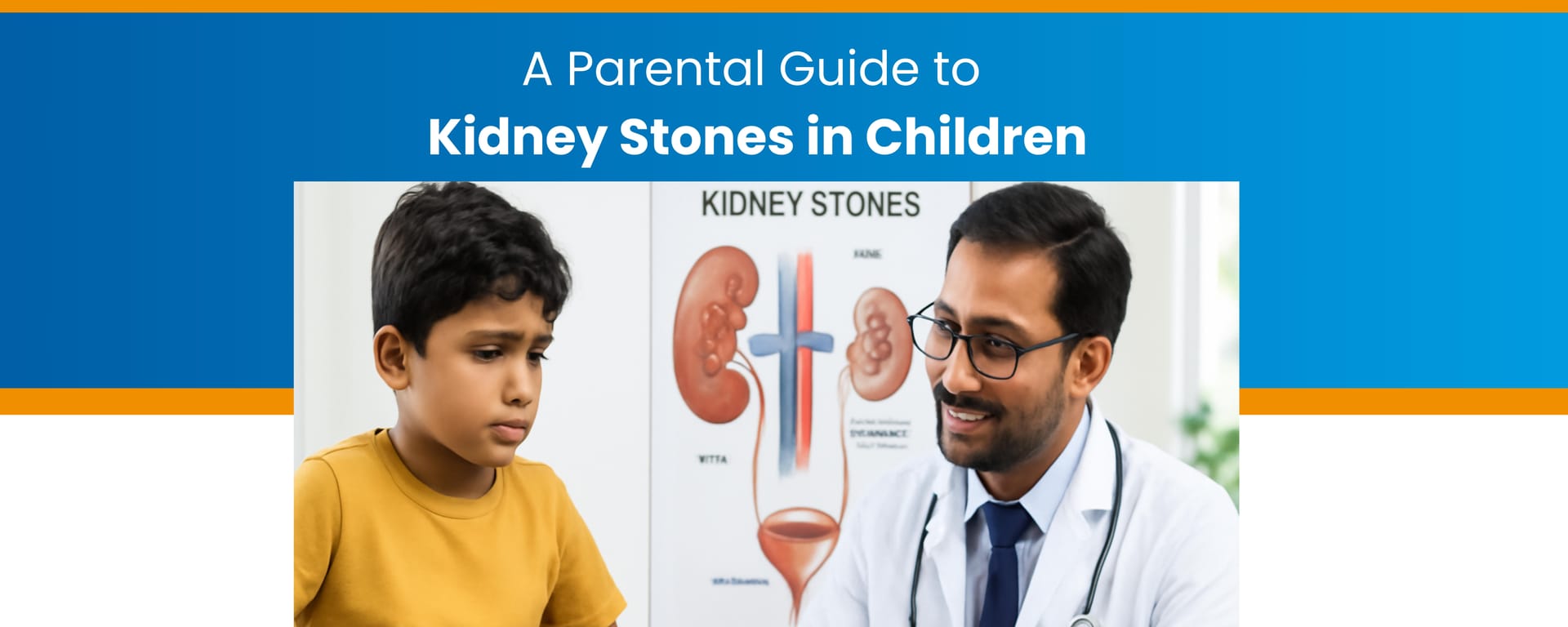
Kidney stones in our little ones may be more common than we think.
To learn more about the causes, symptoms and treatment options for kidney stones in children, please read on.
What are Kidney Stones?
Kidney stones are solid, mineral deposits that form in the kidney when high amounts of certain minerals accumulate in the kidneys.
These stones can vary from sand-like particles to golf ball-sized ones.
Understanding the causes of kidney stones in kids can often help parents ensure proper care for their little ones.
What Causes Kidney Stones in Children?
A search needs to be made for specific factors that contribute to stone formation in children:
-
Obstruction to Urinary Flow
A blockage of the urine flow anywhere from the kidney and the bladder predisposes to stone formation. A simple ultrasound of the abdomen may be a good way to start looking for a possible obstruction.
-
Genetics
If there is a family history of kidney stones, your little one is more likely to get kidney stones. Testing in a genetic laboratory may be needed in a select group of children.
-
Underlying Medical Conditions
Conditions such as hypercalciuria (high calcium levels in the urine) or obesity can be the cause of kidney stones for your child. A condition where the kidneys produce very acid urine can also be of
What are the Symptoms of Kidney Stones in Children
The symptoms of kidney stones in children can often be challenging to identify. However, there are certain visibly common signs you must look out for:
-
Pain in the Lower Back or Side
Your child might experience sharp pain in their lower or side. However, the pain might come and go as the stone moves.
-
Painful Urination
Your child might experience a painful or burning sensation while urinating. Smaller children who are not able to speak may cry while passing urine.
-
Frequent Urination
Your little one might have the urge to urinate frequently.
-
Blood in the Urine
Blood in urine commonly known as hematuria, is one of the signs of kidney issue.
-
Nausea and Vomiting
Your child might experience nausea or vomiting.
-
Fever
Fever in your little one may indicate an infection caused by a kidney stone.
If you notice any of these symptoms of kidney stones in children, you must seek medical assistance immediately.
Diet Tips for Children with Kidney Stones
A well-balanced diet for children with kidney stones can help to deal with kidney stones and prevent future stone formation. Here are a few dietary regulations to manage kidney stones for your little ones:
-
Hydration
Hydration for kids with kidney stones plays a major role. Make sure your child is drinking an adequate amount of water throughout the day. While measuring water intake or urine output in children is difficult, a rough measure is that they must pass urine 7-8 times a day.
-
Reducing Salt Intake
Consuming excessive amounts of salt can increase the amount of calcium level in your child's urine. This raises the risk of kidney stones. Foods such as snacks, canned foods, and fast-food must be avoided.
-
Avoiding Sugary Drinks
High fructose beverages and sugary sodas can contribute to kidney stone formation. You should encourage your child to consume natural fruit juices.
-
Increasing Calcium Intake
Calcium from natural sources such as milk and cheese helps in preventing kidney stones.
-
Increasing dietary fiber
A diet where 70% of the plate is covered with vegetables, fruits, pulses and salads is a good way of reducing the risk of repeated stone formation.
Pediatric Kidney Stone Treatment
Pediatric kidney stone treatment depends on the size and severity of the stone in your child's body. Here are a few of the common treatment options available for your child:
-
Increased Fluid Intake
This is the first line of treatment for your child if the stone is small. Hydration for kids with kidney stones is key as it helps to prevent stones from becoming bigger.
-
Pain Relief
Your pediatrician might prescribe over-the-counter pain medications. This helps to relieve mild to moderate pain caused due to kidney stones. In case of severe pain, visit the emergency department.
-
Medications
In the small group of children with pure uric acid stones, your pediatrician might recommend certain long-term medications to help dissolve the kidney stones. Calcium oxalate stones, which are the most common, cannot be dissolved.
-
Surgical Removal
Surgical procedures for stone removal are now routinely performed where needed.
-
Ureteroscopy
For stones that are difficult to pass on their own, a small camera is inserted into your child's urinary tract to remove or break the stones using laser fibers.
-
PCNL
For larger stones in the kidneys, a tiny telescope is passed directly into the kidneys to break them into fragments.
If your child is suffering from kidney stones, it can be a scary experience. But parents, you must not worry. With proper care and treatment kidney stones in children can be managed effectively.
By understanding the causes of kidney stones in kids you can now keep your child away from harm's way.
Two key factors parents must remember to help beat kidney stones are: to follow the right diet for children with kidney stones and to focus on hydration for kids with kidney stones.
Parents stay proactive and don't forget to consult your Pediatric Urologist if you notice any signs of discomfort in your child.








