 Nephrology
 Urology
 Andrology
 Fertility (IVF)
 General Nephrology
 Paediatric Nephrology
 Dialysis
 Renal (Kidney) Biopsy
 CRRT
 Peritonial Dialysis
 Robotic Surgery
 Urinary Incontinence
 Uro-Oncology
 Laparoscopic Urology
 Reconstructive Urology
 Anaesthesiology
 Radiodiagnosis
 Nutrition and Dietetics
 Pediatric and Immunization
 Cardiology
 Intensive Care Unit




Your kid may not understand when something is wrong with their body. Their bodies are quite strong. Hence, it is quite difficult to diagnose their conditions.
Diagnosing glomerulonephritis in children can be quite difficult. The signs can be subtle.
It is a condition where your child's kidneys’ filters have become inflamed. The kidney filters work silently every day. They clean the blood and remove waste. When they stop working properly, you may notice subtle signs such as little swelling, less urine, sudden weight gain, or blood in the urine.
Glomerulonephritis in children is quite common. In most cases, it is also treatable. With early diagnosis, the right care, and proper follow-up, your children may live a completely healthy life.
It can be quite tricky for both parents and children. We at NU Hospitals are here to help you get clarity regarding this condition. From diagnostic tests to personalized treatment plans, our focus is on healing your child.
Follow this guide to help you understand glomerulonephritis, recognize early symptoms, and learn about the different types.
What is Glomerulonephritis in Children
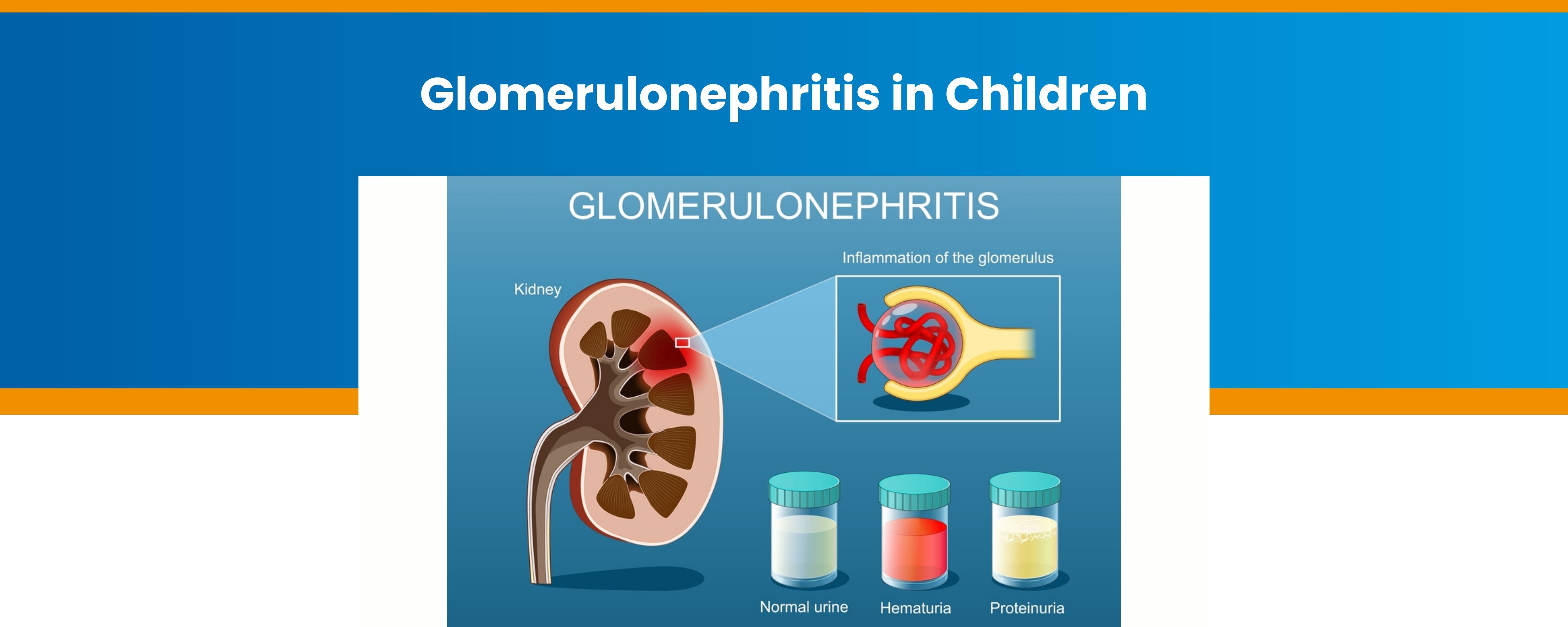
Glomerulonephritis means inflammation of the glomeruli. They are the tiny clusters of blood vessels in your child's kidneys that act as filters.
The glomeruli clean your child’s blood by removing waste and extra fluid. When they are inflamed, the kidneys cannot work properly.
In your children, this may cause:
-
Blood or protein leaking into urine
-
Swelling in the face, hands, or feet
-
High blood pressure
-
Less urine output
This condition can happen suddenly after an infection or develop slowly over time.
Causes and Types of Glomerulonephritis in Children
Not all kidney inflammation is the same.
Understanding the different types of glomerulonephritis will help your doctors find the perfect treatment for your child.
-
Post-Streptococcal Glomerulonephritis (PSGN)
This is the most common type. It usually happens a week or two after a throat or skin infection. Your child's immune system overreacts and suddenly attacks their kidneys.
-
IgA Nephropathy
This is also known as Berger’s disease. This happens when an antibody called IgA builds up in the kidney tissue.
-
Lupus Nephritis
Autoimmune conditions, such as Lupus, cause your child’s body to attack its own organs, including the kidneys.
-
Membranoproliferative GN
It is a complex type where your child's immune system causes structural changes in the kidney filters.
-
Hereditary Nephritis
Sometimes, it’s just in the genetics, such as Alport Syndrome.
Common Symptoms of Glomerulonephritis in Children
Children are not great at explaining how they feel. So parents, you need to be very cautious. Look out for these symptoms of glomerulonephritis:
-
Blood in Urine
Urine that looks dark, brown, or cola-colored. This is caused by blood leaking into your child's bladder.
-
Puffy Eyes
If your child has puffy eyes, especially in the morning. This is often the first sign of fluid retention.
-
Swollen Feet and Ankles
You might notice your child’s shoes getting a little tight.
-
Less Urine Output
Your child might go to the bathroom less than usual.
-
Foamy Urine
Foamy or bubbly urine can indicate that protein is leaking through your child’s urine.
-
Feeling Tired
General fatigue, loss of appetite, or an unusual paleness can also be symptoms of glomerulonephritis.
-
Body Pain
Sometimes your children may complain of body aches or headaches due to high blood pressure.
Diagnosis and Treatment for Glomerulonephritis in Children
Early diagnosis can make a huge difference. At NU Hospitals, our doctors are specialised in diagnosing pediatric conditions.
How to Diagnose Glomerulonephritis :
-
Urinalysis
A simple urine test to check for blood and protein in your child's urine.
-
Blood Tests
This helps to check how well your child’s kidneys are clearing out waste.
-
Ultrasound
A painless procedure that helps to get a picture of your child’s kidneys to see their size and shape.
-
Kidney Biopsy
In some cases, a tiny sample of tissue is taken to see exactly what is happening inside the body.
The Treatment for Glomerulonephritis:
The goal of treatment for glomerulonephritis is to protect your child’s kidneys and control the symptoms.
-
Blood Pressure Medicine
These medicines will help to take the pressure off your child’s kidneys.
-
Diuretics
These will help your child’s body get rid of extra fluid and salt.
-
Antibiotics
If the inflammation was caused by a bacterial infection, your doctor may prescribe antibiotics.
-
Corticosteroids
Corticosteroids can help to calm down an overactive immune system.
-
Diet Changes
Reducing salt and sometimes protein or potassium from your child’s diet can give their kidneys a little rest.
Why choose NU Hospitals for the treatment of Glomerulonephritis in Children
When it comes to your child’s health, you want the best. NU Hospitals, Bengaluru, is a pioneer in nephrology.
Here is why we are the right choice for your child:
-
Pediatric Specialists: We don't just treat children. We personalise treatment for your little one.
-
Cutting-Edge Tech: From advanced imaging to the latest in biopsy techniques, we have it all.
-
Holistic Support: We provide nutritional counseling and proper support for your little one.
-
Proven Track Record: Our success rates in managing complex pediatric kidney cases are among the best in the country.
Having your child diagnosed with glomerulonephritis can feel very overwhelming and scary. But remember, your childs kidneys are quite resilient, and so are little ones! With the right treatment for glomerulonephritis, most kids are back to being themselves in no time.
If you are worried about your little one's kidney health, reach out to the experts who care. At NU Hospitals, Bengaluru, your child receives the expert kidney care they deserve.
Book a consultation with the best pediatric nephrologist in Bangalore today at NU Hospitals.








