 Nephrology
 Urology
 Andrology
 Fertility (IVF)
 General Nephrology
 Paediatric Nephrology
 Dialysis
 Renal (Kidney) Biopsy
 CRRT
 Peritonial Dialysis
 Robotic Surgery
 Urinary Incontinence
 Uro-Oncology
 Laparoscopic Urology
 Reconstructive Urology
 Anaesthesiology
 Radiodiagnosis
 Nutrition and Dietetics
 Pediatric and Immunization
 Cardiology
 Intensive Care Unit




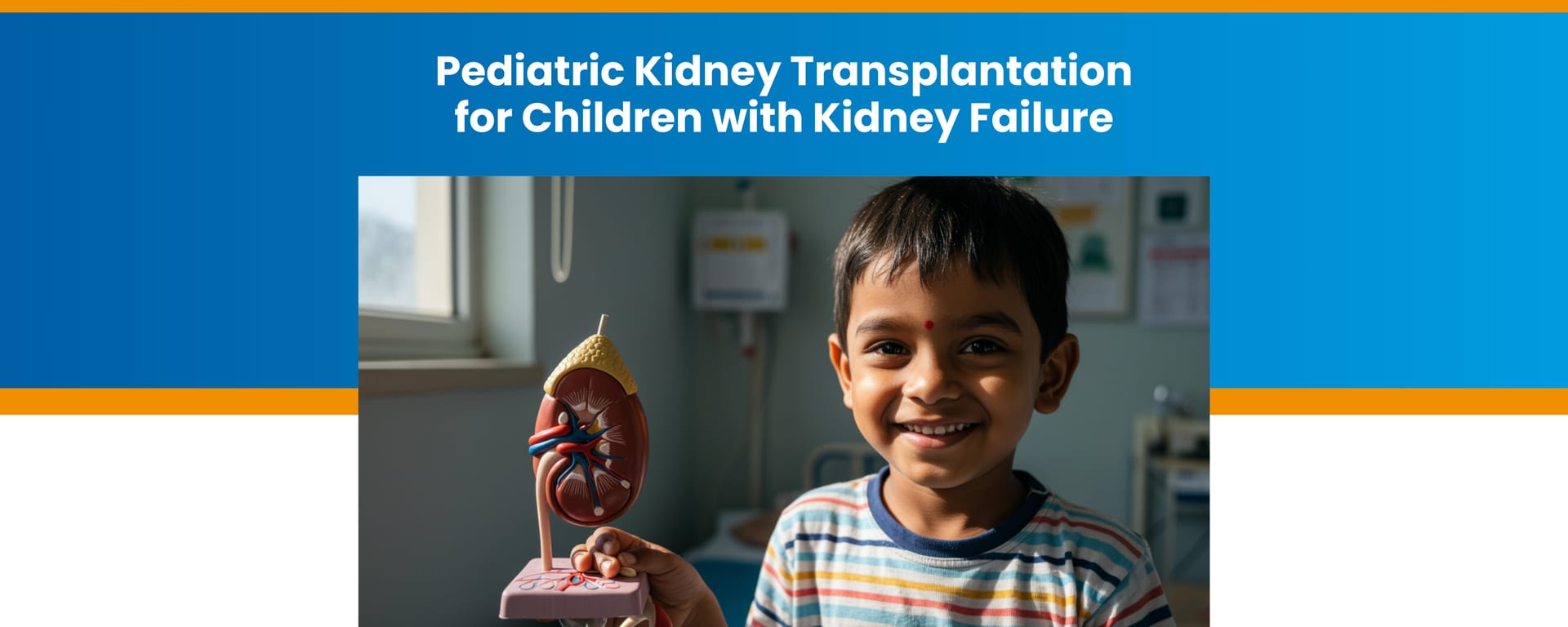
If your little one is suffering from kidney disease? Has your paediatric nephrologist recommended a kidney transplant for children?
Don’t worry, parents. We understand how scary it can feel at first. But with the best team of nephrologists and urologists by your side, you're not alone.
At NU Hospitals, we have the best pediatric transplantation team for your little one. We will give your little one a second chance at life from conditions such as kidney failure in children.
We are dedicated to providing your child with the best possible future.
What Causes Kidney Failure In Children
Parents, your little one might be experiencing kidney failure in children due to several reasons. Here are a few of the most common causes:
-
Congenital Abnormalities
Few kids are born with conditions such as posterior urethral valves or renal dysplasia. This can eventually lead to chronic damage for your little one.
-
Genetic Disorders
Genetic conditions such as Polycystic Kidney Disease (PKD) or Alport syndrome can lead to progressive kidney failure in your kids.
-
Infections
Repeated urinary tract infections, or complications from diseases like hemolytic uremic syndrome, can also result in kidney failure in children.
-
Nephrotic Syndrome
If your little one has nephrotic syndrome and becomes resistant to treatment, it can eventually cause permanent kidney failure.
If your little one is battling with any of these conditions, your pediatric neurologist may suggest pediatric transplantation as a form of treatment.
Pediatric Kidney Transplant Procedure And Benefits
Parents, before your little one goes for a pediatric kidney transplant procedure, are you having any questions? Are you wondering why transplantation is better than long-term dialysis? Here is a list of the benefits of kidney transplantation:
-
Better Growth and Development
Children on dialysis may grow slowly. However, a transplant allows normal growth for your little one.
-
Improved Quality of Life
A kidney transplantation will mean fewer hospital visits and dietary restrictions for your child.
-
Longer Survival Rates
A pediatric kidney transplant allows your little one to live longer and healthier lives than on dialysis.
-
Emotional Healing
A kidney transplant for children means your little one will be able to go to school, play, and live a life like other kids.
A kidney transplant for children is more than a medical procedure. It is going to be their second chance at life.
Kidney Transplant for Children Success Rate
The success rate of kidney transplants for children is quite high.
-
The one-year survival rate is over 90%.
-
The 10-year survival rate is around 70-80% when it comes to kidney transplants for children.
-
Living donor kidney transplants have better outcomes, but deceased donor kidney transplants also yield good outcomes.
Specific Considerations in Pediatric Transplantation
When it comes to pediatric kidney transplant, your little ones will require special care to address their needs. There are several unique factors that you will need to consider.
-
Immune System Response
Your little ones are more prone to rejection. Therefore, immunosuppressants must be balanced carefully.
-
Growth and Hormonal Changes
Post-transplant care must support the physical development of your child.
-
Psychological Support
Transplants can be emotionally overwhelming for your little one. Hence, pediatric care for your child must include mental health support.
-
Family-Centric Approach
Parents and siblings are essential partners in recovery and ongoing care. Make sure to take extra care of your little one.
What Makes NU Hospitals Unique for Pediatric Kidney Transplantation
NU Hospitals stands out as one of India's most trusted centers for pediatric transplantation because of its holistic and high-quality care.
Why NU Hospitaals stands out:
-
Child-Friendly Environment
At NU Hospitals, we care for your little one. We provide them with a supportive and stress-free environment.
-
Specialized Care
Our team of expert pediatric nephrologists and surgeons specializes in diagnosing and treating urological conditions unique to your little ones.
-
Advanced Technology
We utilize the most advanced diagnostic tools and surgical techniques to give your little one the best care.
-
Comprehensive Services
From pre-transplant evaluations to post-transplant follow-up and nutritional management, we provide a full spectrum of care to your little one.
At NU Hospitals, we treat your child as a priority. We make sure they are comfortable at all times and receive the best care.
Watching your little one struggle with kidney failure in children can be quite challenging. But it does not have to be the story for your child. With a kidney transplant for children, give your little one a second chance at life.








