 Nephrology
 Urology
 Andrology
 Fertility (IVF)
 General Nephrology
 Paediatric Nephrology
 Dialysis
 Renal (Kidney) Biopsy
 CRRT
 Peritonial Dialysis
 Robotic Surgery
 Urinary Incontinence
 Uro-Oncology
 Laparoscopic Urology
 Reconstructive Urology
 Anaesthesiology
 Radiodiagnosis
 Nutrition and Dietetics
 Pediatric and Immunization
 Cardiology
 Intensive Care Unit




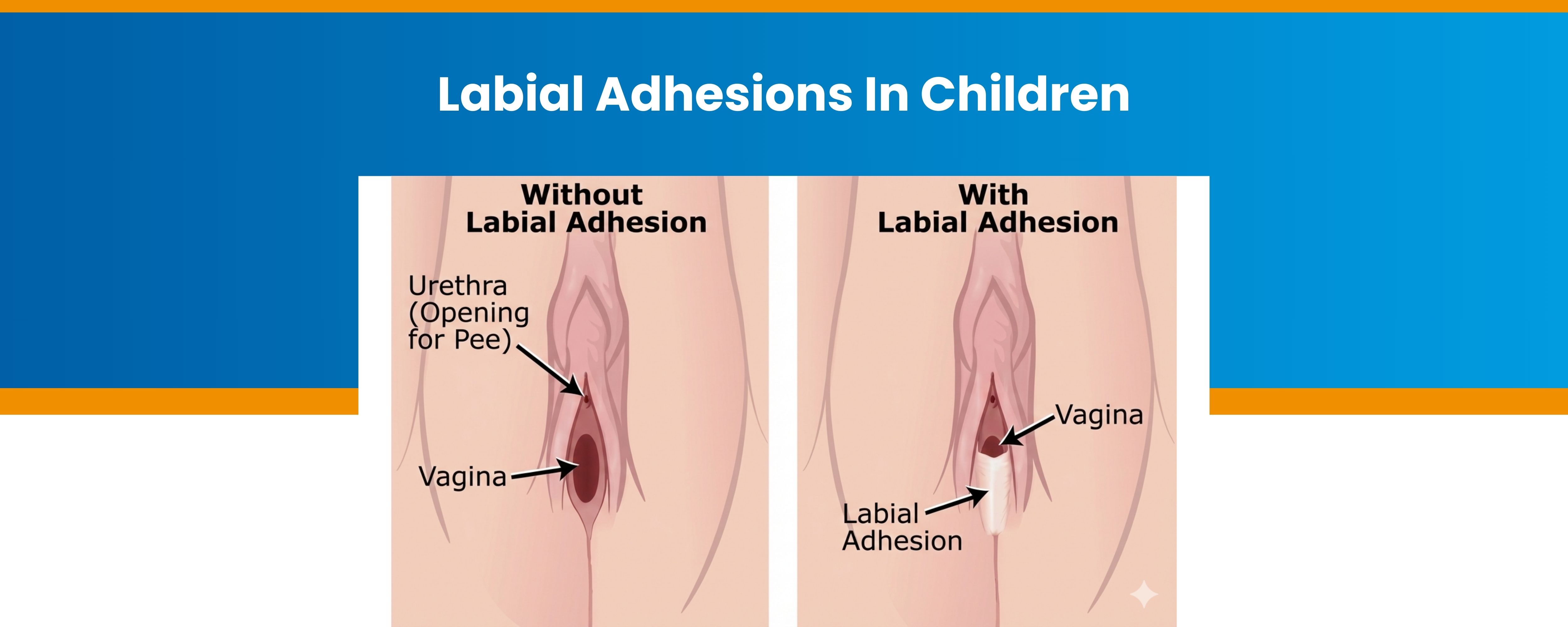
Parent, did you notice something strange in your little one? Has your doctor diagnosed your daughter with a condition known as labial adhesions?
Don't worry, parents. This condition is not as serious as it sounds. Labial adhesions in children are quite common. It affects about 2% of pre-pubertal girls. This condition is most commonly seen in toddlers between the ages of one and two years.
While this condition can be quite concerning, it is a temporary condition.
At NU Hospitals, Bangalore, we have the best specialists to guide you and your little one through this condition.
Go through this blog to learn more about this condition, labial adhesion diagnosis, and
labial adhesion treatment.
What Are Labial Adhesions in Children?
Labial adhesions in children occur when the inner folds of skin around the vaginal opening get stuck together. This may create a thin membrane that can partially or completely cover your child's vaginal opening.
The condition is also known as labial agglutination or fused labia. The adhesion can be a partial translucent line down the middle.
In certain severe cases, the adhesion can only leave a tiny opening for urine to pass.
Most labial adhesion cases are harmless and are usually discovered by chance during a routine diaper change or bath time.
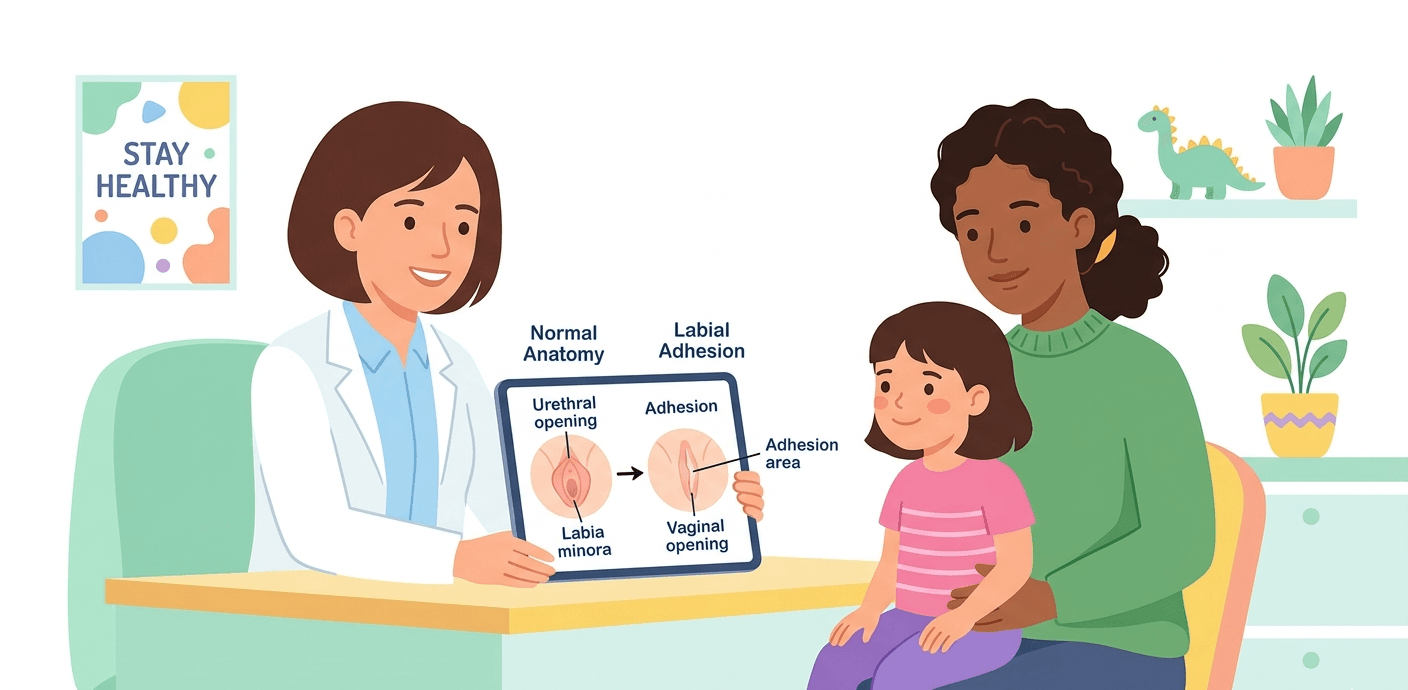
What Causes Labial Adhesions?
Parents' understanding of labial adhesion causes will help you understand the condition better. It can be caused due to:
-
Low estrogen levels in prepubertal girls.
-
Irritation or inflammation from urine, stool, or poor hygiene.
-
Diaper rash or wearing a diaper for too long.
-
Poor hygiene, such as not wiping correctly from front to back.
-
Vulvovaginitis (inflammation of the vulva and vagina).
-
Using perfumed soaps, bubble baths, or harsh detergents.
-
Tight-fitting clothing or synthetic underwear.
Common Symptoms of Labial Adhesions: What Should Parents Notice?
In most cases, there are no symptoms of labial adhesions. Oftentimes, parents are shocked to learn that their little one has labial adhesions.
However, if you are looking for symptoms of labial adhesions in your child, look out for:
-
Urinary dribbling
Urine may get trapped behind the labia, causing a small amount to leak out after your child has finished urinating.
-
Abnormal urine stream
The stream may spray sideways instead of flowing straight down when your child is urinating.
-
Recurrent Urinary Tract Infections (UTIs)
The urine getting trapped behind the adhesion can become a breeding ground for bacteria, leading to frequent infections for your child.
-
Pain or soreness
Your child may complain of discomfort, especially when urinating.
-
Vaginal discharge
Secretions can sometimes get trapped, leading to a build-up and a possible infection.
How Are Labial Adhesions Diagnosed in Children?
Labial adhesion diagnosis is done with the help of a simple physical examination. It is a painless and quick procedure.
No invasive tests are done. So parents, you don't have to worry that your little one will not be in pain.
What Are the Treatment Options for Labial Adhesions?
The treatment for labial adhesion will depend on the severity of the condition.
Observation and Natural Resolution
Most labial adhesions in children go away naturally. As your little one grows and their estrogen levels rise, the conditions may go away.
If your daughter does not show any symptoms, they may recommend waiting and naturally healing. 80% of such conditions get better within one year naturally.
Medical Treatments for Labial Adhesions
If your little one is showing symptoms, then your doctor might suggest labial adhesion treatment as the next step.
-
Topical Estrogen Cream
Tropical estrogen cream is the most common treatment. The estrogen in the cream will cause the delicate tissue to thicken and separate. This method has a high success rate, with studies showing separation in 80-90% of cases within a few weeks.
-
Topical Steroid Cream
Steroid creams, such as betamethasone, can be used. They work by reducing inflammation in the area.
When Is Surgical Treatment Needed?
Surgical labial adhesion treatment is usually considered the last resort. It is only recommended for:
-
Adhesion is complete and blocks urine flow.
-
Repeated infections happen.
-
Pain and discomfort become significant.
Home Care Tips and Ways to Prevent Labial Adhesions
Good hygiene is the most important step when it comes to labial adhesion prevention.
-
Wipe correctly
Teach your child to wipe from front to back after using the toilet. This will help to avoid bringing bacteria from the rectum to the vulva.
-
Use gentle products
Avoid any harsh, perfumed soaps, bubble baths, or wipes with strong chemicals. Use only warm water and a mild, unscented soap.
-
Change diapers frequently
For your babies and toddlers, change wet diapers often to prevent irritation.
-
Proper clothing
Choose loose-fitting, breathable cotton underwear. Avoid tight pants or leggings.
When Should Parents Consult a Paediatric Urologist?
If you notice that your child is suffering from any of the following symptoms:
-
Difficulty peeing, pain, or frequent infections
-
The adhesion fully blocks the vaginal opening
-
Labial adhesions don’t respond to creams or keep coming back
-
The child is older, past puberty, and adhesions haven’t resolved
Then you must not wait any longer and take your little one to a paediatric urologist.
The best pediatric urologist will help to confirm the condition and help you choose the perfect treatment for your child.
Labial Adhesions Treatment in Bangalore at NU Hospitals
Parents, when it comes to the health of your little one, you must never compromise. You should always choose the best. NU Hospitals, Bangalore, is one of the most prestigious and leading hospitals in Bangalore for treating pediatric urology and nephrology conditions.
Bring your little one to NU Hospitals to get them the best care.








