 Nephrology
 Urology
 Andrology
 Fertility (IVF)
 General Nephrology
 Paediatric Nephrology
 Dialysis
 Renal (Kidney) Biopsy
 CRRT
 Peritonial Dialysis
 Robotic Surgery
 Urinary Incontinence
 Uro-Oncology
 Laparoscopic Urology
 Reconstructive Urology
 Anaesthesiology
 Radiodiagnosis
 Nutrition and Dietetics
 Pediatric and Immunization
 Cardiology
 Intensive Care Unit





It is very confusing and heartbreaking to see your child struggling with urination. When a kid faces problems with bladder control, urine frequency and infections, it is stressful for both you and the child.
According to a study by Dr. Prasanna Venkatesh and team, it was found that the prevalence of nocturnal enuresis in Indian children aged 6-12 was 7.6% and 16.3%.
Our Pediatric Urology department at NU Hospitals is a one-of-a-kind, dedicated centre of excellence. Our experts focus on finding the root cause of the urinary and bladder disorders. Your child’s health is safe in the hands of NU Hospitals’ paediatric urologist.
We understand that every child is different; they require extensive comfort and emotional care.
You can find precise diagnostics, gentle care, tailored treatment options, and a child-friendly environment for urodynamics and neuro-urology care.
Follow this blog to learn about paediatric urodynamics and neurourology.
What Are Paediatric Urodynamics and Neurourology?
Have you ever wondered what could be the real cause of your child’s urinary problems?
Let us understand how the bladder and nervous system work together; this is the first step toward better urinary health.
Definition and Importance
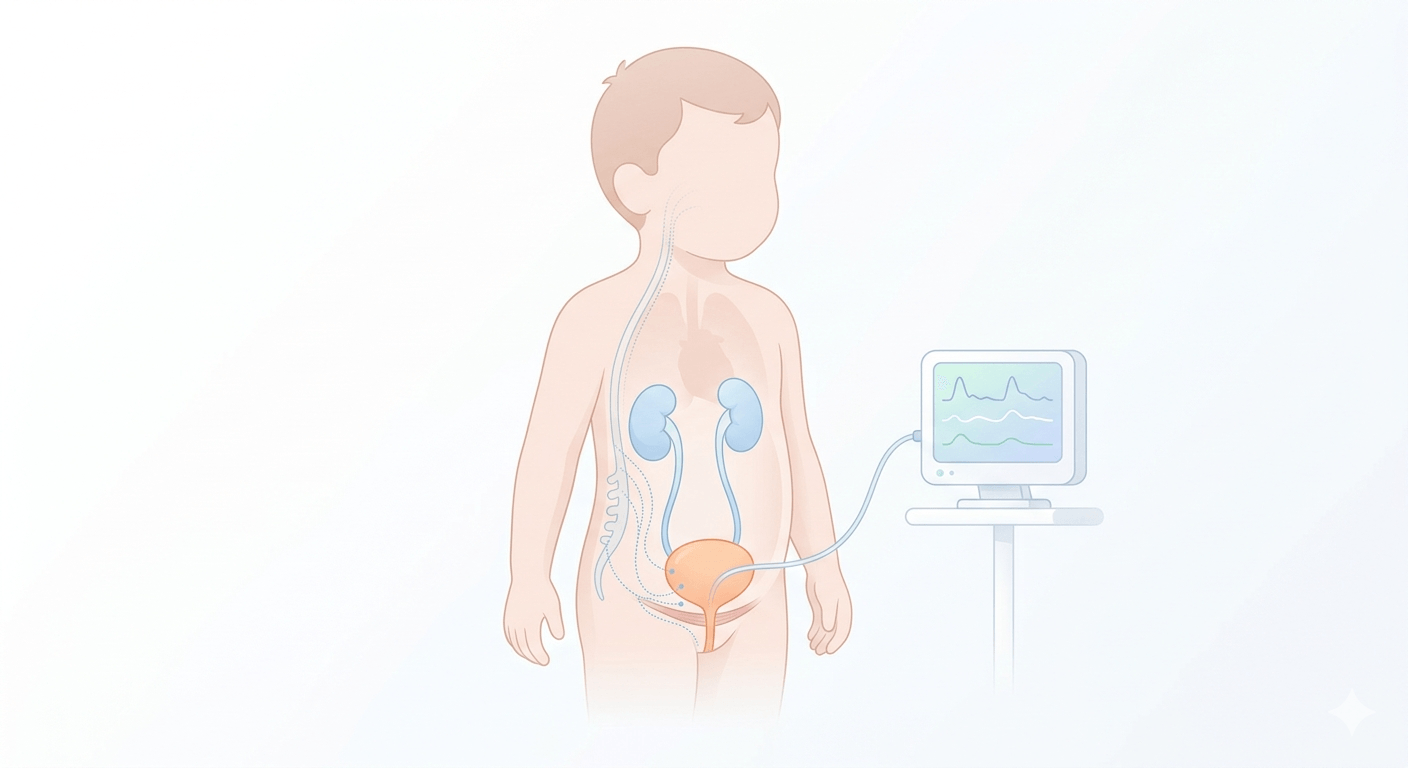
Paediatric urodynamics is a diagnostic test that measures the wellness of your child’s bladder and urinary system functions.
Neurourology is a medical field dealing with the connection between the nervous system and bladder control.
In simple terms, these tests help us understand why your child is facing the following problems.
-
Difficulty holding urine
-
Urine leakage
-
Frequent urination and leakage accidents
-
Recurrent UTIs
-
Cannot empty the bladder completely
After carefully understanding bladder function tests and neuro-urological control in children, we offer accurate and the best treatment options for your child’s condition.
Common Conditions Treated
Our experts treat a wide range of paediatric urinary and neuro-urological conditions, including:
Condition/Disease |
Description |
Treatment Procedure |
Neurogenic bladder |
Caused due to nerve issues in the spine or brain |
Urodynamic testingMedicationSurgery in rare cases |
Vesicoureteral reflux (VUR) |
When the urine flows backwards (bladder to the kidneys) |
ObservationMedicationMinimally invasive correction surgeries |
Dysfunctional voiding |
The bladder muscles do not relax well during urination |
Bladder trainingBiofeedback therapy |
Recurrent infections |
Frequent infections (more than twice or 3 times in 6 months to 1 year) |
Antibiotic medicationLifestyle changesBladder monitoring |
Posterior Urethral Valves (PUV) |
Boys with a blockage in the urethra |
SurgeryUrodynamic follow-ups |
These may sound scary, but do not worry! Early detection and timely evaluation can help your child recover effectively.
Indications for Paediatric Urodynamic Testing
A few signs call for closer and deeper evaluation. Detecting these early signs can indicate a pediatric urodynamic testing.
When Is Evaluation Necessary?
Tests are not mandatory for every child; they become necessary if:
-
Persistent urinary incontinence
If you notice incontinence beyond potty training years
-
Recurrent UTI
UTIs are occurring frequently, even with medication
-
Congenital anomalies
If your child is dealing with some conditions like spina bifida or posterior urethral valves
-
Neurological disorders
When your baby’s bladder function is disrupted due to brain or spinal problems
-
Urine Retention
If your child is retaining urine frequently or is struggling to empty the bladder completely
We focus on treating the root cause for better outcomes, and your child is not prone to future kidney or bladder problems.
How Tests Guide Treatment Plans
Diagnostic tests are not just numbers; they guide treatment decisions. They play a major role in tailoring medication, behavioural therapy, or surgery.
It helps the doctor:
-
The cause of the disease (muscle, nerve or structure related)
-
If your child requires medication, physical therapy or surgery
-
Track progress
Our expert pediatric urologist will customise a care plan that is safe and effective for your child’s condition and overall health.
Pediatric Urodynamic Testing Procedures
It is normal to worry about your child’s tests. But these tests are done to reassure you and your little one.
Types of Tests
There are a few tests used to confirm the diagnosis. We use state-of-the-art tools and world-class technology specific to child-friendly tests.
The main urodynamic test types include:
-
Uroflowmetry
To measure the flow and pattern of urination.
-
Cystometry
To study the bladder pressure, it measures how much the bladder can hold and how it reacts when it's full.
-
Electromyography
To check for electrical activity of the muscles used for urination. (bladder and pelvic muscles)
-
Video urodynamics
It is a combination of X-ray imaging and bladder pressure measuring. It helps to check how the bladder works in real time.
What to Expect During Testing
You need not worry about these tests if they are comfortable for your little ones. But be assured that at NU Hospitals, you will find a child-friendly environment with all safety measures.
-
Our team is well-trained to handle children with gentle communication. They explain every step to parents and children.
-
We have a dedicated area with toys to reduce stress
-
These procedures have no needles, minimal pain, or discomfort.
-
All tests are performed under strict hygiene and safety standards
-
Also done under mild anesthesia (or) sedoanalgesia in children.
Treatment Approaches for Paediatric Urinary Disorders
At times, children need more than just management. Pediatric urinary problems affect their school, play, peace and confidence. Here are a few treatment options to treat your child from urinary problems
Non-Invasive Treatments
Not every condition requires surgery. Here are a few non-invasive treatments:
-
Behavioural therapy (Biofeedback)
This helps your child learn how to relax and tighten bladder muscles
-
Bladder training
Helps them to create toilet schedules and healthy habits
-
Medications
Some meds help relax bladder muscles, control overactivity and manage infections.
-
Diet Management
Changes in fluid and food intake to maintain healthy bladder function
Minimally Invasive and Surgical Options
When medication and lifestyle changes do not work, surgery might be required. We specialise in minimally invasive laparoscopic and robotic surgical options.
A few common surgical treatment options are:
-
Botox injections
These are used to relax overactive bladder muscles
-
Reconstructive procedures
Surgeries to correct congenital anomalies, structural problems and dysfunctions
These surgeries help with preserving kidney and bladder health.
Why Choose NU Hospitals for Paediatric Urodynamics and Neurourology?
Choosing the best and right care is essential; it is about trust, technology and experts. Here is why millions of parents in Bangalore choose NU Hospitals.
Experienced Paediatric Urologists and Multidisciplinary Care
Behind every successful treatment, there is a team that listens and heals. We have globally trained paediatric urologists in Bangalore. They work with other experts from nephrology, paediatricians, physiotherapists and child psychologists to make sure your child receives holistic care.
-
Every case is reviewed by multiple experts
-
Every treatment modality is tailored and backed by success
-
Emotional and psychological support
Advanced Technology and Patient-Centred Approach
We use the latest diagnostic and minimally invasive techniques and tailor treatments for every child. We are one of the few centres with dedicated paediatric testing for symptoms.
We ensure:
-
Accurate diagnosis
-
Minimal discomfort
-
Quicker recovery








