 Nephrology
 Urology
 Andrology
 Fertility (IVF)
 General Nephrology
 Paediatric Nephrology
 Dialysis
 Renal (Kidney) Biopsy
 CRRT
 Peritonial Dialysis
 Robotic Surgery
 Urinary Incontinence
 Uro-Oncology
 Laparoscopic Urology
 Reconstructive Urology
 Anaesthesiology
 Radiodiagnosis
 Nutrition and Dietetics
 Pediatric and Immunization
 Cardiology
 Intensive Care Unit




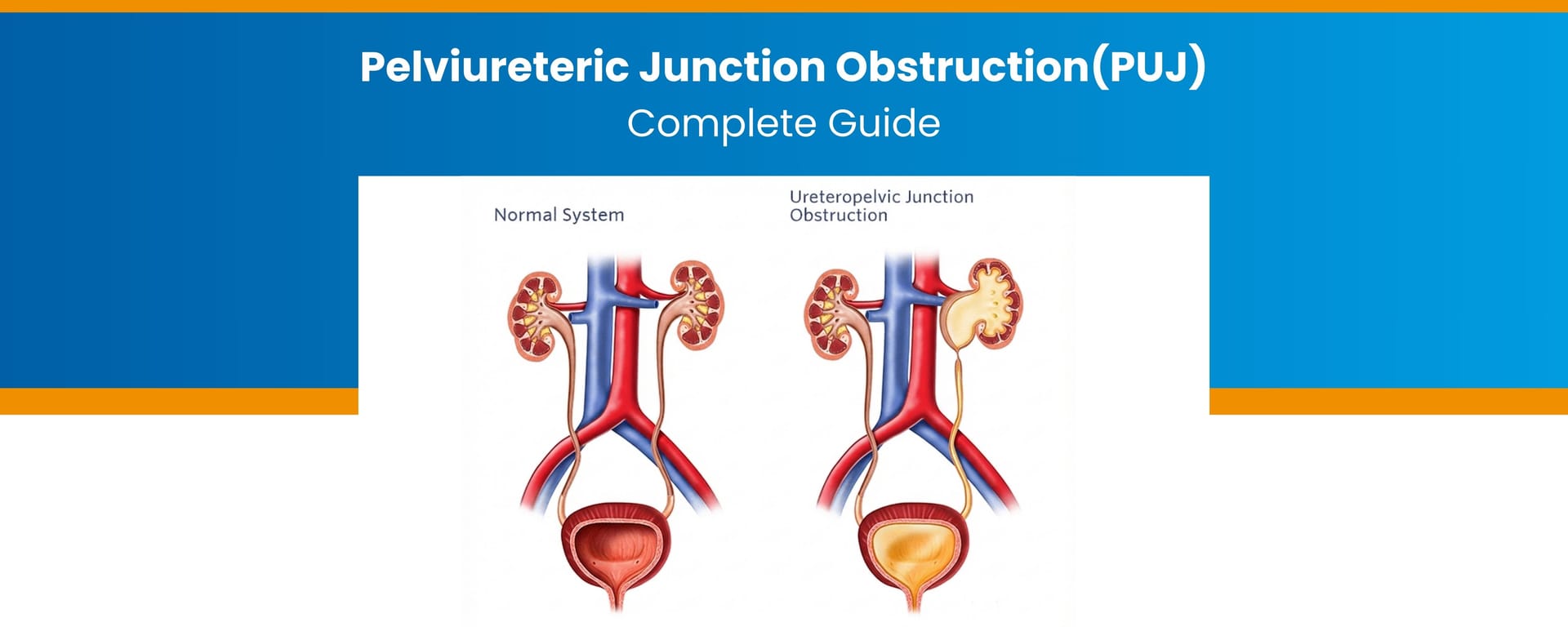
Pelviureteric Junction Obstruction (PUJ) is also known as Ureteropelvic Junction Obstruction (UPJ). This is a condition in which the urine flow from the kidneys to the bladder is partially or completely blocked.
PUJ may occur for various reasons; it can affect both children and adults. Prolonged or untreated blockage can lead to major kidney problems like kidney swelling, hydronephrosis, and even kidney damage.
Did you know that Pelviureteric Junction Obstruction is the major and most common cause of congenital hydronephrosis (Hydronephrosis since birth).
According to a study published in Wolters Kluwer, ureteropelvic junction obstruction affects about 1 in 500 to 1500 newborns.
PUJ is more common in baby boys than in girls. NCBI study reveals a gender ratio of 3-4:1.
The frequency of the left side getting affected is higher than the occurrence in the right side.
Approximately 10-40% cases are bilateral.
PUJ is usually present at birth because of inadequate recanalisation (no opening) of the ureter during the development stage.
It is quite rare that adults acquire PUJ, but it can be treated with timely intervention. You can see improved outcomes with early detection and treatment.
It might sound scary with all the numbers and long-term effects. But do not worry, you are not alone. We make sure you regain better health with the right medical care.
At NU Hospitals, our expert team of pediatric and general urologists are specialised in treating PUJ obstruction with advanced surgical techniques like Laparoscopy and Robotic-assisted systems.
This article helps you understand about pelviureteric junction obstruction, its causes, symptoms to look out for and when you should seek medical help.
Read on and find out how NU Hospitals, Bangalore, helps patients like you regain a quality of life.
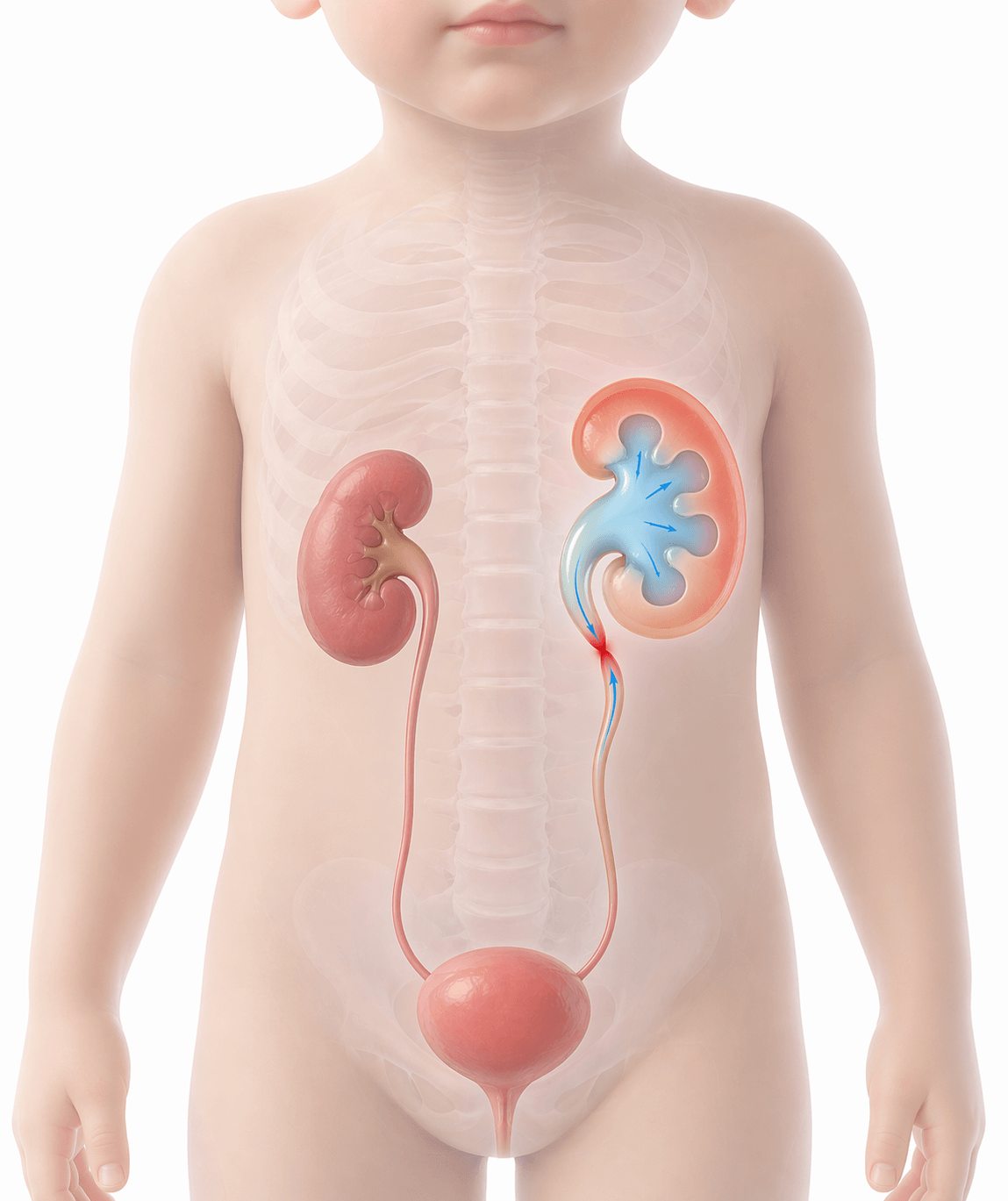
PUJ in Children vs Adults: Key Differences and Risks
The causes, symptoms, and treatment vary for both children and adults with PUJ obstruction. Depending on the age, PUJ obstruction presents differently.
Feature |
Children |
Adults |
Cause |
Most pediatric cases are congenital, meaning present since birth.Abnormal development of the ureter and surrounding tissues |
Usually acquired cases due toKidney stonesScar tissueTumours |
Symptoms |
Back/flank painUrinary tract infections (UTIs)Swelling in the abdominal regionPoor growth in severe cases |
Back/flank painRecurrent UTIsKidney StonesBlood in Urine |
Detection |
It is usually detected in prenatal scans or in the early infant stage through imaging tests |
During imaging tests for kidney problems |
Risk of kidney damage |
There is a high chance that it is not treated early. |
There might be gradual damage, and the risk increases with recurrent infections or obstruction. |
Dear parents, remember that early detection can help your child by preserving kidney function. The damage can be prevented, and they can have a better quality of life.
Elder patients should also get evaluated for kidney stones, UTIs and unexplained flank pain.
Early Signs and Symptoms of Pelviureteric Junction Obstruction
With early detection of warning signs and symptoms of UPJ obstruction, you can prevent many long-term complications.
A few common early signs and symptoms of PUJ obstruction include:
-
Flank pain
-
Discomfort in the abdominal region
-
Recurrent UTIs
-
Nausea
-
Vomitting
-
Abdominal bulging in pediatric cases
-
Blood in urine
-
Poor growth in children
Diagnosis of PUJ: Tests, Imaging, and Latest Technologies
PUJ obstruction can be diagnosed with clinical evaluation, imaging and functional tests. Our experts would recommend:
-
Ultrasound
An ultrasound of the kidneys and ureter will be done to detect swelling of the kidney (hydronephrosis)
-
Renal Scan
Diuretic renography is a kidney scan that measures kidney function and urine drainage. This scan helps in understanding the severity of the obstruction.
-
CT/MRI Urography
For complex cases when ultrasound is not enough, a CT or an MRI will be suggested for detailed imaging. (Rarely done)
-
Blood Test
Blood tests are done to check for kidney function
-
Urine Test
To check for any infection
-
Intravenous Pyelogram
This is a traditional method of imaging for complex cases. This is rarely used to visualise obstruction and kidney function.
Treatment Options for PUJ: Surgical and Non-Surgical Approaches
The treatment options vary based on the severity of the obstruction, age of the patient, and the symptoms.
A few significant treatment options include:
1. Non-surgical Management
For minor asymptomatic cases with normal kidney function. Involves medication for infections, regular monitoring and lifestyle modifications. You would be advised to get regular renal scans to track any progression.
2. Surgical Management
Surgery is recommended when there is significant obstruction, kidney damage and recurrent UTIs
-
Open Pyeloplasty
It is a traditional method of surgery. A direct incision is made to remove the obstruction and reconstruct the tract.
-
Laparoscopic Pyeloplasty
A minimally invasive laparoscope is used for the surgery. Used for older children and adults.
-
Robotic Pyeloplasty
Modern robotic-assisted surgeries offer better precision, minimal scarring and faster healing.
Recovery from PUJ
Minimally invasive procedures offer:
-
Less pain
-
Shorter hospital stay
-
Quick recovery
-
High precision
-
Minimal scarring/trauma
-
Faster healing
Children usually stay for 2-5 days and can see full recovery in 4-6 weeks. While adults might stay for 2-7 days and can return to normal activity within 4 weeks after an open pyeloplasty.
Potential Complications from Untreated PUJ
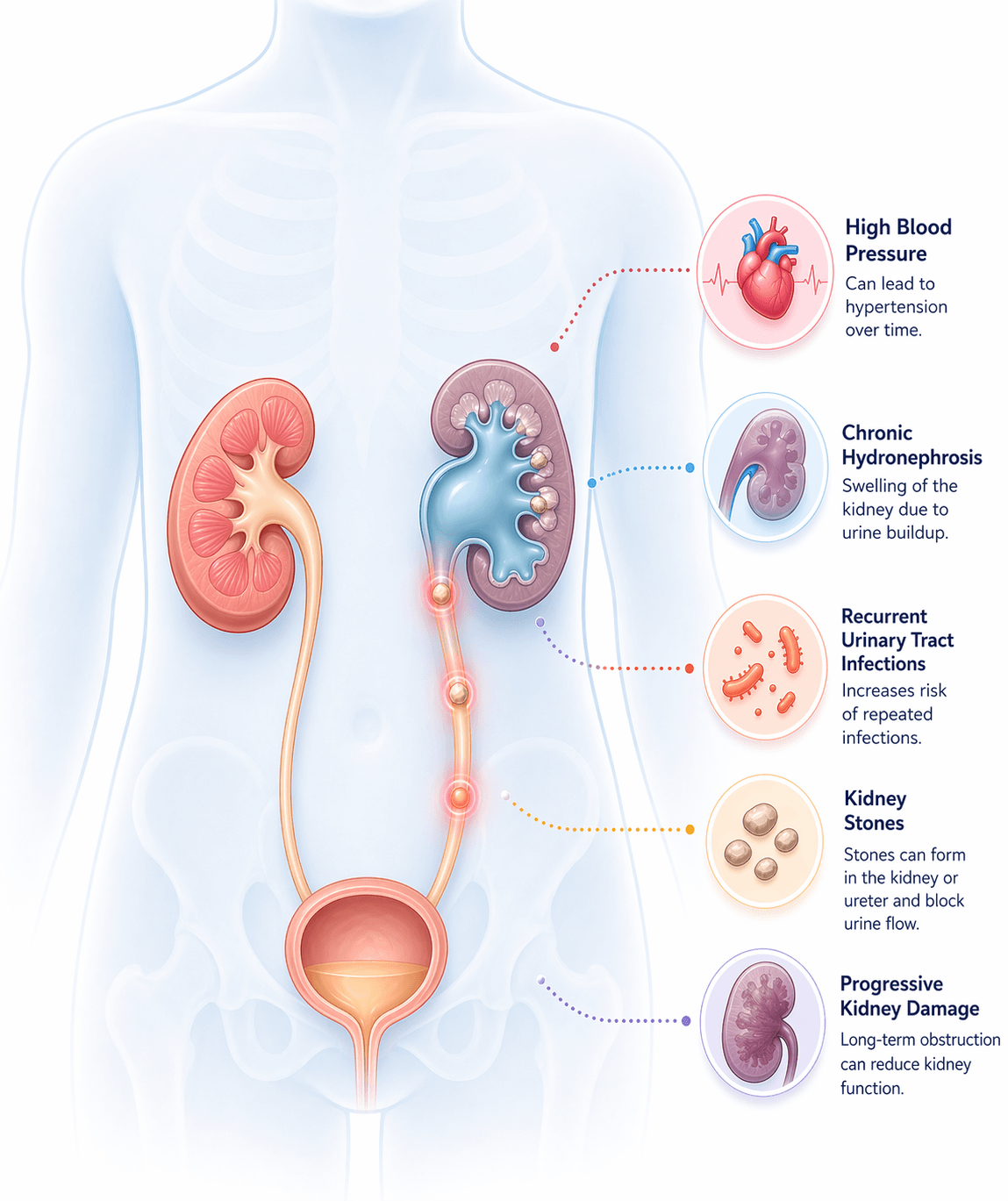
Untreated PUJ obstruction can cause many complications to your health, including:
-
Progressive kidney damage
You might lose kidney function over the long run and potentially incur irreversible kidney damage.
-
Chronic hydronephrosis
Swelling of the kidneys, fluid retention can lead to kidney scarring.
-
High blood pressure
With low kidney function, the blood pressure can be elevated leading to hypertension.
-
Recurrent UTIs
Refluxes and obstruction in the long run can cause recurrent UTIs.
-
Kidney Stones
Stones can be formed in the obstructed kidney.
Do not worry, we are here to help you with early detection and prompt treatment, reducing the risk of long-term kidney complications.
When to Seek Medical Help for Pelviureteric Junction Obstruction
You should consult with a urology specialist if you or your child is facing the below symptoms:
-
Severe abdomen/back/flank pain
-
Recurrent UTIs
-
Blood in urine
-
Abdominal swelling (in kids/infants)
-
Poor growth (in kids)
-
Unexpected weight loss in children
Latest Advances in PUJ Care and Management
Modern advancements in Urology and surgical techniques include
-
Robotic-assisted pyeloplasty
-
3D imaging
-
Intraoperative guidance
-
Minimally invasive surgery (Laparoscopic)
At NU Hospitals, Bangalore (Bengaluru), we have all the modern equipment backed by the global expertise of our urology specialists. Do not worry, your health is in safe hands.
Choose NU Hospitals for Expert PUJ Treatment and Care
As the most trusted hospital for all nephrology and urology concerns, our patients benefit from:
-
Renowned Team of Experts with a Multi-Disciplinary Approach (Pediatric and general urologists and nephrologists)
-
Exceptional Care and World-class Technology (including advanced robotic and laparoscopic surgeries)
-
Expert pediatric and adult urologists with decades of global experience
-
Compassionate care tailored to every patient
-
No. 1 Hospital for PUJ Obstruction management in India and Bangalore
-
Pioneers in Pyeloplasty Surgery
-
Legacy of Innovation and Trusted by Millions
-
Protocolized Evidence-based Care
Bangaloreans can now access world-class urology care at the heart of Rajajinagar, Padmanabhanagar and surrounding areas.








