 Nephrology
 Urology
 Andrology
 Fertility (IVF)
 General Nephrology
 Paediatric Nephrology
 Dialysis
 Renal (Kidney) Biopsy
 CRRT
 Peritonial Dialysis
 Robotic Surgery
 Urinary Incontinence
 Uro-Oncology
 Laparoscopic Urology
 Reconstructive Urology
 Anaesthesiology
 Radiodiagnosis
 Nutrition and Dietetics
 Pediatric and Immunization
 Cardiology
 Intensive Care Unit




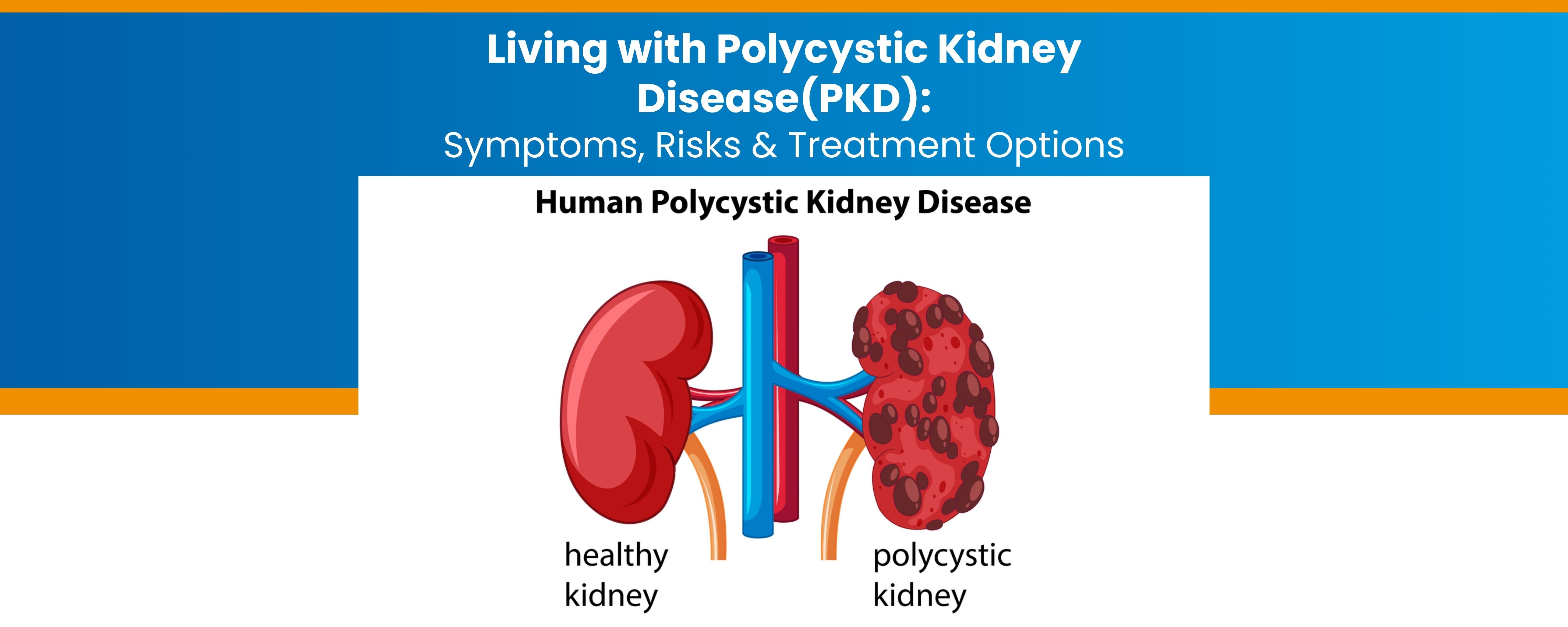
Are your kidneys acting up? Are they filling themselves with balloon-like cysts? This condition is known as polycystic kidney disease (PKD).
PKD isn’t rare. Autosomal Dominant PKD (ADPKD) affects about 1 in every 400 to 1,000 people all over the world. It is one of the most common inherited kidney disorders.
The tricky factor about PKD is that it usually goes unnoticed due to symptoms such as high blood pressure, back pain, or kidney stones.
But don't worry! We will explain all about polycystic kidney disease, symptoms of PKD, and its treatment.
What is Polycystic Kidney Disease?
Polycystic Kidney Disease (PKD) is an inherited condition. In this, non-cancerous clusters of cysts filled with fluid form within your kidneys. These cysts can grow large. Therefore, it disrupts your kidney function and leads to kidney failure over time.
Types of Polycystic Kidney Disease
1. Autosomal Dominant Polycystic Kidney Disease (ADPKD):
-
It is one of the most common forms of PKD. It accounts for about 90% of all PKD cases.
-
Symptoms usually appear between the ages of 30 and 40.
-
If even one parent has ADPKD, the child will have a 50% chance of inheriting the disease.
2. Autosomal Recessive Polycystic Kidney Disease (ARPKD):
-
This is a much rarer and often more severe form.
-
The symptoms of this condition can begin in the womb, at birth, or in early childhood.
-
Both parents must carry the altered gene for a child to develop ARPKD.
What Causes Polycystic Kidney Disease?
-
Genetic Defects:
Mutations in kidney-related genes. It is commonly passed from parent to child.
-
Spontaneous Mutations:
Rarely, it may occur in a few situations where there is no family history.
What are the Symptoms of PKD?
The symptoms of PKD can vary widely. Oftentimes, people might not even know they have cysts until they have grown significantly. Hence, early diagnosis is so important.
A few common symptoms of PKD are:
-
High Blood Pressure: High blood pressure is usually the first and most common sign of PKD.
-
Back or Side Pain: Sharp pains can occur as your cysts grow and press on surrounding organs or nerves.
-
Headaches: Frequent and severe headaches can be a symptom.
-
Blood in Urine (Hematuria): This might be visible or microscopic. It could occur due to a kidney stone or a ruptured cyst.
-
Frequent Urination: Your kidney function might be affected. Hence, you might have the need to urinate more often.
-
Kidney Stones: Kidney stones are common in people with PKD.
-
Urinary Tract Infections (UTIs): Recurrent UTIs may happen from an infection of your cysts.
-
Abdominal Swelling: As the cysts enlarge, they can cause your abdomen to feel full or distended.
-
Fatigue: Anemia from decreased kidney function can leave you feeling weak and exhauste
Risk Factors and Complications of Polycystic Kidney Disease
The main risk factor for developing PKD is having a family history of PKD. If your parents or siblings have PKD, you are at risk.
Can PKD Affect Other Organs?
PKD can also affect other parts of your body:
-
Liver Cysts: These are very common in ADPKD patients. It affects up to 80% of individuals by age 60.
-
Brain Aneurysms: A percentage of people with ADPKD can also develop aneurysms in the blood vessels of the brain. These are quite serious and can rupture.
-
Heart Valve Problems: Conditions such as mitral valve prolapse can occur in a few PKD patients.
-
Colon Diverticula: Small pouches can form in the wall of your colon.
-
Pancreatic Cysts: They are not very common. They also don't cause significant problems.
Therefore, it is clear that polycystic kidney disease is not just a kidney problem. It is a systemic condition that requires comprehensive management.
How is PKD treated?
There is no exact cure for PKD yet. However, there are several treatments available. With the help of these you can manage the symptoms the progresion of the disease and also manage its symptoms.
-
For blood pressure control, you can take ACE inhibitors or ARBs to protect your kidneys.
-
You can take tolvaptan, under the recommendation of your doctor. This will help to slow your cyst growth in ADPKD.
-
Manage UTIs, stones, anemia, and electrolyte problems as they occur.
-
Dialysis or a kidney transplant is needed for ESRD cases.
Diet and Lifestyle Changes for PKD Patients
Making certain lifestyle changes can play a huge role in managing PKD. This will also severely improve your quality of life.
-
Eat a healthy diet. Consume a lot of fresh fruits & veggies, whole grains, lean proteins. Reduce your consumption of salt and fat.
-
Stay hydrated throughout the day.
-
Manage blood pressure. Monitor your blood pressure regularly.
-
Maintain a healthy weight.
-
Avoid smoking and alcohol.
-
Reduce stress with yoga, meditation, and hobbies.
-
Avoid processed foods to cut down on hidden sodium.
Working closely with your healthcare team is very important if you have been diagnosed with PKD. The best PKD treatment plan will be created for you by your nephrologist and dietitian.
Best Hospital in Bangalore for Polycystic Kidney Disease (PKD) Treatment
PKD is a complicated disease. Therefore, it is even more important that you choose the top hospital in Bangalore for the treatment of polycystic kidney disease (PKD).
One of the top hospitals in Bangalore to provide complete kidney care is NU Hospitals:
-
A dedicated nephrology department that specializes in treating PKD.
-
Modern diagnostic facilities
-
Holistic and personalized treatment options
-
Multidisciplinary approach
-
Patient-centric care








