 Nephrology
 Urology
 Andrology
 Fertility (IVF)
 General Nephrology
 Paediatric Nephrology
 Dialysis
 Renal (Kidney) Biopsy
 CRRT
 Peritonial Dialysis
 Robotic Surgery
 Urinary Incontinence
 Uro-Oncology
 Laparoscopic Urology
 Reconstructive Urology
 Anaesthesiology
 Radiodiagnosis
 Nutrition and Dietetics
 Pediatric and Immunization
 Cardiology
 Intensive Care Unit




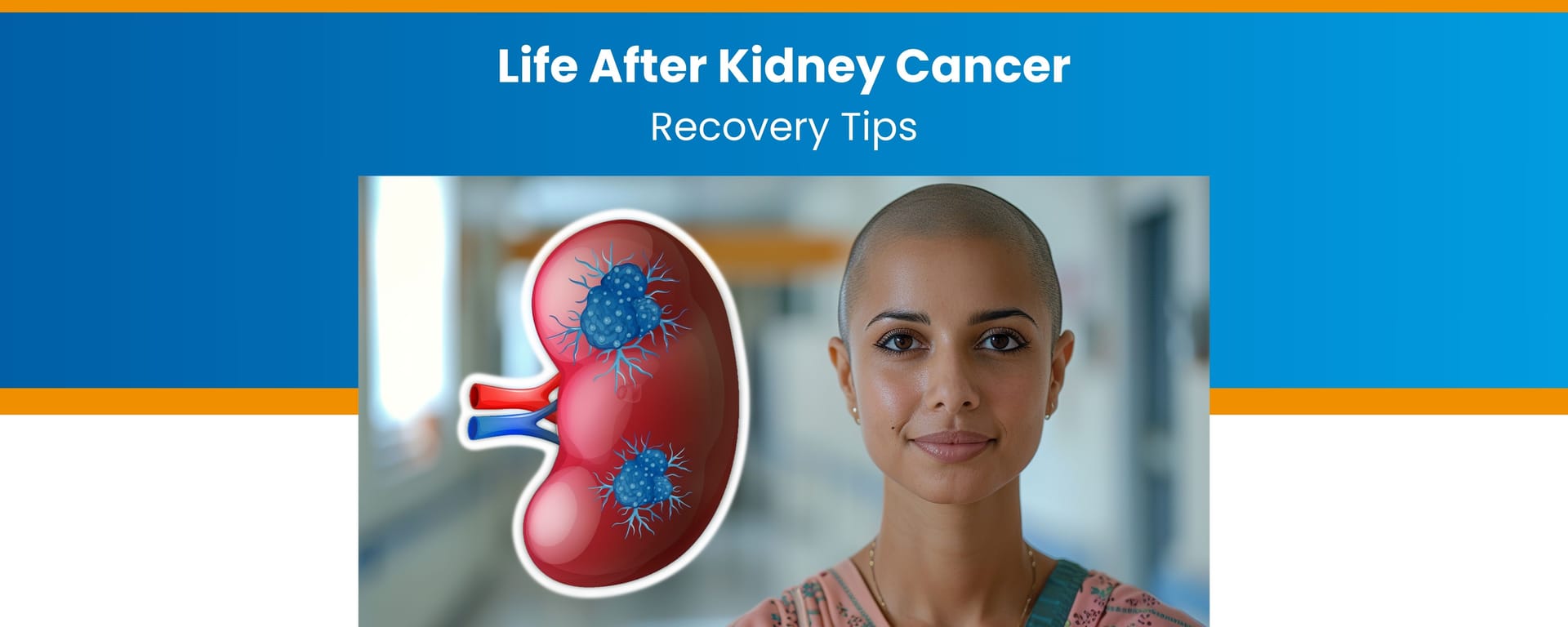
Firstly, congratulate yourself on winning against cancer. It is a victory that deserves celebration. Surviving kidney cancer is in itself a great win, but it requires attention and care for better recovery.
Are you also worried about what happens next? How to regain your strength?
Here is a heads-up: “Recovery journey and postoperative care are as important as your treatment.”
Recovering from treatment can be challenging both physically and emotionally.
This blog is for you to learn through the recovery process and regain strength, confidence and a better quality of life.
Read on to discover the most effective recovery tips suggested by our experts at NU Hospitals, Bangalore.
What to Expect After Kidney Cancer Treatment
Before adopting any new tips, you should know what lies ahead of you after kidney cancer treatment.
Your treatment could be surgery, chemotherapy, targeted therapy or even a combination. Recovery is subjective and varies from patient to patient. The average recovery time is about 4 weeks to a couple of months.
Here is an overview of your recovery phase post-kidney cancer treatment:
Recovery Stage |
Duration |
Hospital Stay |
2-7 days after surgery (laparoscopic to open surgeries) |
Initial recovery |
2-4 weeks |
Full recovery |
2-3 months post major surgeries |
Return to regular life and work |
2-4 weeks for a desk job and light movement |
Exercise |
Heavy exercises can be resumed post 6-8 weeks |
How Can I Safely Return to Daily Activities?
It is natural that you want to jump back to your normal routine. But how and when? Our experts advise that you start with light stretching and exercises initially.
-
Walking
-
Gentle household work
-
Stretching
-
Avoid heavy workouts
-
Do not lift heavy objects
-
Gradually increase the intensity upon clearance from your doctor
Smart Tip: Maintain a journal to note the activities, energy level, pain and improvements. This helps in your follow-up consultations.
What Are Common Physical Changes Post-Treatment?
Are you noticing changes in your energy levels? Appetite going down? Body shape shifts?
You are not alone!
Remember, your body has been through a lot! Recognizing these transformations can help you heal better.
Post treatment, you might experience:
-
Weakness for a long time
-
Fatigue during or after therapy
-
Changes in urination (stream, urgency, frequency, colour)
-
Surgical scars (very less with laparoscopic and robotic surgeries)
-
Swelling in the surgical area
-
Low appetite
-
Digestion problems
-
Hair loss
-
Nausea
-
Mouth sores
-
Infertility or sexual dysfunction (in very rare cases)
Managing Side Effects and Supporting Recovery
We know all recovery paths are a bumpy ride. But here is the good news: most side effects can be managed effectively.
How to Deal with Fatigue and Pain After Kidney Cancer?
We know this is another step towards better recovery. Here is what you can do to deal with fatigue and pain.
-
Take scheduled resting periods throughout the day
-
Take prescribed medication on time for pain management
-
Practise meditation and breathing techniques
-
Relax your body and mind
-
Engage in activities you love, like art, music, etc.
-
It is okay to be less productive, so do not stress or push yourself too much.
What Dietary Changes Are Recommended?
You should eat a balanced diet as advised by our expert kidney dieticians. Remember it's the fuel your body needs.
-
Increase protein intake in your meal.
-
Eat a renal-friendly diet.
-
Add fruits, vegetables, and fibrous foods.
-
Avoid sugary drinks, packaged food, colas, canned and processed food
-
Drink adequate amounts of water and liquids to keep yourself hydrated
How Can Exercise Aid My Recovery?
Movement makes all the difference. Are you wondering if a small walk can make a difference? Yes, it has a significant impact on recovery.
-
Start your exercises with gentle walking.
-
Participate in strengthening and cardiovascular exercises.
-
Then concentrate on the core
-
You should avoid high-impact sports and heavy lifting
-
Include breathing exercises in your routine
Emotional and Mental Well-being After Kidney Cancer
Your mental health aids in physical health recovery. It is important to concentrate on your emotional and mental health as well.
How Can I Manage Anxiety and Stress?
We understand how this whole journey is so stressful. We advise you to:
-
Seek help from family, friends, and counselling
-
Join support groups
-
Speak to your caregivers and doctors freely
-
Maintain healthy conversations at work
-
Practise breathing techniques, mindfulness, meditation, and yoga
-
Have a good night's sleep of 6-8 hours
Long-Term Health Monitoring and Follow-Up Care
Recovery doesn't end when you are out of the hospital; it starts there. Better recovery outcomes require regular care and vigilance.
Why Are Regular Check-Ups Important?
Your regular checkups are the highlighters in recovery. They help with:
-
Detecting cancer recurrence early
-
Monitoring kidney function
-
Assessing treatment receptivity
-
Analyzing your rehabilitation and complete health
-
Adjusting medications
-
Lifestyle recommendations
-
Providing continuous support
What Tests Should I Expect in Follow-Up Visits?
Every test in your follow-up visit helps our experts to analyze and track your recovery.
Here is an overview of all tests and their uses
Test |
Use |
Physical Evaluation |
To check your:
|
Blood tests |
To analyse:
|
Urine tests |
To check for:
|
Imaging tests (Ultrasound, CT, or MRI) |
To check for:
|
Lifestyle Tips for Kidney Cancer Survivors by NU Hospitals Bangalore
You have come very far, and now it is time to protect yourself. Here are a few simple lifestyle tips for all you survivors.
How Can I Maintain a Healthy Weight and Blood Pressure?
To manage your blood pressure, you should:
-
Eat a balanced diet with whole grains, lean protein, and vegetables
-
Have small portions of food
-
Monitor your blood pressure at home every day
-
Exercise regularly.
-
Keep calm
-
Do not forget to meet our experts before starting anything on your own
What Habits Should I Avoid to Reduce Recurrence Risk?
Your cancer recurrence rates can be significantly reduced if:
-
You quit smoking and alcohol
-
Limit processed food and red meat
-
Avoid a sedentary lifestyle
-
Keep yourself active and mindful
How Important Is Smoking Cessation?
Smoking is one of the major risk factors for cancer. By quitting smoking, you will:
-
Reduce the risk of cancer recurrence
-
Have better heart and kidney functions
-
Aids a better and healthier life
-
Improves your overall health
-
Enhances healing journey








