 Nephrology
 Urology
 Andrology
 Fertility (IVF)
 General Nephrology
 Paediatric Nephrology
 Dialysis
 Renal (Kidney) Biopsy
 CRRT
 Peritonial Dialysis
 Robotic Surgery
 Urinary Incontinence
 Uro-Oncology
 Laparoscopic Urology
 Reconstructive Urology
 Anaesthesiology
 Radiodiagnosis
 Nutrition and Dietetics
 Pediatric and Immunization
 Cardiology
 Intensive Care Unit




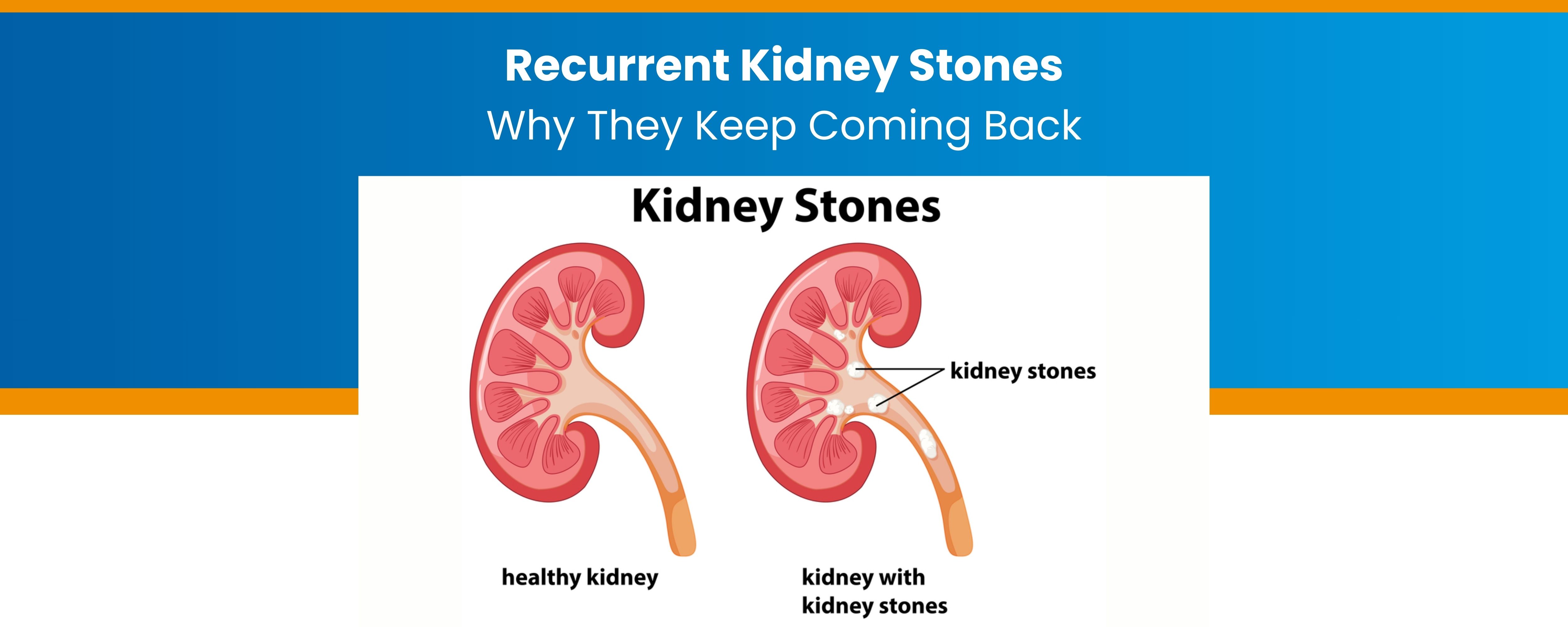
Passing a kidney stone once is enough for a lifetime. Unfortunately, for a huge number of people, it doesn’t stop there. Recurrent kidney stones are a frustrating reality that can keep you off work and in agony. If you’ve had more than one, it’s a sign that something in your lifestyle or your biology needs to be addressed. We aren’t going to sugarcoat it. Managing this requires a bit of effort. This article breaks down exactly why these stones keep coming back and what you can actually do to break the cycle for good.
Understanding Kidney Stones and Recurrence
Passing a stone is a traumatic experience, but for many, the journey doesn't end there. Stones form when minerals in our urine concentrate and crystallise. When this happens repeatedly, we refer to them as recurrent kidney stones. It is a frustrating reality that 50% of people who have one stone will face another within five years if no changes are made. Instead of just dealing with the agony when it hits, it is time to look at the root causes. Prevention is the ultimate wellness hack to keep your kidneys happy and your life completely uninterrupted by pain.
Causes of Recurring Kidney Stones
Having stones more than once usually happens because of our health and how we live. If your urine stays unbalanced and you aren't drinking enough, stones can easily come back.
Identifying these factors is your only way to prevent recurrence. Addressing the root causes is important to reduce the risk of future episodes and stop further damage to your kidneys.
Let’s take a look at the key causes of recurring kidney stones:
-
Persistent metabolic imbalances
If your body is chronically overproducing calcium, oxalate, or uric acid, you will continue to form stones. This is compounded if you lack citrate, which is your kidneys' natural defence against crystal formation.
-
Inadequate fluid intake
It is very common to forget to drink enough water, but low fluid intake is a major trigger. It leads to concentrated urine, which allows minerals to bond together more easily, particularly during warmer British summers.
-
Dietary factors
What we eat matters deeply. Excessive salt and animal proteins can throw off your urinary minerals. For those who are sensitive, even nutrient-dense foods like spinach and chocolate can contribute to stone formation due to their oxalate content
-
Underlying medical conditions
Sometimes, stones are a symptom of a broader issue, such as hyperparathyroidism or digestive imbalances. Additionally, persistent infections can create a cycle of stone development that requires a thoughtful, whole-body approach to truly resolve and heal.
Risk Factors for Repeat Stones
Finding out why you keep getting stones is the best way to stop them. It’s usually a mix of your health, your family, and how you live. Once we know these triggers, we can keep a closer eye on you. It makes it much easier to find the right ways to protect your kidneys and stop future pain.
Key Risk Factors for Repeat Kidney Stones
-
Previous history of kidney stones
If you have suffered from a stone before, it is unfortunately the strongest sign that another might develop. We find the risk is even higher for those who had their first stone when they were quite young, or for those who had several stones at once during their first diagnosis.
-
Genetic and family history
Your family tree can offer many clues. If your relatives have struggled with stones, you may have inherited a tendency for your body to process minerals differently. Rare conditions like cystinuria also make stones much more likely, though we can manage this together with the right care.
-
Lifestyle-related factors
Daily habits are vital. Not drinking enough water can leave your urine too concentrated, while too much salt or meat can shift your chemical balance. Maintaining a healthy weight and staying active helps your body process calcium properly, keeping everything flowing smoothly through your kidneys.
-
Underlying medical conditions and medications
Common conditions such as high blood pressure or diabetes can affect your urine chemistry. Even certain medicines you might be taking for other things, like specific diuretics or high-dose vitamin supplements, can unintentionally increase your risk of stones returning.
Types of Stones and Their Impact on Recurrence
If you have experienced a kidney stone, knowing which family it belongs to is very helpful. Stones form for many reasons, including our age, diet, and other health conditions. By identifying the type of stone, your doctor can find the most effective way to help you avoid another one in the future.
Types of Kidney Stones and Recurrence Risk
-
Calcium oxalate stones
The most frequent stones out there! They are usually a mix of diet and metabolism. To keep them away, you’ll need to stay on top of your lifestyle choices.
-
Calcium phosphate stones
These like an alkaline environment. If your body’s balance is a bit off, these can be quite frequent visitors unless the underlying cause is tackled.
-
Uric acid stones
Linked to high acid levels and often gout, these stones love to return. Correcting your urine’s pH is the secret to stopping the cycle.
-
Struvite and cystine stones
Struvite stones come from nagging UTIs, while cystine stones are a rare inherited condition. Both require expert, targeted strategies to ensure they don't slow you down again.
Treatment for Recurrent Kidney Stones
Treatment for recurrent kidney stones is most effective when it addresses the underlying metabolic environment. It involves much more than just treating the pain of a current stone. By identifying the root causes and making small, manageable changes to our diet and medication, we can protect our kidney health in the long run.
Key Approaches to Treatment
-
Management of acute stone episodes: For a current stone, your doctor may suggest pain relief or procedures like shock wave therapy to help you pass the stone more comfortably.
-
Metabolic evaluation: You’ll likely undergo a 24-hour urine test. This is a key tool for the medics to understand your mineral balance and stop the guesswork regarding stone formation.
-
Medication-based therapy: You might be prescribed thiazide diuretics, potassium citrate, or allopurinol, depending on your specific levels. If there's an infection, expect a long-term treatment plan.
-
Dietary counselling: A disciplined diet is your best weapon. Stay hydrated and cut back on the salt; it’s a straightforward way to keep your kidneys functioning as they should.
Long-Term Prevention of Recurrent Kidney Stones
Effective long-term prevention of recurrent kidney stones depends on consistent lifestyle changes and, when required, ongoing medical management. Since kidney stones tend to recur, prevention strategies focus on maintaining healthy urine composition and addressing individual risk factors over time.
Key Strategies for Long-Term Prevention
-
Adequate fluid intake
Aim to produce 2.5 litres of urine. Drink plenty of water. Citrus drinks can also help by adding citrate to keep you stone-free and healthy.
-
Individualised dietary changes
A little less salt and a balanced approach to protein goes a long way. Some people might also need to watch their intake of oxalate-rich foods.
-
Healthy lifestyle habits
Staying active and managing your weight truly helps your kidneys. Keeping blood pressure and diabetes in check is also vital.
-
Ongoing monitoring
Seeing your GP regularly makes a big difference. Tests and scans help us all stay ahead of the game, catching any little changes nice and early.
Conclusion
Dealing with stones again is tough, but there is a path forward. By understanding why they return and spotting the risk factors for repeat stones, we can shift from quick fixes to lasting health. With a bit of help from your doctor and some changes to your daily routine, you can break the cycle and keep your kidneys working well for years.








