 Nephrology
 Urology
 Andrology
 Fertility (IVF)
 General Nephrology
 Paediatric Nephrology
 Dialysis
 Renal (Kidney) Biopsy
 CRRT
 Peritonial Dialysis
 Robotic Surgery
 Urinary Incontinence
 Uro-Oncology
 Laparoscopic Urology
 Reconstructive Urology
 Anaesthesiology
 Radiodiagnosis
 Nutrition and Dietetics
 Pediatric and Immunization
 Cardiology
 Intensive Care Unit





One of the most common cancers in the world is bladder cancer. According to the WHO’s report in 2024, bladder cancer affects more than 5.73 million people every year.
For patients suffering from bladder cancer, especially if it is a deep type, then removal of the bladder is advised. This can be performed through traditional methods, laparoscopically or robotic surgery.
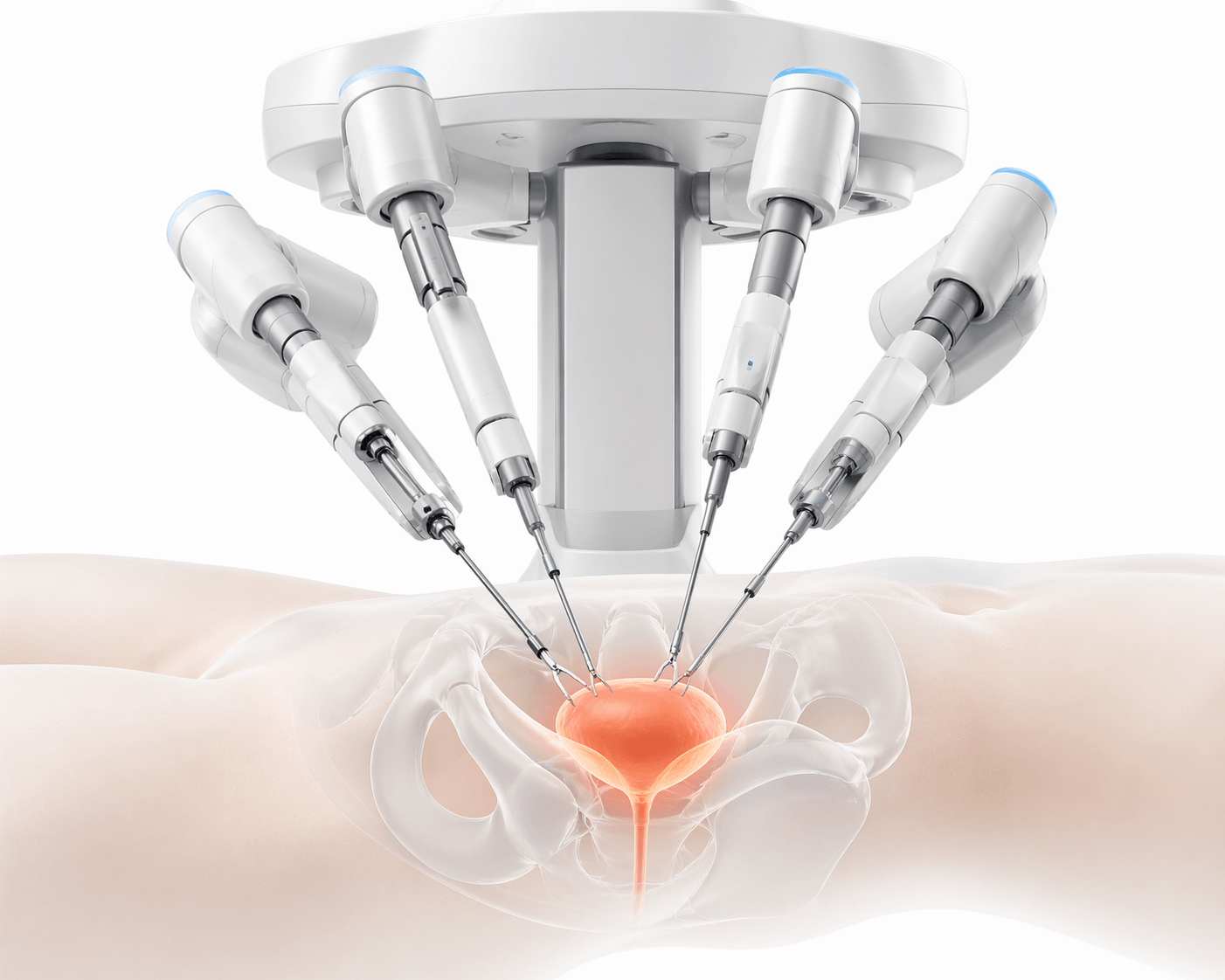
Robotic surgery for bladder cancer is known as robotic cystectomy. Robotic cystectomy is a minimally invasive surgery. A robot is used to remove the bladder and reconstruct the urinary system.
Robotic cystectomy offers great precision, fewer incisions and cuts leading to less blood loss, shorter hospital stays and better recovery.
Bladder cancer can seem very scary, but with advanced technologies like robotic surgeries, effective treatment options are offering better results.
Read on as we uncover more about robotic cystectomy, how it's different, the benefits of robotic bladder cancer surgery, its success rates and how you can prepare yourself for the surgery.
If you or a loved one is going through bladder cancer, this blog should answer all your doubts and queries.
What is Robotic Cystectomy?
Robotic cystectomy is a bladder removal surgery performed for patients suffering from bladder cancer. A robotic system, like the da Vinci Surgical system or CMR Versius Robot, is used instead of traditional tools.
The surgeon handles the robot through a console and removes the affected bladder through small incisions (do note that sometimes the bladder may be larger and need larger cuts to remove it, though the procedure is done with a robot).
The robot’s arms are equipped with surgical instruments and a 3D HD camera, allowing the surgeon great view and precision.
Robotic cystectomy is usually performed for high-risk non-muscle-invasive or muscle-invasive bladder cancer cases.
Cystectomy can be combined with bladder reconstruction surgery.
Types of cystectomy:
1. Radical cystectomy:
Surgery is performed to remove the entire bladder. Here, the surgeon will also remove the surrounding lymph nodes. Depending on how the cancer has spread or advanced to the neighbouring parts, surgeons will decide if there is a necessity to remove the reproductive system.
2. Partial cystectomy:
Only a part of the bladder is removed. Partial cystectomy is ideal when the cancer has affected only a part of the bladder (note this may not be offered to everyone).
Our expert urologists will suggest which is the best option for you based on your condition.
Robotic Cystectomy vs. Open & Laparoscopic Cystectomy
Factor |
Robotic Cystectomy |
Open Cystectomy |
Laparoscopic Cstectomy |
Incision size |
Small cuts of 1-2cm (keyhole-sized) |
A large incision is made to allow direct visualisation and surgery |
Small cuts to use a laparoscope |
Blood loss |
Very little or minimal bleeding |
Higher blood loss, as a big incision is made |
Very little or minimal bleeding |
Hospital Stay |
5-8 days |
7-15 days |
6-10 days |
Recovery Time |
3-4 weeks |
6-8 weeks |
4-6 weeks |
Complication Risk |
Low |
Comparatively higher |
Moderately low |
Benefits of Robotic Bladder Cancer Surgery
Robotic cystectomy poses many benefits:
For Patients:
-
Less pain
-
Small cuts/incisions
-
Less scarring
-
Minimal blood loss
-
Lower risk of complications
-
Short hospital stays
-
Decreased risk of blood clots
-
Better recovery
-
Early mobilisation
-
Preservation of urinary continence and sexual function
-
Improved quality of life
For Surgeons:
-
Great precision and control
-
Enhanced visualisation
-
Enables delicate dissection and suturing
-
Less fatigue
-
Stable movements
Success Rate of Robotic Cystectomy
The success rates of robotic cystectomy depend on various factors, like:
-
Cancer stage
Patients who undergo surgery at the early stages have better outcomes.
-
Patient’s overall health
Patients who have higher BMI, are obese, and have more comorbidities pose higher complication risks.
-
Age
Younger patients have better outcomes and recover sooner.
-
Previous neoadjuvant chemotherapy
Patients who have undergone chemotherapy before have higher short-term complications.
-
Pre-existing medical conditions
If the patient has significant cardiac or pulmonary issues, it can affect the overall surgery results.
Success Rates of Robotic Cystectomy
Measure |
Success Rates |
5-year recurrence-free survival |
66% |
5-year overall survival |
60-68% |
5-year survival (cancer-specific) |
65-90% |
10-year recurrence-free survival |
59% |
10-year overall survival |
30-35% |
10-year survival (cancer-specific) |
60-65% |
According to a Journal of Urology study in 2024, robotic radical cystectomies have better cancer control rates compared to traditional open surgeries.
Journal of Urology, Vol. 202, Issue 5, 2019, pages 927–934
How to Prepare for Robotic Cystectomy Surgery
Here is a step-by-step guide on how to prepare yourself for the cystectomy surgery:
-
Consult with our expert urologists
-
Undergo health evaluations as advised by our experts
-
-
Blood tests
-
ECG
-
Imaging scans
-
-
Understand medications and lifestyle changes
-
Follow dietary instructions
-
Quits smoking and Alcohol
-
Practise personal hygiene
-
Prepare yourself mentally and emotionally
-
Bowel Preparation
-
Prehabilitation (gentle exercises to improve physical health)
Recovery from Robotic Cystectomy
-
Patients with partial cystectomy recover faster as compared to patients with radical cystectomy.
-
You might have a poor appetite or abnormal bowel function after the surgery (the recovery can be anywhere from weeks to months)
-
Hospital stay is usually up to 7-10 days post-surgery
-
Week 1:
- Pain can be managed with meds
- Indulge in slow walking to prevent blood clots
- Follow dietary and fluid intake instructions thoroughly
-
At Home:
- Avoid heavy lifting
- Maintain hygiene and keep the wounds clean and dry
- Follow dietary and fluid intake instructions thoroughly
-
Long-term management:
- Full recovery may take 6-8 weeks
- Follow regular follow-ups and tests as advised by the doctors.
Risks of Robotic Cystectomy
As with any other surgery, cystectomy also has a few risks involved, they are:
-
Bleeding
-
Blood clots
-
Infection
-
Organ damage
-
Anaesthesia reactions
-
Changes in urination
-
Increased frequency of urination
-
Erectile dysfunction (for some men)
-
Some women may also face sexual side effects (if a part of the vagina was removed)
When to see a specialist for bladder cancer?
You should consult with an expert urologist if:
-
See any signs of infection
-
Have fever
-
Experiencing chills
-
Nauseous
-
Heavy bleeding
-
Uncontrollable pain
-
Swelling in the surgical area
-
Difficulty urinating
Why Choose NU Hospitals for Robotic Cystectomy?
-
No. 1 Hospital for Bladder Cancer In India and Bangalore
-
Protocolized Evidence-based Care
-
Renowned Team of Experts with a Multi-Disciplinary Approach
-
Exceptional Care and World-class Technology








