 Nephrology
 Urology
 Andrology
 Fertility (IVF)
 General Nephrology
 Paediatric Nephrology
 Dialysis
 Renal (Kidney) Biopsy
 CRRT
 Peritonial Dialysis
 Robotic Surgery
 Urinary Incontinence
 Uro-Oncology
 Laparoscopic Urology
 Reconstructive Urology
 Anaesthesiology
 Radiodiagnosis
 Nutrition and Dietetics
 Pediatric and Immunization
 Cardiology
 Intensive Care Unit





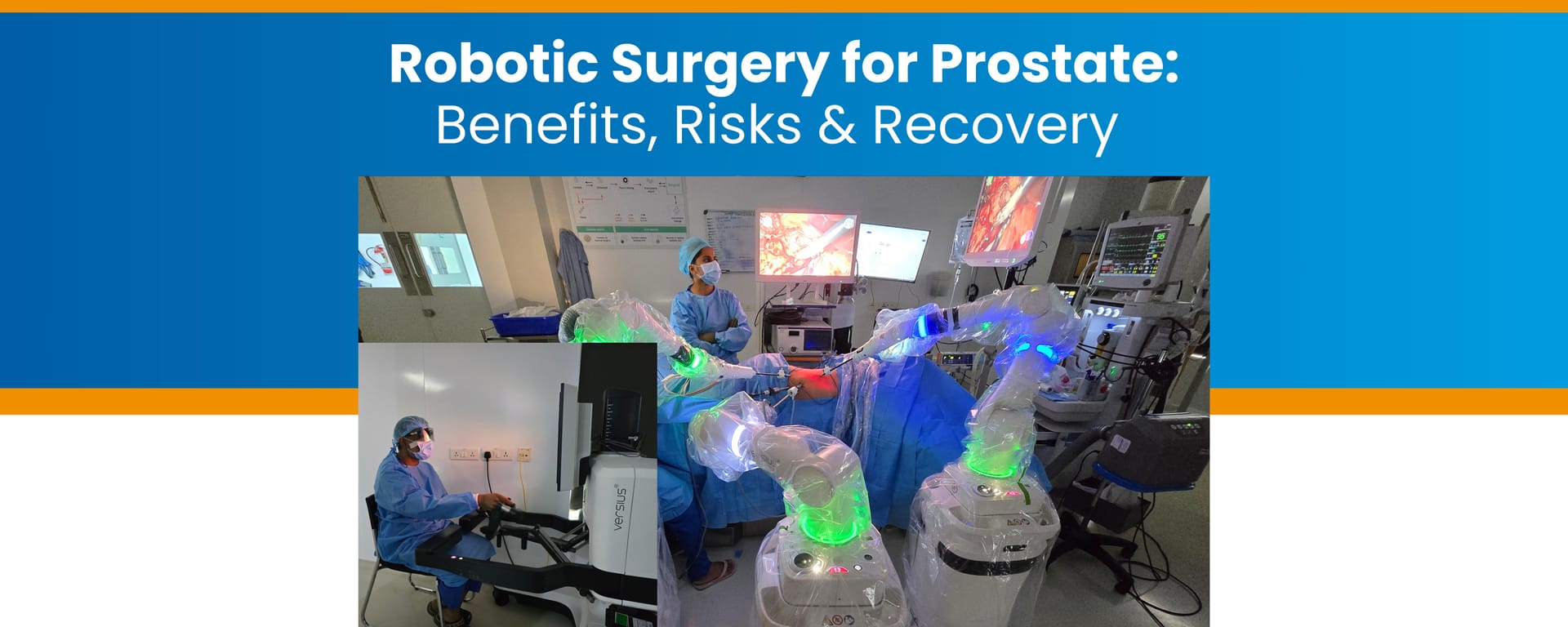
Prostatectomy is a surgery where the surgeon removes a part or the entire prostate gland. This is the best treatment option for certain specific prostate conditions. It is the most common treatment option for prostate cancer or benign prostatic hyperplasia.
Prostatectomy can be done in multiple ways: open surgery, minimally invasive laparoscopic surgery, or robotic surgery. Based on your condition, our expert urologists will suggest the mode of surgery.
Robotic prostatectomy is an advanced and efficient procedure, where the surgeon will precisely remove the prostate with the use of a robotic system.
It offers great precision, short hospital stays and better recovery.
Read on as we explore the benefits, risks, success rates, how to prepare for the surgery and your recovery after robotic prostate surgery in this blog.
What is Robotic Prostatectomy?
Robotic prostatectomy is a minimally invasive surgical procedure. This involves a robotic system like a CMR Versius surgical robot or da Vinci robotic surgical system, where the surgeon removes a part or the complete prostate gland. The robotic system helps the surgeon operate with utmost precision. The robotic arms are controlled by the surgeon from a console.
The surgery is recommended for patients where the cancer has not spread beyond the prostate gland.
There are two types of Robotic Prostatectomy:
Radical prostatectomy
This is a complete removal of the prostate gland. The surgeon removes the fat and tissues around your prostate.
Simple/Partial prostatectomy
Removal of the inner portion of the prostate is a simple prostatectomy.
Robotic Prostatectomy Procedure
Step 1: The surgeon makes a small incision or several tiny incisions. (Single-port or multi-port prostatectomy)
These incisions are not bigger than 3/4th of an inch.
Step 2: The Surgeon inserts a laparoscope and robotic surgical equipment through the incisions
Step 3: Removal of the prostate gland and seminal vesicles from the surrounding tissues.
Step 4: Reattachment of your urethra to your bladder using small sutures.
What are the Benefits of Robotic Prostate Surgery
The main advantage of prostatectomy is treating prostate cancer or BPH. Robotic Prostate Surgery provides many benefits when compared to open surgery,
-
Minimally Invasive Surgery
The smaller incisions help with
-
Less pain
-
Minimal scars
-
Less infection risks
-
Shorter Hospital Stay
Hospital stay is reduced to 3-4 days from a 5-7 day stay for traditional surgery.
-
Fast Recovery
Recovery starts much sooner, and patients can resume their routine life within 2-3 weeks.
-
Better Precision
The surgeon’s experience is backed by the latest robotic technology, providing better precision. This results in reduced damage to the surrounding tissues and nerves.
-
Better Cancer Control
In the early stages, the precise removal of the cancerous tissue helps to lower the recurrence of prostate cancer.
What is the Success Rate of Robotic Prostatectomy
Robotic prostatectomy offers high success rates in cancer tissue removal and long-term survival.
There are many aspects of Robotic Prostatectomy:
-
Oncology (Cancer) Outcomes
Studies say there is a 95% success rate in cancer tissue removal.
-
Long-term survival
Studies show 97.6% survival from cancer-related prostatectomy and about 85% from any cause.
-
Urinary incontinence and ED
ED and incontinence are potential side effects of the surgery, although they are temporary. This can be effectively managed with medication and therapy.
-
Minimally invasive surgery
The advantages of the procedure also have a positive effect on success rates.
The success rate of robotic prostate surgery depends on:
-
Cancer Stage
-
Patient Condition
-
Patient’s overall health
-
Lifestyle factors
Robotic prostatectomy provides 85-95% cancer control success in the early stages.
The long-term survival rates are 80-90%
According to Mayo Clinic and Cleveland Clinic’s studies, robotic prostatectomy has better and superior outcomes when compared to traditional open surgeries.
How to Prepare for Robotic Prostatectomy Surgery?
Preoperative preparation is crucial for the surgery. Here are a few things you need to know:
Evaluation
-
A cystoscopy may or may not be done to check for
-
Prostate size
-
Examine the urinary system.
-
Tests to
-
-
Measure prostate functions
-
Measure urine flow
-
-
ECG
-
Chest X-ray
-
PSA (Prostate-Specific Antigen) levels
-
MRI or bone scan
Medication
-
Inform your care team about all the medicines and supplements you consume
-
Avoid over-the-counter medication unless advised by the doctor
-
Avoid blood thinners a week before surgery.
Diet/ Food Restrictions
-
Have light meals the day before
-
Fasting before surgery
You will be advised not to consume food and water from the previous night.
Emotional & Mental Readiness
-
Discuss all your concerns with the doctor, whether it be physical or emotional.
-
Be ready psychologically for the after effects and discuss how well and by when you will recover completely. This will provide you with confidence.
Arrangements post surgery
Understand how long you will be spending in the hospital. Prepare yourself with all the essentials required for the period. Also, book an advance ride home, as you will not be able to ride after surgery.
What to Expect After the Procedure?
-
You will be on monitored pain medication through IV and later moved to prescription pills.
-
You will be advised to walk after a day or two.
-
You shall be discharged within 2-4 days after surgery.
-
Most people need a urinary catheter for 15 days after surgery
-
You will resume your routine over 4-6 weeks
-
Regular follow-ups to be maintained
-
You will be able to resume sexual activity after complete recovery. (Discuss with your doctor for clear answers)
What are the Risks and Side Effects of Robotic Prostatectomy
Just like any other surgery, there are a few risks of robotic prostatectomy:
-
Urinary Incontinence
Loss of bladder control may be temporary; with proper management, it goes away over time.
-
ED (Erectile Dysfunction)
Trouble having or keeping an erection post-surgery. Consult your doctor to know when you can resume sexual activity.
-
Bleeding
This is rare but possible at the incision sites or can be internal bleeding.
-
Blood Clots
You will be advised to move post-surgery and use compression stockings to reduce the risk of blood clots.
-
Anaesthesia-related risks
Nausea or some mild complications, in rare cases.
-
Urinary tract infection
Rare but possible, your doctors will help you with medication for effective management.
-
Narrowing of the urethra
Very rare, but treatable
-
Damage to the intestine or rectum
Very rare, but treatable
-
Healing Problems
When the wound does not heal well
-
Need for blood transfusion.
-
Fluid buildup at the surgical site
-
Little or no ejaculation (Dry orgasm)
-
Depression
Recovery After Robotic Prostatectomy
Hospital Stay
-
3-4 days
-
Catheter 15 days
Home recovery
-
Avoid heavy lifting
-
Avoid any strenuous activity for 6 weeks
-
Walk regularly to avoid blood clots
-
Follow all instructions to treat your wounds
-
Follow Catheter hygiene
Diet
-
Start with soft food
-
Hydration is the key
-
A High-fibre diet is recommended
Medications
-
Adhere to all medications prescribed by your doctor.
Follow-up appointments
-
Do not miss your follow-up consultations. It is important to know the recovery graph.
-
PSA testing within 8 weeks
-
PSA monitoring every 3 months
Sexual Recovery
-
Baseline sexual function may take 6 months to 1 year
-
Your doctors might recommend
-
PDE5 inhibitors
-
Vacuum erection devices
-
Counselling
Pelvic floor exercises and physiotherapy help improve urinary control faster.
Who is a Good Candidate for Robotic Prostate Surgery?
Robotic Prostatectomy is the best option for:
-
Patients who are diagnosed with localised prostate cancer
-
Patients suffering from BPH requiring surgical intervention
-
Patients who prefer faster recovery with minimal scarring
-
Younger patients who are looking for options that are safe to preserve their sexual and urinary functions
Results of a Robot-assisted Prostatectomy
-
Less pain
-
Less blood loss
-
Short hospital stays
-
Quick recovery
-
Easing of urinary symptoms
-
Easing of complications from blocked urine flow, like:
-
Frequent urination
-
Urine urgency
-
Trouble starting urination
-
Prolonged urination
-
UTIs
Robotic Prostatectomy in India: Availability and Cost
Cost of Robotic Prostatectomy in India
The cost of the surgery ranges from ₹2.5L to ₹5L
Factors affecting the cost are:
-
Hospital Type
-
Technology availability
-
City
-
Surgeon experience
-
Type of robotic system
As the technology is limited, only a few private hospitals in Bangalore, Chennai, Delhi, Mumbai, and Hyderabad offer robotic surgery facilities.
Most health insurance policies and government schemes cover robotic prostatectomy for prostate cancer. It is advised that you speak to your insurance provider before you plan the surgery.
Please note: The surgery cost may vary based on the type of ward selected, medications, and any additional procedures, etc.
Robotic Prostatectomy vs Open Prostatectomy
Feature |
Robotic Prostate Surgery |
Open prostate surgery |
Incision |
The incisions are small (5-6 ports) |
They are large (8-10 inches) |
Blood loss |
Minimal blood loss |
Blood loss is more significant |
Hospital stay |
3-4 days |
4-7 days |
Recovery time |
2-3 weeks |
4-8 weeks |
Sexual & urinary outcomes |
Much better |
Varies and depends on various factors |
Surgeon visibility |
Offers a 3D magnified view and allows great precision |
Direct visual field |
Is Robotic Surgery Right for You?
Robotic prostate surgery offers
Minimally invasive, high precision, and better recovery outcomes.
The decision to choose this option should only be made when your urologist or uro-oncologist has advised the same. The doctors will decide if it is safe for you based on
-
Your age
-
Your overall health
-
Cancer stage







