 Nephrology
 Urology
 Andrology
 Fertility (IVF)
 General Nephrology
 Paediatric Nephrology
 Dialysis
 Renal (Kidney) Biopsy
 CRRT
 Peritonial Dialysis
 Robotic Surgery
 Urinary Incontinence
 Uro-Oncology
 Laparoscopic Urology
 Reconstructive Urology
 Anaesthesiology
 Radiodiagnosis
 Nutrition and Dietetics
 Pediatric and Immunization
 Cardiology
 Intensive Care Unit




Being diagnosed with a urological condition can be very scary. But what often feels even more difficult is the idea of having surgery.
Every year, several people face urological conditions such as kidney tumors, prostate cancer, or bladder problems. But thanks to advances in medical technology, treatment has now become safer and easier.
Why stick to old surgical methods when you have advanced options like robotic surgery for urological conditions? Robotic surgery in urology brings greater precision, faster procedures, and shorter recovery times, so you can get back to living your life in no time.
In Bangalore, NU Hospitals stands at the forefront of this revolution. We offer state-of-the-art care for conditions such as prostate cancer, kidney disorders, and more.
What Is Robotic Urological Surgery?
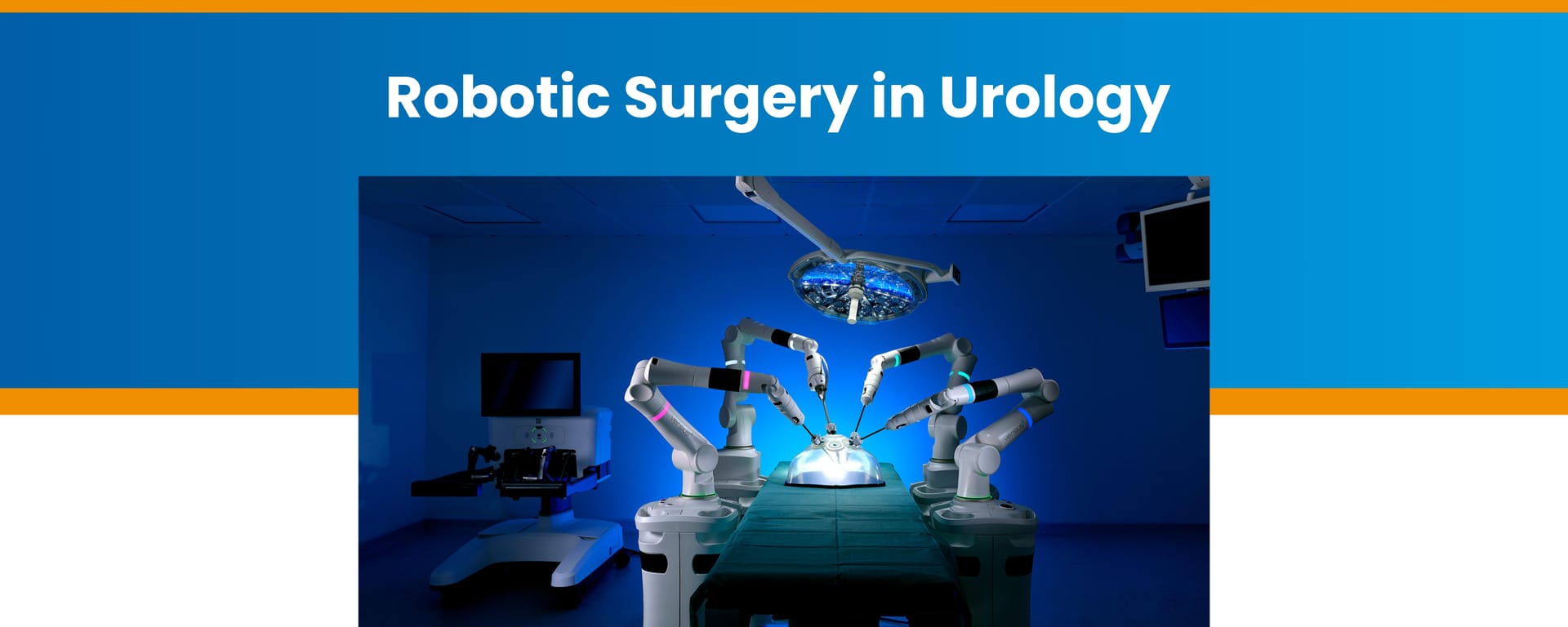
Robotic urological surgery is a minimally invasive technique that uses advanced robotic systems to perform urological procedures.
Unlike traditional open surgery, which requires large incisions, or laparoscopy, which uses rigid instruments, robotic surgery in urology uses miniaturized instruments attached to robotic arms. The surgeon controls the instruments from a console, providing enhanced precision and control.
This robotic urological surgery is particularly beneficial in urology, where procedures often involve delicate structures and require high precision. This means better outcomes, less pain, and a quicker return to normal life.
What Are The Types Of Robotic Urological Surgery
There are several types of robotic urological surgery. Each is designed to treat specific urological conditions.
-
Robotic Prostatectomy
Robotic prostatectomy is performed to remove the prostate gland. It is commonly performed for prostate cancer.
-
Robotic Partial or Radical Nephrectomy
Robotic partial or radical nephrectomy is done to remove a part or all of a kidney, often due to cancer or other kidney diseases.
-
Robotic Pyeloplasty
Robotic pyeloplasty is the surgical reconstruction of the renal pelvis to correct any blockages.
-
Robotic Cystectomy
Robotic cystectomy is done to remove the bladder, typically due to cancer.
-
Robotic Ureteral Reconstruction
Robotic ureteral reconstruction helps to repair the ureters to restore normal urine flow.
-
Robotic Ureteral Reimplantation
Robotic ureteral reimplantation helps to reposition the ureter for better urine flow.
-
Robotic Ureterolithotomy
Robotic ureterolithotomy is a procedure to remove large kidney or ureteral stones.
-
Robotic Reconstructive Surgeries
Robotic reconstructive surgeries are done for congenital or acquired abnormalities of the urinary tract.
What Happens During Robotic Surgery For Urological Problems
A step-by-step look at robotic surgery for urological problems.
1. Preparation
Robotic urological surgery begins with preparation before the surgery. You will be under general anesthesia, and your surgeon will make a few small incisions. The incisions are typically less than a centimeter each.
2. Insertion of Robotic Instruments
Through these small incisions, specialized instruments and a high-definition 3D camera will be inserted.
3. Surgeon Control
Your surgeon will control the robotic arms from a console, viewing a magnified, high-definition 3D image of the surgical area.
4. Procedure Execution
The surgeon performs the necessary surgical steps with enhanced precision and control.
5. Completion
The instruments are removed, and the small incisions are closed.
Throughout your procedure, the surgical team will monitor your vital signs and ensure the safety and effectiveness of your surgery.
Advantages Of Robotic Surgery For Urinary & Kidney Problems
-
Minimally Invasive
Smaller incisions lead to less pain and quicker recovery. There is also a lower risk of recovery.
-
Enhanced Precision
High-definition 3D visualization allows for more accurate surgeries.
-
Reduced Blood Loss
Robotic techniques often result in less bleeding during surgery, therefore faster recovery.
-
Shorter Hospital Stay
Patients typically experience shorter recovery times and can return to daily activities sooner. Most patients typically go home within two days.
-
Lower Risk of Complications
The precision of robotic systems reduces the risk of nerve damage and other complications.
-
Faster Return to Normal Activities
Most of the patients resume their daily life sooner than with open surgery.
Traditional Open Surgery vs Laparoscopic Surgery vs Robotic Urological Surgery
Are you debating which procedure to choose for your urological condition? Understanding the differences between Traditional Open Surgery, Laparoscopic Surgery, and Robotic Urological Surgery can help you make your decision.
Each of these procedures has its own benefits and limitations in terms of invasiveness, recovery time, precision, and overall outcomes in urological treatments.
Feature |
Traditional Open Surgery |
Laparoscopic Surgery |
Robotic Urological Surgery |
Invasiveness |
Large incision |
Small incision |
Very Small (Keyhole size incision) |
Precision |
Dependent on the surgeon’s hands |
Moderate manually controlled tools |
Highly enhanced 3D visualization and precision |
Recovery Time |
Longer (4–8 weeks) |
Moderate (2–4 weeks) |
Shorter (1–2 weeks) |
Hospital Stay |
4–7 days |
2–4 days |
1–3 3-4 days |
Scarring |
Major |
Minimal |
Minimal |
Blood Loss |
Higher |
Moderate |
Least among the three |
Pain Post-Surgery |
More discomfort |
Less pain |
Least pain |
Visualization |
Direct, 2D |
2D on the monitor |
Magnified, High-Definition 3D |
Best Hospital/Doctor For Robotic Surgery In Urology
When it comes to something as important as your urological health, choosing the right hospital and experienced surgical team is the key. NU Hospitals, a pioneer in nephrology and urology care in Bengaluru, stands out as a leading destination for robotic urological surgery.
With over 26 years of trusted treatment, NU Hospitals has a proven track record. Our team has performed over 700 kidney transplants and 60,000+ urological surgeries. Our commitment to cutting-edge technology is reflected in our advanced robotic surgery program.
Our team of highly skilled urologists are experts in their field. With extensive training and experience in performing various types of robotic urological surgery, we ensure the highest level of care and precision.
At NU Hospitals, we combine state-of-the-art robotic technology with a compassionate, patient-centric approach. We believe in providing holistic care, from diagnosis to post-operative recovery.








