 Nephrology
 Urology
 Andrology
 Fertility (IVF)
 General Nephrology
 Paediatric Nephrology
 Dialysis
 Renal (Kidney) Biopsy
 CRRT
 Peritonial Dialysis
 Robotic Surgery
 Urinary Incontinence
 Uro-Oncology
 Laparoscopic Urology
 Reconstructive Urology
 Anaesthesiology
 Radiodiagnosis
 Nutrition and Dietetics
 Pediatric and Immunization
 Cardiology
 Intensive Care Unit




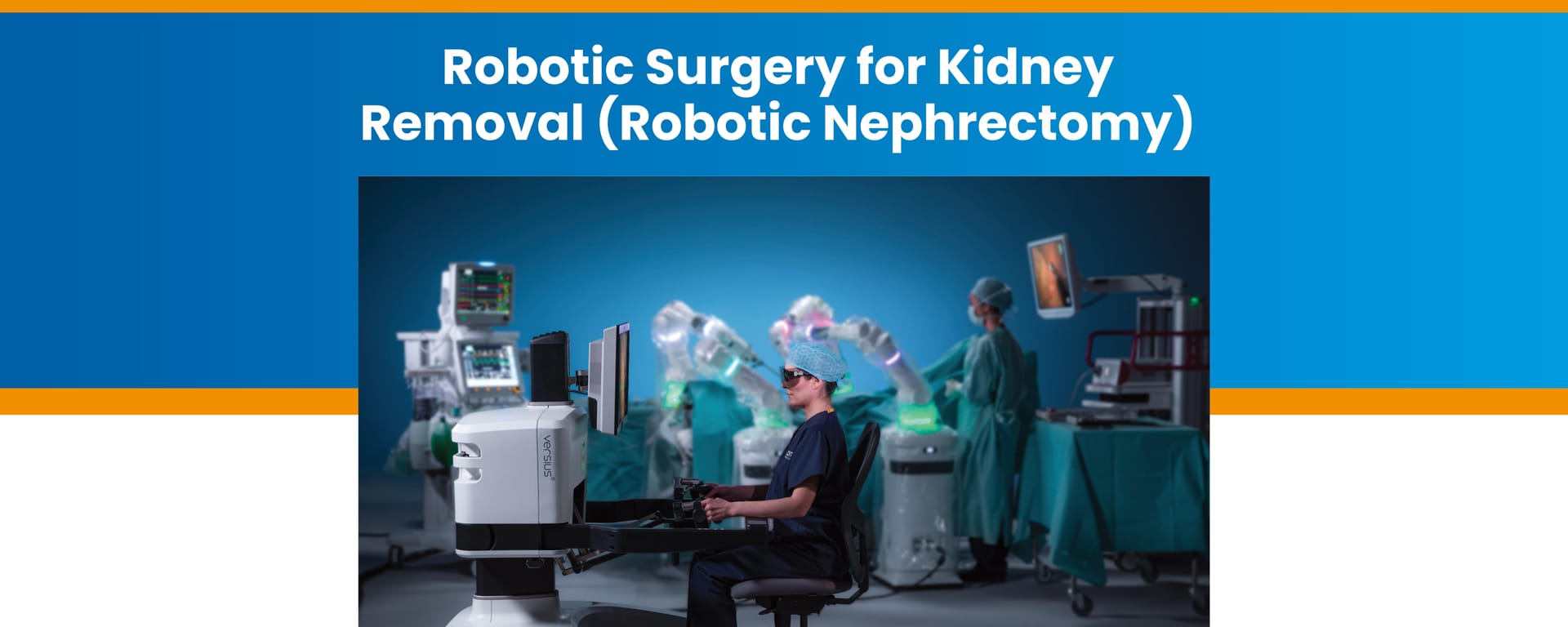
Have you been diagnosed with kidney disease or a kidney tumour? This can be quite scary. But now, due to advancements in medical technology, your treatment journey doesn’t have to be painful, long, or filled with big scars.
Robotic nephrectomy is a cutting-edge treatment for you. It is a minimally invasive kidney removal procedure. Whether it is for removing your tumor or an entire kidney, this procedure offers a high-precision, low-pain solution. It makes sure that you recover faster and live better.
Instead of large incisions, this technique uses a robotic surgical system. The surgery is done through tiny cuts. Therefore, this means less blood loss, less pain, and quicker return to your normal life.
If you are looking for top hospitals in metro cities, NU Hospitals, Bengaluru, is your first choice.
What is Robotic Nephrectomy
Robotic nephrectomy is a minimally invasive surgical procedure performed by Uro-oncologist. It removes all or part of your kidney using a robotic surgical system. A surgeon controls robotic instruments using a two-handed console. The robotic system will offer a 3D view and let the surgeon work with amazing precision to remove a whole kidney or the diseased part.
This method is used for kidney tumor surgery, chronic kidney infections, kidney disease/injury or non-working kidneys. It is a significant step up from traditional open surgery and laparoscopic nephrectomy.
Process of Robotic Neohrectomy
The process of robotic nephrectomy is a minimally invasive kidney removal. Hence, no big cuts, less pain, better precision. The procedure is performed under general anesthesia, so you will not feel anything.
-
Small Incisions:
Your surgeon will make a few small incisions, typically 1 cm each, in your abdomen.
-
The Robotic Surgical System
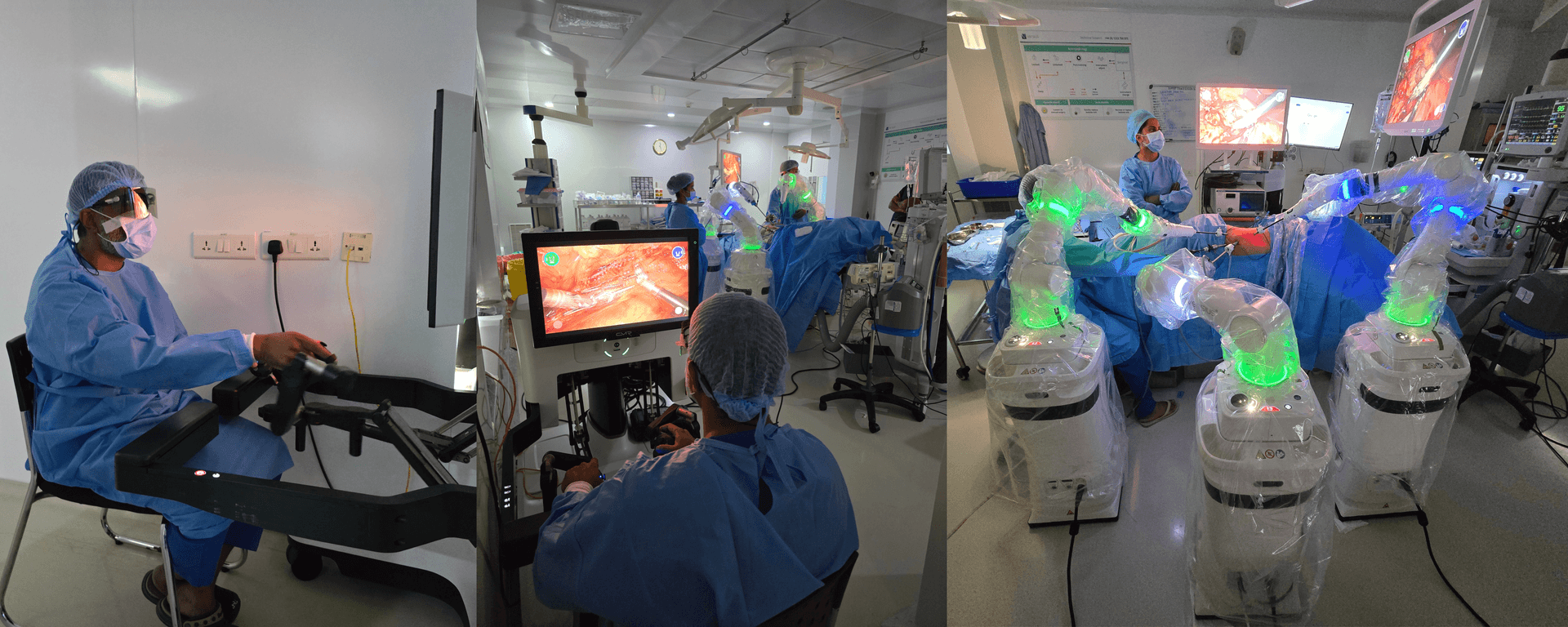
The robotic arms and a camera are inserted into your abdomen through these tiny incisions. The camera provides the surgeon with a highly magnified, 3D view of the surgical area on a screen.
-
Removal of the Kidney
The surgeon operates from a console. They use hand and foot controls to guide the robotic arms to dissect the kidney and remove the tumor. The robotic instruments have a greater range of motion than human hands.
Your kidney or the affected area is removed with the help of one of the small incisions.
-
Closing the Incisions
The instruments are then taken out, and the incisions are closed with stitches or surgical glue.
-
Recovery
Most patients are up and moving the same or the next day!
Benefits of Robotic Nephrectomy
There are several advantages that robotic nephrectomy offers over traditional surgery.
-
Less Pain
In robotic nephrectomy, you get smaller incisions. Therefore, less trauma to your body and less postoperative pain.
-
Faster Recovery
Robotic nephrectomy will offer you a shorter hospital stay (usually 3-4 days). You can return to your daily activities sooner compared to traditional surgery.
-
Minimal Scarring
The small incisions in the robotic procedure result in tiny and less noticeable scars.
-
Reduced Blood Loss
The better precision of the robotic instruments minimizes bleeding during the operation. This reduces the need for blood transfusions.
-
Greater Precision
The 3D magnification and fine control offered by the robotic surgical system offer better precision. This is beneficial for partial nephrectomy and preserving as much of your healthy kidney tissue as possible.
Open Nephrectomy Vs Robotic Nephrectomy
If you are debating between your choices, whether to go for open nephrectomy or robotic nephrectomy, here is a table of comparison.
Feature |
Open Nephrectomy |
Robotic Nephrectomy |
Recovery Time |
8-12 weeks |
4-6 weeks |
Hospital Stay |
4-7 days or longer |
1-4 days |
Incision Size |
Large, often 8-12 inches |
Small, a few 1-cm incisions |
Pain Level |
Significant |
Significantly less |
Blood Loss |
Higher risk |
Minimal |
Scarring |
Prominent scar |
Tiny, barely noticeable scars |
Risks |
Higher risk of infection and complications |
Lower risk of infection and complications |
Kidney Cancer Surgery Options
If you have been diagnosed with a kidney tumor, the choice of your surgery will depend on the tumor size and location. Here are your major options when it comes to kidney cancer surgery.
-
Radical Nephrectomy
Radical nephrectomy is the removal of the entire kidney, along with surrounding tissue. Sometimes your adrenal gland and lymph nodes may also be removed.
It's typically done for larger or more complex tumors. Both open and robotic methods can be used for this procedure.
-
Partial Nephrectomy
Partial nephrectomy is also known as nephron-sparing surgery. This procedure involves removing only the cancerous part of your kidney while leaving your healthy tissue intact.
This is a preferred choice for smaller tumors as it helps preserve your kidney function. A robotic partial nephrectomy is very effective for this due to its precision.
These procedures include different kinds of robotic kidney surgery. Their aim is to completely remove your tumor while minimizing the impact on the remaining kidney.
Being told that you need to get kidney surgery can shake your ground. But thanks to robotic kidney surgery, you don't need to worry anymore.
So if you are wondering now what the next step is for you, don't be scared. We at NU Hospitals are here to help you choose the best path for you.








