 Nephrology
 Urology
 Andrology
 Fertility (IVF)
 General Nephrology
 Paediatric Nephrology
 Dialysis
 Renal (Kidney) Biopsy
 CRRT
 Peritonial Dialysis
 Robotic Surgery
 Urinary Incontinence
 Uro-Oncology
 Laparoscopic Urology
 Reconstructive Urology
 Anaesthesiology
 Radiodiagnosis
 Nutrition and Dietetics
 Pediatric and Immunization
 Cardiology
 Intensive Care Unit




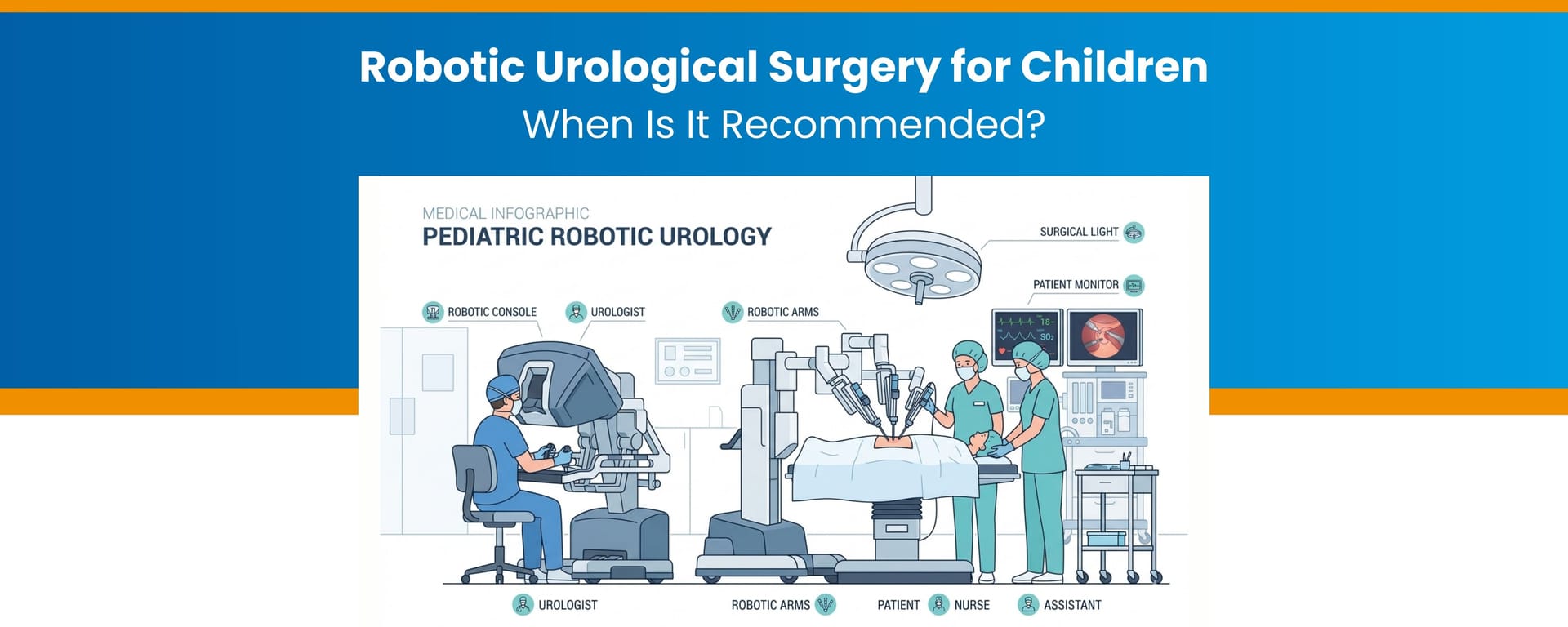
Technological leaps have changed how surgeons treat children. Robotic urological surgery for children is a key example of this, offering a minimally invasive alternative to traditional open surgery. It is now widely accepted in hospitals for specific procedures where precision is the priority. Let's take a deep look at when it is recommended for children.
Understanding Paediatric Robotic Urological Surgery
This method involves a surgeon controlling robotic arms from a computer console. The robotic system does not act on its own; it mirrors the surgeon’s movements with extreme accuracy. Because children have smaller body structures, the precision offered by these robotic tools is a significant advantage over manual instruments.
The equipment provides a magnified 3D image, allowing the surgeon to see fine details clearly. This approach is commonly utilised in paediatric urology, general surgery, and some thoracic cases. The decision to use this technology depends on the child’s specific diagnosis, weight, and age. It aims to reduce scarring and accelerate the patient's overall recovery.
When Is Robotic Surgery Recommended for Kids?
Many parents ask, When is robotic surgery recommended for kids, and the answer depends on the specific surgical goals. Robotic-assisted procedures are typically considered when:
-
The operation requires very high precision
-
Smaller incisions are clearly better than a large open cut
-
The child’s body is big enough for the instruments to move safely
-
The surgeons have the right skills for paediatric robotic work
Doctors mostly use this for non-emergency, planned surgeries like fixing birth defects or working in tight areas of the body. It isn't the right choice for every situation, though. A team of experts will check your child’s case carefully to make sure the robot really is a better option than traditional surgery.
Common Conditions Treated Using Robotic Techniques
Robotic-assisted surgery is a sophisticated tool used for children where precision is critical. Examples include:
-
Robotic Ureteric Reimplantation
-
Robotic Pyeloplasty
By using robotic arms, surgeons can operate in tight spaces with better dexterity than traditional tools allow.
Benefits of Robotic Surgery in Pediatric Patients
The clinical shift toward this technology is due to the benefits of robotic surgery in pediatric patients. Because children’s bodies are small and developing, these technical perks matter.
Key benefits include:
-
Near-invisible scarring from small ports.
-
Extremely low blood loss.
-
Significantly less discomfort after waking up.
-
A quicker trip home from the hospital.
-
Returning to school and activities quickly.
With high-definition 3D cameras, surgeons gain a visual advantage over the naked eye, ensuring that every delicate movement remains incredibly precise and highly controlled.
Comparing Robotic Surgery with Traditional Approaches
Doctors choose between robotic, laparoscopic, or open surgery based on the child's needs. Robotic procedures are less invasive than open surgery, with smaller cuts and less tissue trauma. Compared with standard laparoscopy, pediatric robotic surgery offers greater instrument flexibility and improved depth perception. This helps significantly with complex reconstructions or suturing in small spaces. Traditional surgery is still an excellent option for many kids. Robotic surgery is chosen only when it clearly offers a better result for the patient, rather than just using the latest equipment for its own sake.
Safety of Robotic Surgery in Children
Evaluating the safety of robotic surgery in children requires looking at clinical outcomes. Data suggests that, in the hands of trained paediatric surgeons, robotic procedures are a safe and effective option.
Key safety considerations include:
-
Careful selection of children based on size and health
-
Strict use of paediatric-specific surgical guidelines
-
Specialised robotic training for the surgical team
-
Constant patient monitoring during and after surgery
The technology includes built-in safety features like motion scaling and tremor reduction to improve control. It is vital to understand that the surgeon is in complete control of every movement at all times. Evidence confirms that complication rates for robotic surgery in children are similar to, or sometimes better than, those of traditional open or laparoscopic methods.
Recovery and Postoperative Care
Recovery following robotic surgery for children is generally smoother compared to open procedures. Most children experience less pain and can start gentle movement and oral intake sooner after surgery.
Postoperative care focuses on:
-
Keeping your child comfortable using age-appropriate medication
-
Gently monitoring for infection or complications
-
Supporting a gradual return to normal activity levels
-
Friendly follow-up appointments to assess healing and outcomes
The resulting reduction in hospital stay length facilitates faster resumption of family routines. This transition is a key factor in improving the emotional well-being of both the paediatric patient and their caregivers.
Limitations and Considerations
It is essential to understand that robotic surgery is a tool, and like any tool, it has its limits. Not every hospital has a paediatric robot, and surgeons need specific, lengthy training to use them. For very small babies, the instruments might be too cumbersome, and for emergencies, the preparation time might be too long. Each child’s case is unique. We encourage a complete discussion with the surgeon about the pros and cons of all possible surgical methods.
Making an Informed Decision
Making decisions for your child can be tough. By learning about the role of robotic surgery, you can feel much more prepared. Ask your surgeon about their experience and what you should expect in the days following the operation. This helps everyone stay on the same page. The priority is always to treat the illness while keeping your child's physical and emotional well-being at the centre of everything we do.
Conclusion
Robotic surgery at NU Hospitals is a significant milestone in paediatric care. It gives us a way to be incredibly precise. It isn't the only way, but it is a very valuable way to reduce trauma and speed up recovery. With an understanding of the safety of robotic surgery in children, you can move forward with confidence. As the years go by, more and more children will benefit from this remarkable technology.








