 Nephrology
 Urology
 Andrology
 Fertility (IVF)
 General Nephrology
 Paediatric Nephrology
 Dialysis
 Renal (Kidney) Biopsy
 CRRT
 Peritonial Dialysis
 Robotic Surgery
 Urinary Incontinence
 Uro-Oncology
 Laparoscopic Urology
 Reconstructive Urology
 Anaesthesiology
 Radiodiagnosis
 Nutrition and Dietetics
 Pediatric and Immunization
 Cardiology
 Intensive Care Unit




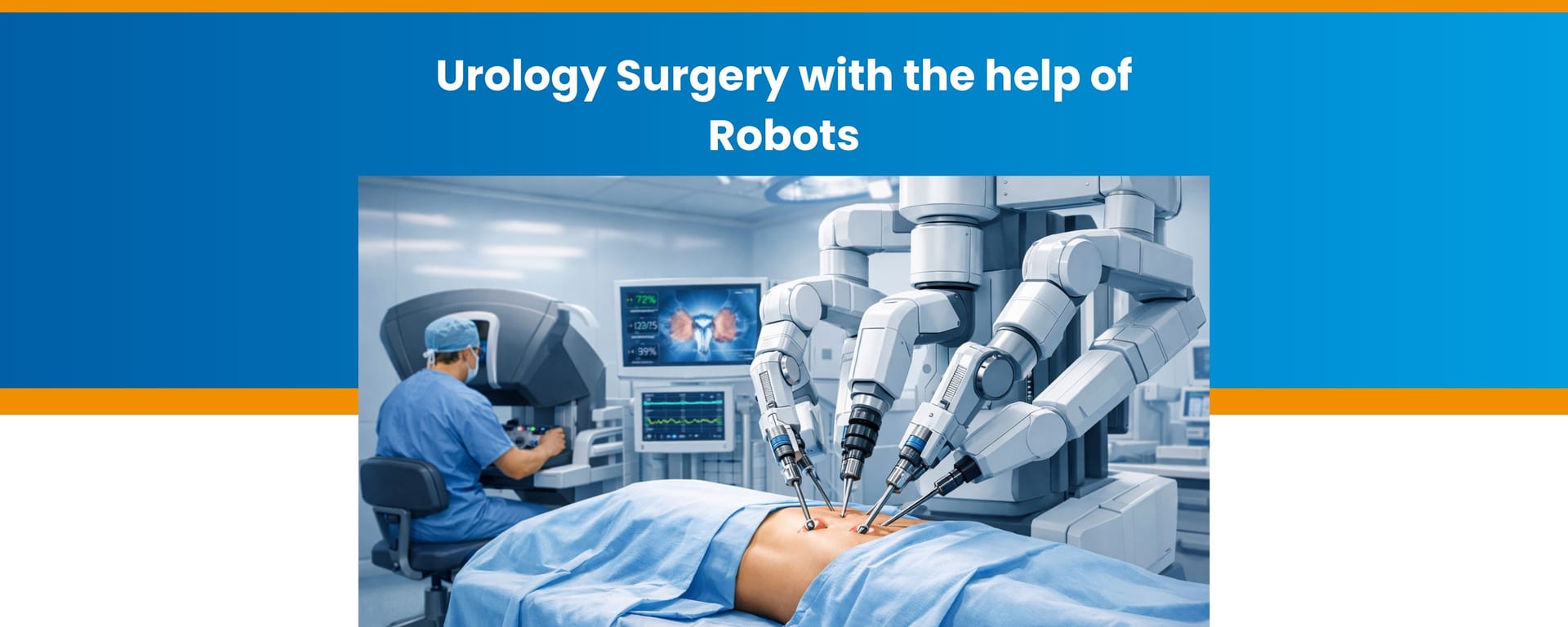
If you need urological surgery, the technology used matters. Robotic-assisted urology surgery is a practical, minimally invasive choice that may offer advantages over traditional open surgery. It offers greater precision, which means you spend less time in the hospital and have a lower risk of complications.
At the Robotic Centre of Excellence at NU Hospitals, the focus is on experience and results. Their surgeons have the time needed to protect nerves and clear out disease effectively. This article gets straight to the point about how robotic surgery evolved, why it's better for you, and what the future holds for patients.
The Evolution of Urological Surgery
Historically, urological procedures such as prostate, kidney, and bladder surgery were performed through open operations requiring large incisions. Although effective, open surgery was associated with:
-
Significant intraoperative blood loss
-
Longer hospitalisation
-
Higher postoperative pain
-
Extended recovery periods
Laparoscopic surgery marked the first major shift towards minimally invasive care. Smaller incisions reduced trauma, but surgeons were limited by rigid instruments and two-dimensional imaging.
Robotic platforms overcame these limitations by introducing 3D high-definition visualisation, enhanced dexterity, and intuitive motion, allowing surgeons to operate with remarkable precision in confined anatomical spaces.
Understanding Robotic-Assisted Urology Surgery
It is a common misconception that in robotic surgery, machines work alone. Actually, the surgeon stays in full control at a console, directing all movements. In CMR Versius surgery urology, the system acts as an advanced extension of the surgeon’s hands. Improving visibility and precision, it helps the surgeon work more effectively while maintaining total human oversight during the operation.
The cutting-edge CMR Versius Surgery Urology System provides:
-
Magnified 3D vision: A crystal-clear, high-definition view that makes the smallest vessels look large and clear.
-
Wristed instruments: Unmatched dexterity enables the surgeon to navigate around corners and into tight spaces with ease.
-
Tremor filtration: Complete stabilisation of hand movements for rock-solid precision during the most delicate parts of the surgery.
-
Motion scaling: The ability to scale hand movements down for microscopic accuracy during tissue dissection.
This precision is what allows for a proper nerve sparing technique, which is vital for your recovery. By being this accurate, the surgeon can ensure the best oncological outcomes, treating the problem while keeping the rest of your body functioning as it should. It’s a practical, effective way to get the best results.
Comparing Surgical Approaches in Urology
Understanding the distinction between open, laparoscopic, and robotic techniques helps clarify why many patients and clinicians prefer robotic methods today.
Open vs Laparoscopic vs Robotic Surgery
Feature |
Open Surgery |
Laparoscopic Surgery |
Robotic Surgery |
Blood loss |
Highest |
Moderate |
Lowest |
Hospital stay |
Longest |
Shorter |
Shortest |
Recovery |
Slow |
Faster |
Fastest |
Precision |
Limited by hand movement |
Improved but restricted |
Highest with articulated instruments and 3D vision |
In the choice of robotic vs laparoscopic urology, robotics is now preferred for cancer treatments due to its unmatched surgical accuracy.
Core Applications in Robotic Urology
Robotic platforms are now widely used in three major areas: prostate, kidney, and bladder surgery.
Robotic Prostatectomy
Robotic-assisted surgery has emerged as the definitive standard for managing localised prostate cancer in modern urology. The robotic prostatectomy benefits are comprehensive, focusing on oncological clearance and the meticulous preservation of post-operative quality of life. By utilising 3D magnification, surgeons navigate the pelvic anatomy with heightened precision, minimising collateral tissue damage.
The robotic prostatectomy benefits include:
-
Precise cancer removal through enhanced visual clarity and superior instrument dexterity.
-
Optimised patient safety evidenced by consistently lower transfusion rates.
-
Superior functional outcomes in terms of urinary continence recovery.
-
Meticulous preservation of erectile function via established nerve-sparing techniques.
Yes, the cost of robotic prostatectomy is higher than a standard operation. But you have to look at the total bill, including your time away from work and the risk of complications. Because you get home faster and heal better, the overall cost of robotic prostatectomy is often much more sensible when you consider your long-term health and your ability to get back to your normal routine.
Robotic Partial Nephrectomy
If you have a small kidney tumour, you want the cancer out without losing the whole kidney. Robotic partial nephrectomy is the most practical way to achieve this. It lets the surgeon be incredibly precise, removing only the bad tissue while saving the good. This accuracy is essential for a successful operation, ensuring the cancer is gone and the kidney functions properly afterwards.
Advantages include:
-
Reduced warm ischaemia time: Improved suturing efficiency helps minimise the period of blood flow interruption to the organ.
-
Precise tumour excision: High-definition magnification correlates with a lower rate of positive surgical margins compared to manual techniques.
-
Lower complication rates: Using smaller instruments leads to less trauma to the body and a much safer post-operative period.
-
Excellent oncological outcomes: Several studies have shown this method is just as effective at clearing cancer as older techniques.
By learning about robotic surgery for kidney cancer, patients can see why smaller incisions and a faster recovery make it the preferred choice for treating small tumours while saving the kidney.
Robotic Cystectomy
Bladder cancer surgery is a major urological procedure that involves removing the bladder and lymph nodes and rebuilding the urinary path. Robotic cystectomy is now frequently used to improve the safety and accuracy of this operation. The robotic system provides a zoomed-in 3D view and flexible tools that allow the surgeon to work more effectively in the tight spaces of the pelvis than in traditional surgery.
Robotic cystectomy enhances:
-
Lymph node dissection accuracy: High-definition zoom allows surgeons to remove lymph nodes thoroughly, which is vital for knowing how far the cancer has spread.
-
Reconstruction precision: Flexible robotic tools make it easier to reconstruct the new urinary path, helping prevent leaks after surgery.
-
Blood loss control: With a clearer view, the surgeon can avoid blood vessels, resulting in reduced blood loss during the procedure.
-
Overall postoperative recovery: Because the body isn't opened up in the traditional way, healing is much faster and less painful.
Clinical Outcomes and Safety Profile
Global data consistently demonstrate that robotic-assisted urology surgery is associated with:
-
Reduced intraoperative blood loss
-
Lower complication rates
-
Shorter robotic surgery hospital stay
-
Faster return to daily activities
-
Comparable or improved cancer control
Centres with high surgical volumes and experienced robotic surgeons achieve particularly strong results. At the Robotic Centre of Excellence at NU Hospitals, extensive console experience translates into high nerve preservation rates, low conversion to open surgery, and superior functional recovery outcomes.
Patient Experience and Recovery
A central advantage of this technology is the streamlined robotic surgery recovery. Reduced incision sizes and the use of high-precision instruments ensure minimal internal trauma, directly resulting in faster healing and shorter recuperation.
Robotic Surgery Recovery Timeline
-
Early Movement: Mobilisation within 24 hours is standard, reducing the risk of complications and boosting morale.
-
Lower Pain: Minimal trauma leads to less discomfort and reduced dependency on analgesics.
-
Stay Duration: A shortened robotic surgery hospital stay is a major benefit for many patients.
-
Return to Work: Healing is often fast enough to allow for an early return to professional activities.
This surgical approach yields clear benefits for urological conditions. Patients must locate expert robotic urologists nearby to access these technological advancements, which are specifically designed to enhance precision and improve long-term functional recovery.
Why Robotic Surgery Excels in Nerve-Sparing Procedures
The preservation of neurovascular bundles is a key determinant of functional outcomes in urological surgery. The neurovascular bundles are fragile and easily damaged, which can impair urinary and sexual function. Robotic systems provide the precision required to handle these sensitive areas, offering high-definition visualisation and controlled movement to protect nerves during the removal of cancerous tissue.
The robotic platform provides:
-
Magnified anatomical detail: High-definition 3D views allow the surgeon to clearly see fine nerve fibres.
-
Precise tissue dissection: Flexible instruments ensure careful nerve separation without using excessive force.
-
Improved visual identification: Superior depth perception enables more precise localisation and preservation of neurovascular bundles.
The Role of Surgeon Expertise
Surgeon experience is the primary determinant of success in robotic-assisted procedures. Key factors include console volume and formalised training. By utilising multidisciplinary care and evidence-based protocols, surgical centres can ensure that the robotic platform is used safely to achieve superior functional and oncologic outcomes.
-
Console case volume
High procedural volumes are directly associated with better consistency and lower complication rates.
-
Technical training
Structured training ensures that surgeons can perform the procedure safely and with precision.
-
Multidisciplinary collaboration
Multidisciplinary teams facilitate a holistic approach to patient management and long-term clinical surveillance.
-
Evidence-based protocols
Standardised clinical guidelines are essential for maintaining safety and accelerating recovery.
The Future of Robotic Urology
Modern robotic surgery is defined by its ability to integrate new technology into daily clinical practice. As these platforms evolve, they provide surgeons with digital tools that enhance every phase of a urological procedure. These refinements enhance mechanical precision, ensuring that surgical high-performance standards are replicated across all clinical environments and operating teams.
-
Image-guided tumour mapping: Advanced imaging provides a clearer view of tumours, supporting accurate removal and tissue conservation.
-
Artificial intelligence integration: AI tools analyse data to improve surgical efficiency and predict outcomes.
-
Augmented reality overlays: AR provides real-time anatomical maps, helping surgeons avoid critical structures during delicate dissections.
-
Enhanced instrument articulation: Next-generation robotic tools offer superior flexibility and movement in confined surgical fields.








