 Nephrology
 Urology
 Andrology
 Fertility (IVF)
 General Nephrology
 Paediatric Nephrology
 Dialysis
 Renal (Kidney) Biopsy
 CRRT
 Peritonial Dialysis
 Robotic Surgery
 Urinary Incontinence
 Uro-Oncology
 Laparoscopic Urology
 Reconstructive Urology
 Anaesthesiology
 Radiodiagnosis
 Nutrition and Dietetics
 Pediatric and Immunization
 Cardiology
 Intensive Care Unit




The evolution of urology has been marked by the rise of minimally invasive surgery, offering alternatives to invasive open operations. Robotic and laparoscopic methods are the primary choices, focusing on reducing scarring and hospital stays.
Identifying the difference between robotic and laparoscopic surgery involves examining how each technology assists the surgeon. Such information allows patients to make evidence-based decisions regarding their specific surgical plan and the resulting clinical goals.
Understanding the Techniques
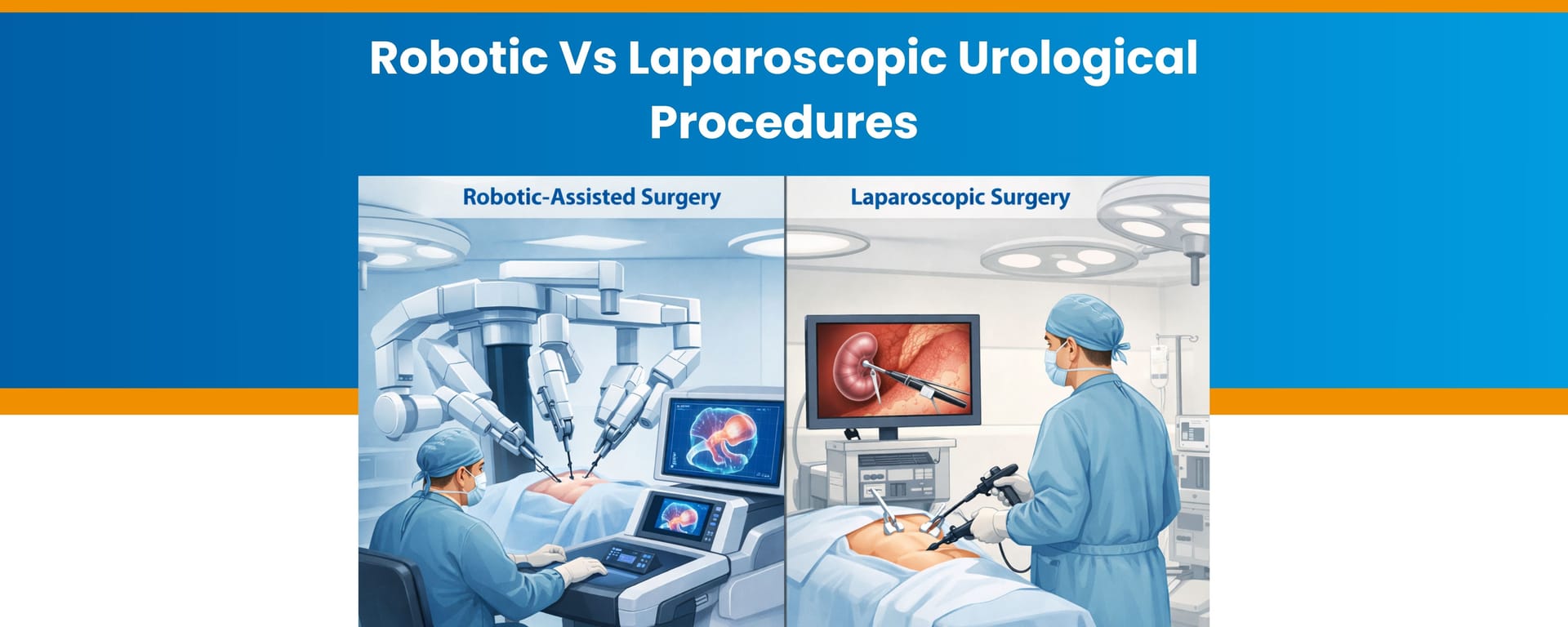
Minimally invasive urology is structured into two main categories: laparoscopic and robotic surgery. Laparoscopy uses small incisions, a camera, and long instruments that the surgeon manipulates manually. This reduces patient trauma and improves the visualisation offered by open surgery.
Conversely, robotic urological surgery introduces an advanced interface where the surgeon sits at a console. Their hand movements are converted into refined actions by robotic arms within the patient. A major benefit is the high-definition, three-dimensional view, which offers far greater depth perception than standard monitors.
Although both are minimally invasive, the difference between robotic and laparoscopic surgery lies in the technical execution, the quality of visual data, and the physical strain on the surgeon. These distinctions are critical for understanding how different technologies can impact surgical precision and long-term patient outcomes.
Key Differences Between Robotic and Laparoscopic Surgery
When comparing robotic vs laparoscopic urology surgery, several important differences emerge:
Visualisation
Robotic hardware generates a high-definition 3D image, granting the surgeon enhanced depth perception. In contrast, standard laparoscopy often utilises 2D visual feeds, which can complicate depth judgment and fine dissection during the procedure.
Instrument Control and Dexterity
The wristed articulation of robotic tools provides a range of motion that surpasses that of straight, rigid laparoscopic instruments. This allows for more fluid movements and greater precision during the most delicate surgical steps.
Ergonomics
Robotic surgery allows the consultant to operate while seated at a console, reducing fatigue. In laparoscopic surgery, the surgeon must stand, which can be more physically demanding during long or difficult operations.
Learning Curve
Advanced robotic interfaces may shorten the technical learning curve for some surgeons. Regardless of the technology used, a high level of proficiency requires specialised training and a significant volume of surgical cases.
Benefits of Robotic Urological Surgery
Robotic systems offer a descriptive advancement in surgical technology. The benefits of robotic urological surgery are as follows:
Greater Precision and Control
The robot translates hand movements into sub-millimetre actions. This technical precision is essential for delicate urological tasks, such as suturing a new bladder neck or sparing pelvic nerves.
Smaller Incisions and Reduced Trauma
Reducing the surgical footprint is a major benefit for the patient. Minimally invasive surgery results in less pain and a much faster transition back to normal life.
Improved Visualisation
The 3D HD view offers a magnified, clear perspective of the internal anatomy. This technical clarity allows for the careful preservation of structures that are hard to see with the naked eye.
Better Ergonomics for Surgeons
The surgeon operates from a seated position, which prevents the physical exhaustion that can occur during long-standing procedures. This ergonomic stability supports consistent surgical performance.
Potential for Better Functional Outcomes
Research indicates that robotic techniques may improve functional recovery, such as bladder control and potency. The high degree of precision makes it a preferred option for nerve-sparing urological operations.
Benefits of Laparoscopic Urology Procedures
Modern urological practice continues to rely on laparoscopy as a systematic and effective minimally invasive surgical method.
Proven Safety and Effectiveness
As a modern surgical standard, laparoscopy is trusted for its safety. It provides excellent outcomes for patients with various bladder and kidney conditions.
Small Incisions and Faster Recovery
The systematic use of keyhole surgery ensures that patients recover quickly. This modern approach reduces pain and results in minimal post-operative scarring.
Lower Cost
Laparoscopy is the more economical way to deliver modern urology. It avoids the high costs of robotic technology, ensuring that care remains accessible to all.
Short Hospital Stay
Shorter hospitalisations are a key benefit of this systematic approach. Patients can return home faster, which is better for their overall recovery and well-being.
Risks and Outcomes of Robotic and Laparoscopic Urology Procedures
Robotic and laparoscopic urology surgery improves upon open surgery through smaller incisions and faster recovery. Risks include injury to nerves, vessels, or the bowel, and respiratory issues from pneumoperitoneum. These are vital when examining the risks and outcomes of laparoscopic urology procedures and robotic options.
Outcomes are largely identical with respect to safety and stay length. Robotic surgery provides a better view but costs more and takes longer. For kidney surgery, blood loss and complication rates are similar. Robotics may help in very complex cases. Both are safe; understanding the risks helps tailor the treatment to the patient and surgeon.
Choosing the Right Minimally Invasive Urology Surgery
Choosing the right minimally invasive urology surgery depends on a range of patient-centred and clinical factors:
Type and Complexity of Condition
Robotic surgery may offer greater technical advantages for complex reconstructive urological procedures and cases requiring meticulous dissection or suturing. Simpler laparoscopic operations can often be just as effective for straightforward conditions.
Surgeon Experience
Outcomes are strongly tied to the surgeon's and the surgical team's experience. High-volume centres with experienced robotic surgeons can achieve excellent results, while highly skilled laparoscopic surgeons may achieve comparable outcomes for many procedures.
Institutional Resources
The high cost and maintenance requirements of robotic systems mean that institutional resource availability often influences which technique is recommended to the patient.
Patient Preference and Health Status
The final decision involves the patient’s own goals, such as recovery speed and cosmetic outcomes, which the healthcare provider evaluates alongside clinical evidence.
Conclusion
The difference between robotic and laparoscopic surgery is found in the tools and visualisation used during the procedure. Both offer the keyhole advantage of smaller scars and quicker healing compared to open surgery. Robotics are designed to help with very difficult and complex reconstructions, while laparoscopy remains a standard and effective choice for many routine urological operations.
The best results come from a surgeon who is highly experienced in the chosen technique and a team providing specialised care. Effective recovery begins by evaluating your condition and health needs. Informed decision-making ensures the chosen surgical approach, robotic or laparoscopic, is the safest and most successful way to reach your health goals after surgery.








