 Nephrology
 Urology
 Andrology
 Fertility (IVF)
 General Nephrology
 Paediatric Nephrology
 Dialysis
 Renal (Kidney) Biopsy
 CRRT
 Peritonial Dialysis
 Robotic Surgery
 Urinary Incontinence
 Uro-Oncology
 Laparoscopic Urology
 Reconstructive Urology
 Anaesthesiology
 Radiodiagnosis
 Nutrition and Dietetics
 Pediatric and Immunization
 Cardiology
 Intensive Care Unit




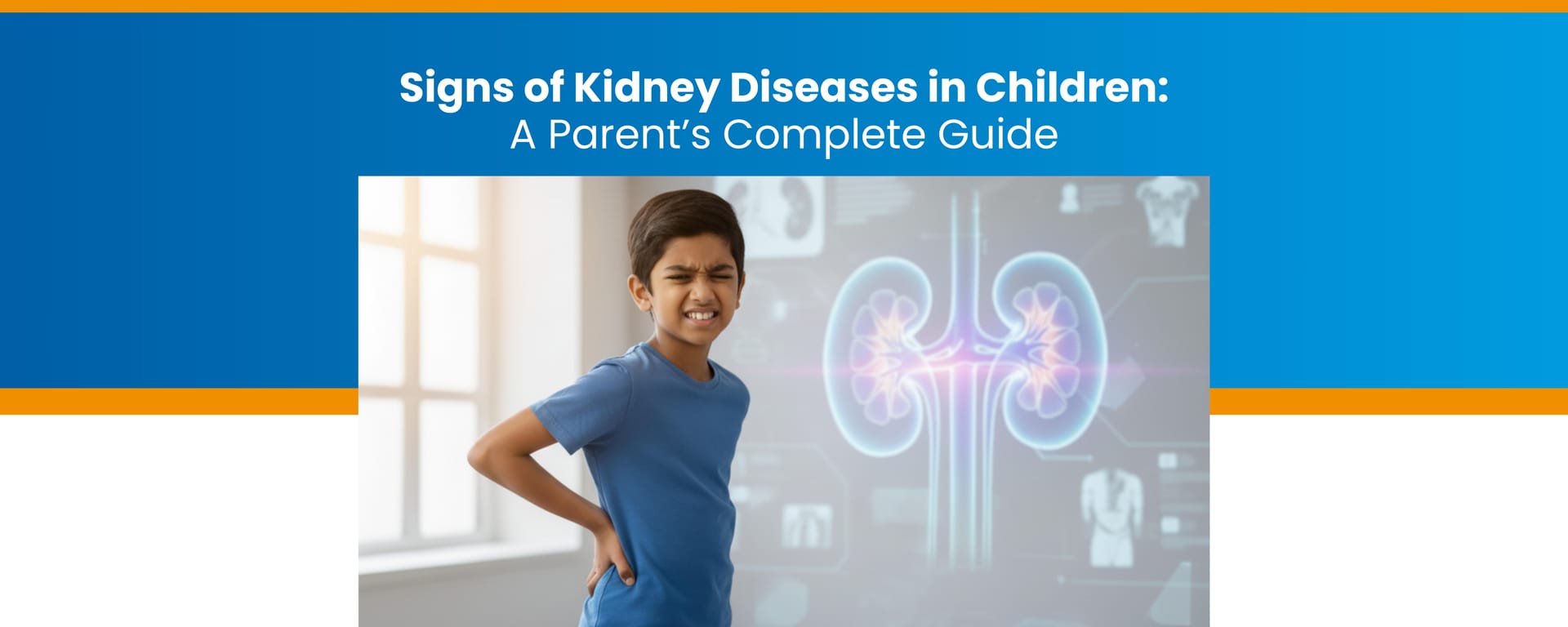
Are you worried about kidney diseases in your children? We understand how disheartening it is to find your little one in such situations.
Kidney diseases creep in silently without any major symptoms in the initial stages. This is why early detection and treatment are of utmost importance.
Early detection can help in preventing major complications and providing the right treatment for your child.
At NU Hospitals, we are committed to providing you not only with world-class, compassionate care but also expert advice and the right information.
Read on as we walk you through the causes, symptoms, diagnosis and treatment options for kidney disease in children.
This guide will help all you parents to know what to watch for and understand your kids’ conditions.
What is Kidney Disease in Children?
When your child’s kidneys are not functioning properly as they should, your child is known to have a kidney disease.
Kidneys are responsible for electrolyte balance, body fluid balance, and filtering of waste. If any or all of these functions are hampered in a child, you should consult a pediatric nephrologist.
There are two types of kidney diseases:
Minor damage to the kidney and its functions, which can be treated with early diagnosis. If left untreated, it may lead to serious complications.
-
Chronic Kidney Disease
CKD is caused over a period of time (may be months or years). This can lead to kidney failure. Look out for early symptoms and consult with our expert pediatric nephrologists as early as possible.
Kidney diseases are rare in occurrence in children. It is difficult to trace any symptoms in the early stages, as they could be minor. Early detection is the key to better treatment and recovery.
Many studies have shown that young boys are more likely to develop CKD than girls.
According to the International Pediatric Nephrology Association, 1 in 10,000 children around the globe are diagnosed with CKD every year.
Common Signs/Symptoms of Pediatric Kidney Diasease
-
Swelling
Puffiness or swelling around the eyes, hands, and feet
-
Changes in Urination
-
-
Increased or decreased frequency
-
Bedwetting
-
Foamy urine
-
Blood in urine
-
Discoloured urine
-
-
Constant Fatigue
-
Loss of Appetite
-
Poor Growth
-
High BP
-
Weak Bones
-
Nausea
-
Weight loss
-
Difficulty in focus
-
Itchy skin
What Causes Kidney Disease in Children
-
Birth defects: Congenital abnormalities (structural problems at birth)
Most kidney disease in children occurs due to birth defects. Might include missing kidneys, improper growth of kidneys or structural problems of the urinary system and kidneys
-
Genetically inherited conditions
Many kidney diseases are inherited through genes; if your family has a history of kidney diseases, there is are high chances that your child also has kidney issues.
-
Urinary tract infections (UTIs)
Repeated bacterial infections can harm the urinary system nd kidneys
-
Nephrotic Syndrome
This is a kidney condition where the kidney’s filters are weak, leading to protein leakage in the urine.
-
Trauma
Injuries to the kidneys or other organs affecting the blood flow to the kidneys can cause kidney disease.
-
Urinary Blockages
If urination is hampered, it is more likely to affect the kidneys as well.
-
Reflux nephropathy (backflow of urine into the kidneys)
When the urine flows backwards, it affects the filter system.
How to Diagnose Kidney Disease in Children?
Our pediatric neurology specialists study your child’s medical history and perform a physical examination, and advise additional tests, such as:
-
Urine Tests
Used to analyse and check for protein/blood presence in the urine
-
Blood Tests
Used to measure kidney function
-
Ultrasound
Used to check the size and shape of the kidneys
-
Kidney Biopsy
A small sample of the kidney tissue is taken to test for damage (in rare cases)
-
Genetic testing
Test for genetically inherited kidney problems
When to see a Pediatric Nephrologist?
Symptoms |
Consultation Urgency |
Swelling or puffiness around the eyes |
Within a few days |
Foamy urine or blood in urine |
Immediately or the next day |
Extreme swelling of hands and feet |
Immediately or on the same day |
Constant vomiting or weakness |
Immediately |
Sudden stop in urine output |
Emergency situation, consult immediately |
Treatment for Kidney Diseases in Children
Our expert pediatric nephrologists and urologists work together and make sure to treat the root cause. They aim at slowing the progression, managing the symptoms and making your child feel better.
Treatments include:
-
Medications
-
-
Meds are used to treat symptoms like
-
Controlling BP
-
Reduce Swelling
-
Anemia treatment
-
-
Surgery
Surgery may be suggested for structural issues, and repair can restore kidney function.
-
Dialysis
Dialysis is advised when the kidneys have stopped working, to filter the blood outside the body.
-
Kidney Transplant
A transplantation can give your kid a new chance in life without constant dialysis sessions.
How do Experts Handle Complications of Kidney Disease?
Kidney diseases affect other parts of the body. It might cause anaemia, bone weakness or infections.
Our expert pediatric nephrologists will help your child manage the issues with:
-
Medication
-
Close monitoring
-
Personalised diets
-
Vaccinations
Prevention of Paediatric Kidney Disease:
Most kidney disease cases in children are inherited or present since birth; they cannot be prevented. But with early detection and proper treatment, the symptoms can be managed. With slower progression, your kid will lead a better and healthier life.
How can you help your Child with Kidney Disease?
You are your child’s backbone, emotional support and strongest advocate. Here is what you can do:
-
Track your child’s fluid intake
-
Follow strict dietary guidelines
-
Provide an adequate amount of water
-
Ensure that timely medication is given to your child
-
Consult with an expert if you notice any side effects or worsening symptoms
-
Do not self-medicate your child
-
Be there for your kid, be their emotional support
-
Help your kid with the right knowledge about their conditions








