 Nephrology
 Urology
 Andrology
 Fertility (IVF)
 General Nephrology
 Paediatric Nephrology
 Dialysis
 Renal (Kidney) Biopsy
 CRRT
 Peritonial Dialysis
 Robotic Surgery
 Urinary Incontinence
 Uro-Oncology
 Laparoscopic Urology
 Reconstructive Urology
 Anaesthesiology
 Radiodiagnosis
 Nutrition and Dietetics
 Pediatric and Immunization
 Cardiology
 Intensive Care Unit





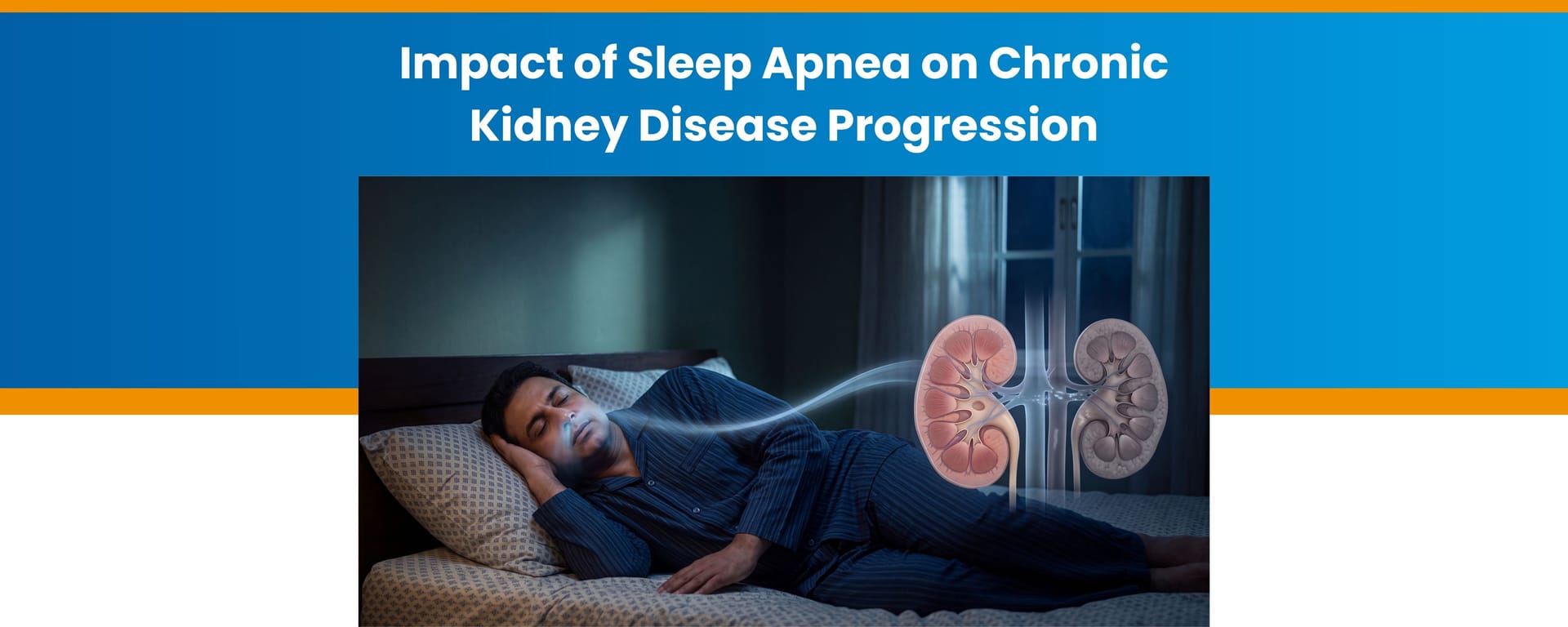
Do you have sleep apnea? Are you constantly tired even after you sleep? Is sleep apnea taking a toll on your body?
You’re not alone. Several people wake up feeling just as exhausted as when they went to bed. You might think it is stress, long work hours, or screen time. However, the real reason is something happening while you sleep. Sleep apnea and kidney disease could be more connected than you think.
Sleep apnea is not just about snoring. It causes repeated pauses in breathing at night. This often leads to low oxygen levels, also known as nocturnal hypoxia. This puts stress on your entire body.
Over time, this can affect your heart, blood pressure, and even your kidneys. This is where the OSA and CKD link becomes important. If you already have kidney conditions, poor sleep can make things worse. And if you do not have it, untreated sleep apnea can slowly increase your risk.
Most people don’t even realize they have sleep apnea. They just feel tired every day. Therefore, early diagnosis matters.
At NU Hospitals, our doctors look beyond your symptoms. They focus on how your sleep, blood pressure, and kidney health are all connected.
Go through this blog to learn more about sleep apnea and kidney disease.
What Is Sleep Apnea and Chronic Kidney Disease (CKD)?
Overview of Obstructive Sleep Apnea (OSA)
Obstructive sleep apnea is a condition where your breathing repeatedly stops during sleep. This is caused by airway blockage and leads to drops in your oxygen levels, also known as nocturnal hypoxia.
A few of the common signs are:
-
Loud snoring
-
Gasping for air at night
-
Poor sleep quality
Understanding Chronic Kidney Disease Stages
Chronic Kidney Disease is a slow loss of your kidney function over time.
Stage |
Kidney Function |
Signs |
Stage 1 |
Normal/slightly reduced |
No symptoms |
Stage 2 |
Mild loss |
Early warning signs |
Stage 3 |
Moderate damage |
Fatigue, swelling |
Stage 4 |
Severe damage |
Complications increase |
Stage 5 |
Kidney failure |
Dialysis or transplant needed |
Why These Two Conditions Are Linked
Both of these conditions affect your blood flow and oxygen supply. They also increase the strain on your heart
These conditions have similar risk factors, such as:
-
Obesity
-
Diabetes
-
Hypertension and sleep apnea
How Sleep Apnea Affects Kidney Function
Oxygen Deprivation and Kidney Damage
When you stop breathing, your blood oxygen levels drop. It is a state known as nocturnal hypoxia.
-
The kidneys are highly sensitive to oxygen levels.
-
Low oxygen levels trigger "oxidative stress."
-
This leads to scarring (fibrosis) of your kidney tissue.
-
Repeated nocturnal hypoxia is an injury to your renal system.
Impact on Blood Pressure and Fluid Balance
-
Sleep apnea raises your blood pressure overnight
-
Your kidneys struggle to regulate fluids
-
This leads to fluid retention and swelling in your legs and face
-
It also increases your urination at night
Inflammation and Hormonal Changes
-
Apnea releases inflammatory markers into your blood.
-
It messes with the RAAS (Renin-Angiotensin-Aldosterone System), which regulates your fluid balance.
-
It can lead to more swelling (edema) and higher pressure in the kidney filters.
Does Sleep Apnea Worsen CKD Progression?
Yes, sleep apnea can worsen your CKD progression.
Evidence Linking OSA to Faster Kidney Decline
Studies show that patients with untreated sleep apnea see a much faster drop in their GFR (Glomerular Filtration Rate). Sleep apnea and kidney disease are closely linked.
Increased Risk of Proteinuria and Hypertension
-
High pressure in the kidneys causes protein to leak into the urine.
-
If your blood pressure does not go down despite medications, sleep apnea is usually the hidden culprit.
Cardiovascular Complications in CKD Patients
-
Sleep apnea puts extra pressure on your heart
-
Low oxygen levels make your heart work harder
-
Blood pressure becomes difficult to control
-
There is a higher risk of heart disease, heart failure, and stroke
-
Fluid buildup in CKD adds more stress on your heart
Symptoms to Watch for in CKD Patients with Sleep Apnea
Loud Snoring and Interrupted Sleep
-
Frequent awakenings
-
Choking or gasping at night
Daytime Fatigue and Poor Concentration
-
Feeling tired even after sleep
-
Difficulty focusing
Worsening Blood Pressure or Swelling
-
Sudden increase in BP
-
Fluid buildup in your body, leading to swelling
How Sleep Apnea Is Diagnosed in CKD Patients
Our doctors at NU Hospitals conduct several tests to diagnose your condition.
Sleep Study (Polysomnography)
-
It is conducted overnight in a sleep lab
-
Sensors monitor brain waves, oxygen, heart rate, and breathing.
Home Sleep Apnea Testing
-
A portable device that you use in your own bed.
-
It tracks breathing interruptions.
-
Great for moderate to severe cases of OSA and CKD link detection.
Kidney Function Monitoring and Tests
-
eGFR helps to check your kidney filtration speed.
-
Urine albumin helps to check for protein leakage caused by nighttime pressure.
Treatment Options for Sleep Apnea in CKD
CPAP Therapy (Continuous Positive Airway Pressure)
-
A mask blows a gentle stream of air to keep your throat open.
-
It is the most effective way to reverse nocturnal hypoxia.
-
It improves your oxygen levels
Weight Management and Lifestyle Changes
-
Losing even 5-10% of your body weight can reduce apnea severity.
-
Avoid alcohol and sedatives before bed.
-
Also, improve your sleep routine
Managing Blood Pressure and Fluid Overload
-
Use diuretics (water pills) as prescribed.
-
Reduce your salt intake to prevent fluid from moving to your neck area at night.
Can Treating Sleep Apnea Slow CKD Progression?
Yes, treating sleep apnea can slow your CKD progression.
Benefits of Early Diagnosis and Intervention
-
Prevents further kidney damage
-
Improves your sleep quality
-
Stabilizes your oxygen levels
Improving Kidney and Heart Outcomes
-
Better blood pressure control
-
Reduced heart strain
-
Improves your overall health
Long-Term Disease Management
-
Slower CKD progression
-
Better quality of life
-
Reduced complications
Comprehensive Kidney Care at NU Hospitals, Bangalore
Are you looking for the best hospital to help you manage your condition? NU Hospitals, Bangalore, is a leading hospital for urology and nephrology. It helps you manage your kidney conditions.
At NU Hospitals, you get:
-
Integrated Nephrology and Sleep Care Approach
-
Advanced Diagnostics and Monitoring
-
Personalized CKD Management Plans







