 Nephrology
 Urology
 Andrology
 Fertility (IVF)
 General Nephrology
 Paediatric Nephrology
 Dialysis
 Renal (Kidney) Biopsy
 CRRT
 Peritonial Dialysis
 Robotic Surgery
 Urinary Incontinence
 Uro-Oncology
 Laparoscopic Urology
 Reconstructive Urology
 Anaesthesiology
 Radiodiagnosis
 Nutrition and Dietetics
 Pediatric and Immunization
 Cardiology
 Intensive Care Unit




Overview
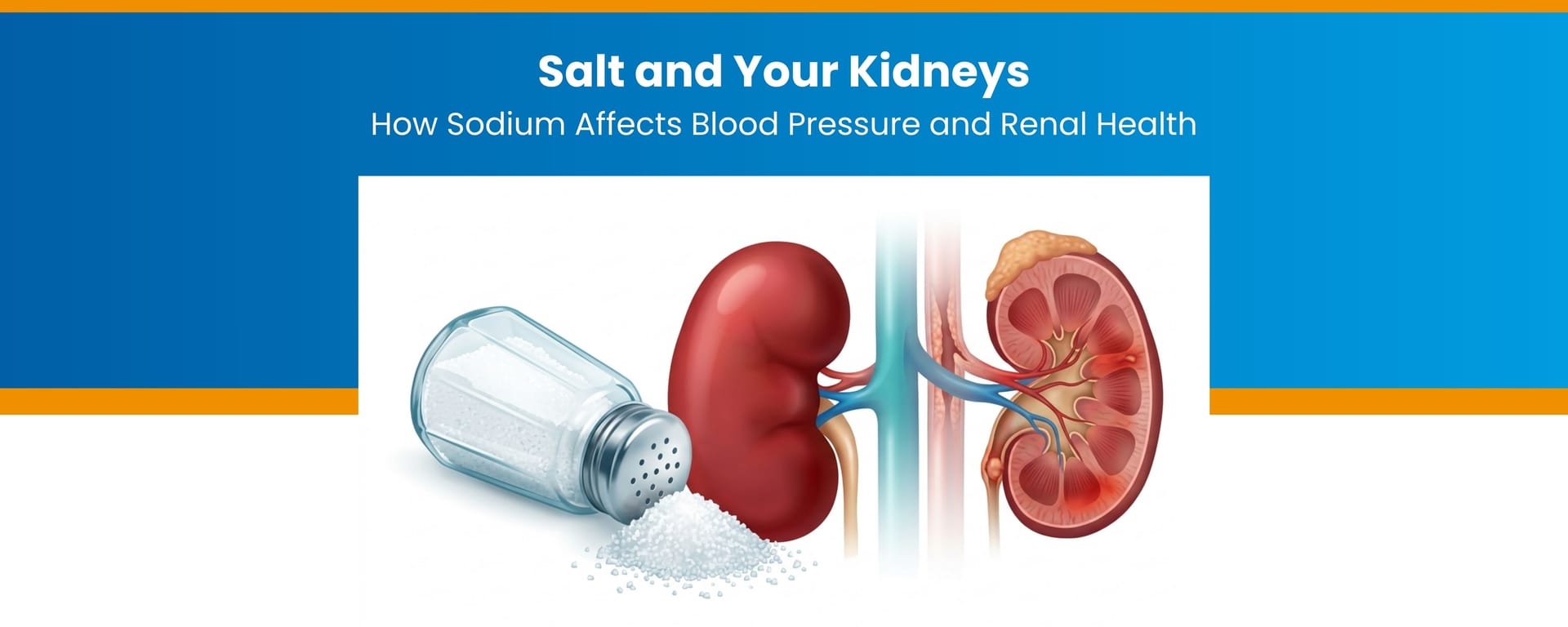
Salt is an ingredient you can almost never ignore. It has become an important part of our daily lives, and in the right amounts, sodium plays an essential role in maintaining fluid balance, supporting nerve transmission, and enabling muscle function. The kidneys are responsible for efficiently filtering waste from a person’s body and excess water from the blood to make urine. For this, it is necessary to maintain an optimal balance of sodium and potassium.
However, the impact of salt on the kidneys is difficult to ignore. Excessive salt intake can disrupt balance, leading to fluid retention, increased blood volume, and high blood pressure.
As always, salt alone is not the problem. The problem lies in excess consumption. Our daily diet has increased our salt intake, making us susceptible to kidney damage. To maintain renal health, we must understand the relationship between sodium, blood pressure, and our kidneys.
Salt and High Blood Pressure: How Sodium Influences Blood Pressure
Salt and blood pressure have a complex relationship. When a person consumes excess sodium, their body responds by retaining water to dilute the sodium. This increases pressure inside blood vessels, making your heart work harder.
If you already struggle with high blood pressure, your doctor may put you on diuretics and vasodilators. Diuretics help remove excess salt & water from your body through urine, while vasodilators relax the muscles lining blood vessels, widening them. However, excess salt consumption can disrupt this treatment by retaining additional fluid and increasing blood volume.
One of the easiest ways to lower high blood pressure is to maintain a low-sodium diet and track how much salt can be safely consumed per day.
How Much Salt Per Day Is Recommended?
According to the World Health Organisation’s recommendations, adults are advised to have less than 2000 mg/day of sodium. In simpler terms, that’s about 5g salt per day, just under a teaspoon. For children aged 2-15, the WHO recommends adjusting the adult dosage based on the child’s energy requirements.
This does not include children who are exclusively breastfeeding (0-6 months) or those who are undergoing complementary feeding with continued breastfeeding (6-24 months).
Make sure to check the labels before consuming food that may be high in sodium. For reference, 1g of salt is equivalent to 400 mg of sodium. Checking the labels will also ensure that you are aware of the hidden sodium in foods, helping you to stick to the daily limit.
How to Follow a Low Sodium Diet for Kidneys
By limiting sodium intake, a person can decrease the risk of developing diseases like hypertension, cardiovascular disease, congestive heart failure, and even chronic kidney disease (CKD). If one wants to follow a low-sodium diet for kidney health, it is important to choose foods naturally low in sodium or with limited added salt.
-
Include lots of vegetables in your diet, including greens, peppers, broccoli, cauliflower, eggplant, carrots, and more.
-
Go for fresh fruits like apples, berries, cherries, pineapple, watermelon, and more.
-
Chicken, egg whites, fish, beef, veal, and pork are good sources of protein, but avoid adding extra salt or purchasing products injected with a sodium solution.
-
Consume whole wheat pasta, brown rice, and quinoa.
-
Include healthy fats such as seeds, nuts, olive oil and avocado.
-
Dairy products like milk and yoghurt can be added to the diet, along with unsalted butter and low-sodium cheeses.
-
You can have unsalted nuts, pumpkin seeds, almonds, and peanuts.
-
Herbs & Spices are a great way of adding flavour to your meal instead of salt. Use garlic powder, onion powder, black pepper, lemon juice, and vinegar.
Tips to Reduce Salt Intake
Consistency and sincerity are everything when it comes to following a low-sodium diet for the kidneys. It is easy to forget your goals and cheat on your diet. Try to follow these tips to make your journey easier:
-
Make sure the salt you are consuming is iodised.
-
Cook with little to no added salt.
-
Keep the saltshaker away from your dining table.
-
If you have normal kidney function replace table salt with potassium-rich, lower-sodium substitutes; however if you are on medications for hypertension which can rise your potassium levels (discuss with your doctor), or have reduced kidney function - better to use only iodized common salt and not to substitute with low sodium high potassium salts
-
Be aware of The Salt Trap, where you may be consuming large amounts of sodium lurking in everyday foods, packaged goods, and restaurant meals:
Food Category |
Common Examples |
Practical Tip |
Bread & Bakery |
Sandwich bread, rolls, bagels, crackers |
Compare nutrition labels and choose lower-sodium options |
Sauces & Condiments |
Mayonnaise, soy sauce, salad dressings, barbecue sauce, ketchup |
Use smaller portions while consuming the product |
Packaged Snacks |
Potato chips, pretzels, salted nuts, popcorn |
Choose unsalted or lightly salted varieties |
Restaurant Meals |
Burgers, pizzas, fried items, curries |
Be mindful of portion size |
Making these small changes will greatly benefit you in reducing sodium intake.
Clinical Benefits of Reducing Sodium Intake
Reducing sodium in your diet is one of the most cost-effective ways to improve health and reduce the burden of disease. It allows better control of fluid retention, helps lower your blood pressure, and reduces proteinuria.
Clinical Parameter |
High Sodium Intake |
After Sodium Reduction |
Blood Pressure |
Elevated systolic and diastolic levels |
Average reduction of 4-10 mmHg |
Edema |
Fluid retention, swelling |
Improved fluid balance |
Proteinuria |
Increase in urinary protein loss |
Reduced protein excretion |
How NU Hospitals Can Help
The Nutrition and Dietetics Department at NU Hospitals is dedicated to helping patients turn their lives around without sacrificing their taste buds. We offer regular personalised assessments and meal plans for kidney-related complications, as well as nutritional care during hospital stays.
The department also conducts community outreach programs, corporate programs, academic events, student intern training, and more.
Patients will receive diet counselling at discharge. Moreover, NU Hospitals offers outpatient diet counselling services to manage conditions affecting the kidneys.
Conclusion
Salt may be unavoidable, but it is manageable. Reducing sodium intake is a step in the right direction for kidney health. With informed dietary choices and appropriate clinical guidance, sodium can be managed effectively, resulting in both blood pressure control and the preservation of renal health.








