 Nephrology
 Urology
 Andrology
 Fertility (IVF)
 General Nephrology
 Paediatric Nephrology
 Dialysis
 Renal (Kidney) Biopsy
 CRRT
 Peritonial Dialysis
 Robotic Surgery
 Urinary Incontinence
 Uro-Oncology
 Laparoscopic Urology
 Reconstructive Urology
 Anaesthesiology
 Radiodiagnosis
 Nutrition and Dietetics
 Pediatric and Immunization
 Cardiology
 Intensive Care Unit




Did you visit the toilet and see blood in urine? Or did your recent blood test mention blood in urine?
It can be quite scary and confusing to find blood in your urine.
Blood in urine can be caused by a urinary infection or dehydration. It can also be caused by kidney stones, prostate problems, or complex conditions that need immediate attention.
Blood in urine does not usually show up clearly. In most cases, it is detected through a urine test during your health check.
Understanding the causes of blood in urine, the symptoms, and knowing the right time to ask for help can protect your long-term kidney and urinary health.
At NU Hospitals, Bengaluru, our doctors see patients with this concern every day. With advanced diagnostics and expert urology care, we help you understand your condition better.
Follow this blog to learn more about blood in urine and its causes.
What is Blood in Urine? (Hematuria)
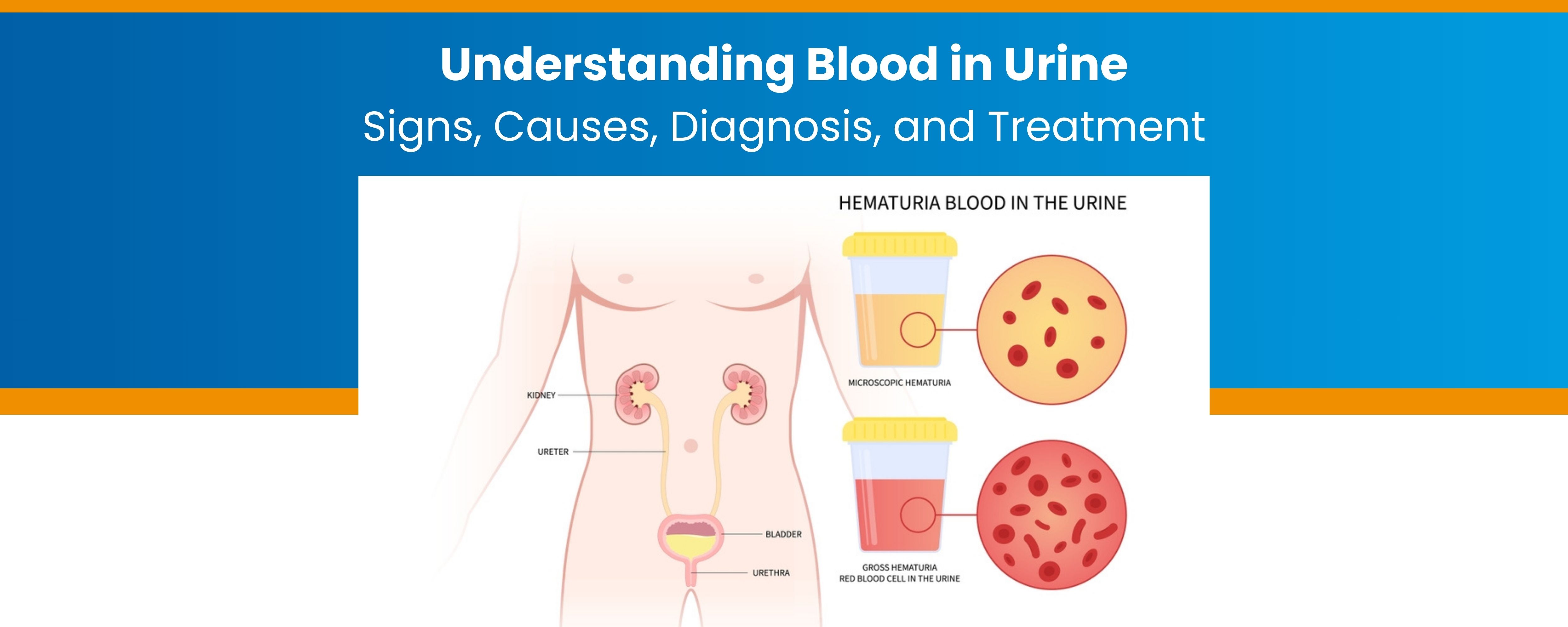
Blood in urine is also known as hematuria. It means red blood cells are present in your urine.
Your urine may look pink or red. It can also look completely normal, but blood can show up in your urine tests.
Blood in urine needs quick medical attention. Hematuria is not a disease. It is a sign that your urinary system needs checking.
What are the Types of Blood in Urine?
There are two main types of blood in urine.
-
Gross Hematuria:
It is when you can see blood in your urine. The urine may look pink, red, or the color of cola.
-
Microscopic Hematuria:
You can not see this with the naked eye. Your urine will look perfectly normal. However, a urine test under a microscope can detect the presence of red cells.
Feature |
Gross Hematuria |
Microscopic Hematuria |
Visibility |
Visible to the naked eye |
Only visible under a microscope |
Urine Color |
Pink, red, or brown tint |
Normal (yellow/clear) |
Detection |
Observed by the patient |
Found in a urine test |
Symptoms and Causes
What are the signs and symptoms of blood in urine?
Usually, the only sign is the change in color of your urine. However, alongwith the causes of blood in urine, you might also experience other symptoms:
-
Painful urination
A burning sensation when you urinate.
-
Urgency
Feeling like you need to urinate constantly.
-
Frequency
Going to the bathroom much more often than usual.
-
Back or side pain
Having constant back or side pain.
-
Clots
In a few cases of gross hematuria, you might experience small blood clots.
What is the cause of blood in urine?
The causes of blood in urine can range from minor irritations to more serious internal conditions.
-
Urinary Tract Infections (UTIs)
Bacteria enter your urethra and multiply in your bladder.
-
Kidney Infections (Pyelonephritis)
Bacteria move from your bloodstream or ureters into your kidneys.
-
Bladder or Kidney Stones
Hard crystals can cause small tears in the lining of your urinary tract.
-
Enlarged Prostate
In men, a growing prostate can compress your urethra and cause bleeding.
-
Kidney Injury
An injury to your kidneys from sports or an accident can lead to blood in urine.
-
Cancer
Bleeding can be a sign of kidney, bladder, or prostate cancer.
-
Strenuous Exercise
Sometimes, intense workouts can lead to trauma in your bladder.
What are the Risk Factors of Blood in Urine?
A few people are more at risk of blood in urine:
-
Age
Men over 50 usually have blood in their urine due to an enlarged prostate.
-
Gender
Women might get blood in their urine due to a UTI.
-
Recent Infection
Kidney inflammation after a viral or bacterial infection. It is quite common in children.
-
Family History
A history of kidney stones or kidney disease.
-
Medications
Certain antibiotics and blood thinners can increase your risk of blood in your urine.
What are the complications of Blood in Urine?
Ignoring blood in urine can be quite harmful. It can lead to:
-
Anemia: If your bleeding is heavy and constant, it can lead to low iron levels in your body.
-
Kidney Failure: If the cause is a chronic kidney disease, and left untreated, it can lead to kidney failure.
-
Urinary Blockage: Large blood clots can sometimes block your flow of urine. It is a medical emergency.
How is Blood in Urine Diagnosed?
Your doctor can diagnose the cause of blood in urine with the help of:
-
Physical Exam: Checking for tenderness in your back or abdomen.
-
Urine test: This is the main test. It checks for infection, minerals (stones), and the concentration of red cells.
-
Imaging Tests: Often, an Ultrasound, CT scan, or MRI is used to get better and clearer images.
-
Cystoscopy: A tiny camera is inserted into the bladder to look for tumors or stones.
What is the Treatment for Blood in Urine?
The treatment for blood in urine will depend entirely on the cause of the blood in urine.
-
Infections
If your cause is an infection, your doctor will give you a course of antibiotics. This usually helps to clear things in a few days.
-
Stones
Small stones need adequate hydration(~2.5 L/day), medicationsto flush out. However, larger ones need minimally invasive procedures to break them up.
-
Enlarged Prostate
If you have an enlarged prostate, your doctor may prescribe medications or minor procedures to shrink the tissue.
-
Cancer
Depending on the stage and type of cancer, your doctor may suggest treatment such as surgery, radiation, or chemotherapy.
How to Prevent Blood in Urine?
On certain occasions, you can prevent blood in urine.
-
Stay Hydrated
Drink an adequate amount of water to flush out bacteria and minerals from your body.
-
Urinate when you need to
Do not hold your urine for a long period of time.
-
Hygiene
Menstrual hygiene for women - frequent changing of sanitary pads, avoiding menstrual cups. Preputial hygiene in men. .
-
Quit Smoking
Smoking is a major risk factor for bladder and kidney cancers.
-
Low-Salt Diet
It helps to prevent the formation of certain types of kidney stones.
Get Blood in Urine Checked
Blood in urine is your body's way of indicating something is wrong.
The cause of blood in urine can vary. Sometimes it can be just a urinary infection; however, it can also be due to serious reasons such as chronic kidney disease. Therefore, you must never take blood in urine lightly.
Visit the best urologist in Bangalore at NU Hospitals and get a proper diagnosis of your condition.








