 Nephrology
 Urology
 Andrology
 Fertility (IVF)
 General Nephrology
 Paediatric Nephrology
 Dialysis
 Renal (Kidney) Biopsy
 CRRT
 Peritonial Dialysis
 Robotic Surgery
 Urinary Incontinence
 Uro-Oncology
 Laparoscopic Urology
 Reconstructive Urology
 Anaesthesiology
 Radiodiagnosis
 Nutrition and Dietetics
 Pediatric and Immunization
 Cardiology
 Intensive Care Unit





Quick Overview
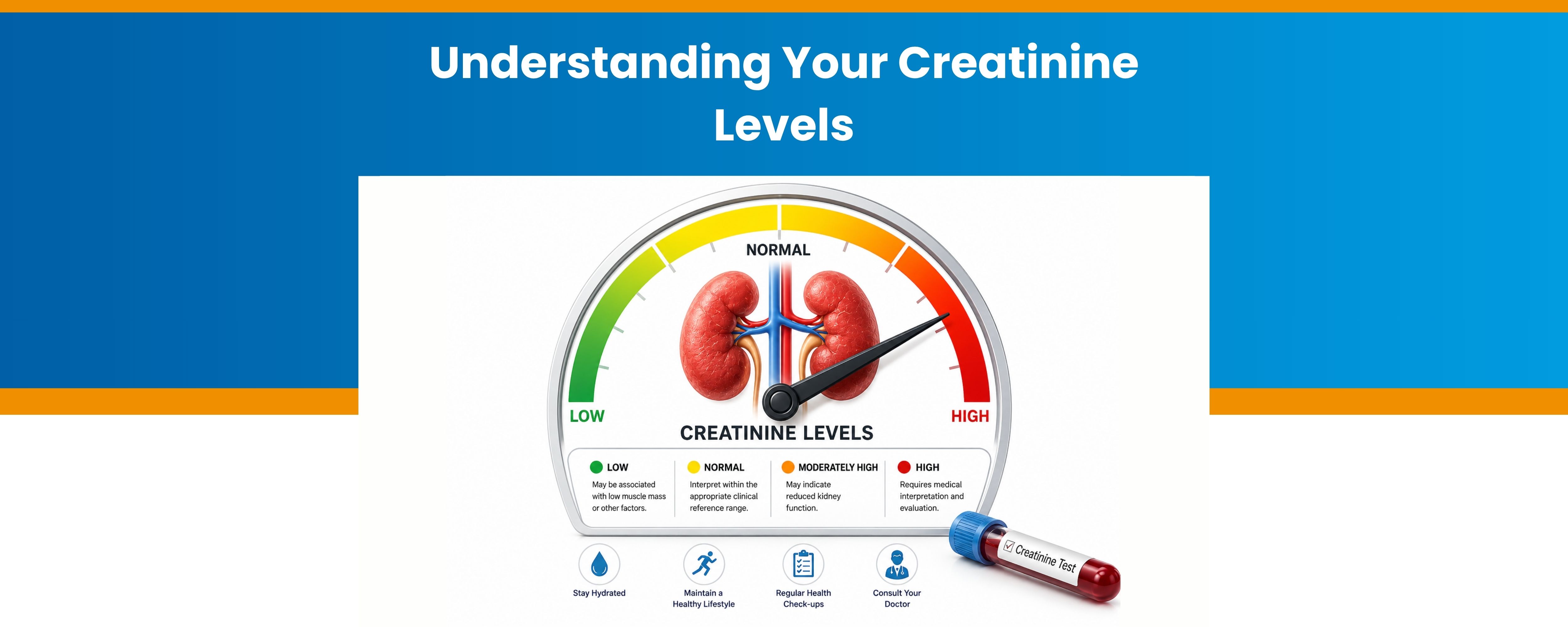
Creatinine is a waste product that forms after the metabolism of protein and the normal breakdown of muscle tissue. The kidneys help in removing it from your blood. However, high creatinine levels in your blood can indicate a kidney problem. It is important to note that rising creatinine levels are a marker, not a disease.
Understanding creatinine levels is critical, as they indicate decreased kidney filtration efficiency, or glomerular filtration rate (GFR). A normal creatinine range is highly individualised as it is influenced by a person’s muscle mass, age, and gender. That being said, a sudden spike in creatinine levels needs immediate nephrological evaluation to distinguish between dehydration and chronic kidney damage.
What are the Causes of Rising Creatinine?
While normal creatinine ranges depend on age, gender, and muscle mass, the average ranges are 0.7 to 1.2 mg/dL for males and 0.5 to 1.0 mg/dL for females. Estimated GFR (eGFR) is calculated using age of the patient and creatinine values indicates underlying renal function.
Category |
Serum Creatinine (mg/dL) |
General Clinical Context |
Normal |
0.7 to 1.3 (Men) / 0.6 to 1.1 (Women) |
Usually indicates healthy filtration. |
Borderline |
1.2 to 1.5 |
Requires correlation with eGFR and history. |
High |
Above 1.5 |
Often indicates Acute Kidney Injury (AKI) or CKD. |
High creatinine levels may indicate a disruption in normal kidney function. Some of the causes of rising creatinine can include:
- Dehydration
- A high-protein diet
- Pregnancy
- Regular and intense exercise or physical activity
- Supplements
- Kidney infection (pyelonephritis)
- Drug-induced nephrotoxicity
- Glomerulonephritis
- Diabetes
- High blood pressure
- Obstruction in the urinary tract
- Acute or chronic kidney failure
- Heart diseases like atherosclerosis or congestive heart failure
Symptoms of High Creatinine
A temporary rise in creatinine levels may not cause any symptoms in a person. Meaning, in the early stages, high creatinine is a silent phenomenon. However, with time, you may notice the following high creatinine symptoms:
- Swelling in the face, wrists, abdomen,
- Muscle cramps
- High blood pressure
- Painful urination
- Dry or itchy skin
- Difficulty in breathing
- Chest pain
- Mental confusion
- Fatigue
- Loss of appetite
- Change in urine patterns
Understanding Creatinine Level 1.5
Understanding creatinine levels is important to ensure your kidneys are functioning effectively. While a creatinine level of 1.5 is high and might alarm you at first, whether or not it indicates kidney failure depends on a person’s eGFR.
For a young athlete, a creatinine level of 1.5 might represent a slightly higher muscle load, while the same for a 70-year-old could represent a later stage of chronic kidney disease. This means that 1.5 could depict different things for different groups of people. However, for a woman or someone with low muscle mass, the number could be alarming.
How NU Hospitals Can Help?
At NU Hospitals, the Preventive Nephrology Clinic does not stop at a single lab result when diagnosing. Instead, we are focused on integrating eGFR trends and biomarkers such as Cystatin C, enabling the patient to receive a precise and complete clinical picture. This allows our experienced healthcare professionals to identify risks early and intervene promptly. We boast highly advanced medical technology, backed by state-of-the-art infrastructure, which supports our experienced medical professionals. We believe in providing the best diagnosis, treatment, and after-care to every patient.







