 Nephrology
 Urology
 Andrology
 Fertility (IVF)
 General Nephrology
 Paediatric Nephrology
 Dialysis
 Renal (Kidney) Biopsy
 CRRT
 Peritonial Dialysis
 Robotic Surgery
 Urinary Incontinence
 Uro-Oncology
 Laparoscopic Urology
 Reconstructive Urology
 Anaesthesiology
 Radiodiagnosis
 Nutrition and Dietetics
 Pediatric and Immunization
 Cardiology
 Intensive Care Unit





Introduction
The urine colour tells a lot about an individual’s overall health. It can provide vital information about your hydration levels, kidney function, and other health conditions. While your urine can change in colour from time to time, it usually returns to normal over time. It can often reveal health concerns like dehydration, liver problems, or an infection.
With the right knowledge of different urine colours, a person gets an idea of what is normal and abnormal. However, apart from knowing when there is a visible abnormality in colour, analysis of urine is necessary to obtain more accurate information about the state of the kidney and overall body function.
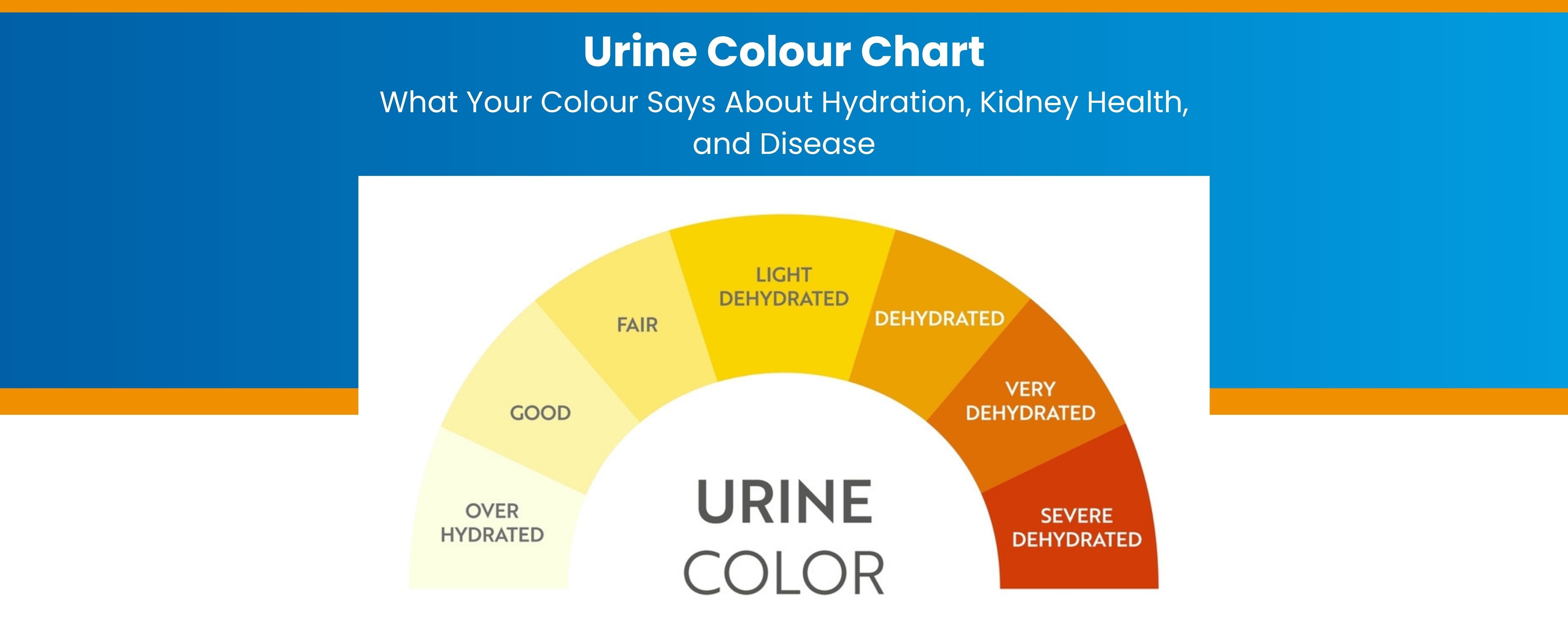
Understanding the Urine Colour Chart
Urine has its normal yellow colour due to urochrome, which forms during the metabolism of haemoglobin. The intensity of the colour of urine depends on the concentration of this pigment in the urine. The table below explains the different types of urine colour, their possible meanings, and underlying causes. Let’s take a look at it to get a deeper understanding of urine colour.
Clinical Urine Colour Decoder
Urine Colour |
Meaning |
Possible Cause |
Pale Yellow |
Well hydrated |
Normal |
Transparent |
Excess hydration |
Overconsumption of fluids |
Dark Yellow |
Mild Dehydration |
Low fluid intake |
Amber |
Dehydration |
Concentrated urine |
Orange |
Liver or bile issue |
Medications, hepatitis |
Pink/Red |
Blood in urine |
Kidney stones, infection |
Brown |
Liver disorder |
Muscle breakdown |
Cloudy |
Infection |
Bacteria, crystals |
Blue/Green |
Medication effect |
Rare metabolic causes |
While this urine colour chart provides general guidance on urine colours, it does not replace diagnostic testing or expert guidance.
Urine Colour Meaning: When to Be Concerned
Some possible temporary reasons for a change in urine colour include:
-
Vitamin supplements, especially B-complex vitamins
-
Consumption of beetroot, carrots, etc.
-
Certain medications
-
Dehydration in the body
However, some extreme cases with abnormal colours in urine may require medical attention:
-
Persistent red or pink urine (possibly blood)
-
Dark brown urine ( indications of a liver or muscle disease)
-
Cloudy urine with foul smell (infection), foamy urine (protein loss or possible kidney disease)
Dark Urine Meaning
Dark-coloured urine is generally considered a sign of dehydration. It can be treated by increasing water intake and staying hydrated. But if nothing is done regarding hydration, the condition can take a serious form. The following condition can be detected:
-
Liver disorders (Bilirubin in urine)
-
Kidney disease
-
Rhabdomyolysis
-
Severe Urine Infection
If dark-coloured urine is accompanied by fatigue, swelling, and oliguria, a kidney screening might be recommended to identify the underlying condition.
Urine Colour and Kidney Disease
According to studies, the most searched concern about urine colour is “urine colour kidney disease.” Although generally, kidney disease does not affect the colour of urine, there are noticeable symptoms present, which include:
-
Tea-coloured urine, also known as blood breakdown.
-
Persistent cloudy or foamy urine
-
Decreased amount of urine output
-
Swelling in the Legs and Face
However, in many cases, there are no symptoms of kidney disease. This is why lab tests and expert guidance are also important for accurate results.
Beyond Visible Colour: The Role of Advanced Urinalysis
At NU Hospitals Diagnostic Lab, urine analysis is not limited to colour alone. Advanced urine analysis techniques are used to make a detailed prognosis of the patient’s condition. Some of them are:
-
Chemical analysis (protein, glucose, ketones, bilirubin)
-
Microscopic examination (RBCs, WBCs)
-
Urine protein quantification
-
Microalbumin Testing
-
Urine cultures, if infection is suspected.
Normally, these tests help detect abnormalities well before colour changes become apparent or the condition becomes serious.
Potentially Dangerous Causes
While minor changes in the urine colour are not that serious, some of the potentially dangerous causes of urine colour change include:
-
Blood in Urine (Kidney Stones, Tumours)
-
Brown Urine (Liver Disease)
-
Persistent cloudiness (UTIs)
-
Coloured urine (muscle breakdown)
If the colour change persists beyond 48 hours or is accompanied by other symptoms such as pain, fever, or swelling, it is advised to consult a doctor immediately.
When Should You See a Doctor?
See a medical care provider if you have the following symptoms:
-
Blood in the urine
-
Severe back pain
-
Fever with cloudy urine
-
Persistent dark-colored urine
-
Swelling or reduced urination
At NU Hospitals, patients undergo a structured diagnostic pathway that includes lab tests, imaging, and consultation with nephrology or urology.
Conclusion
A colour chart for urine is an extremely useful tool for self-monitoring and early detection. But visible changes in colour and odour are only superficial indicators. True assessment of kidney health requires precision and accuracy that can only be provided by laboratory tests, along with expert interpretation and guidance.
NU Hospitals integrates advanced diagnostic technology with specialist evaluation and treatment to enable early detection. If you persist with abnormal urine colour, early medical evaluation will make a difference.







