 Nephrology
 Urology
 Andrology
 Fertility (IVF)
 General Nephrology
 Paediatric Nephrology
 Dialysis
 Renal (Kidney) Biopsy
 CRRT
 Peritonial Dialysis
 Robotic Surgery
 Urinary Incontinence
 Uro-Oncology
 Laparoscopic Urology
 Reconstructive Urology
 Anaesthesiology
 Radiodiagnosis
 Nutrition and Dietetics
 Pediatric and Immunization
 Cardiology
 Intensive Care Unit




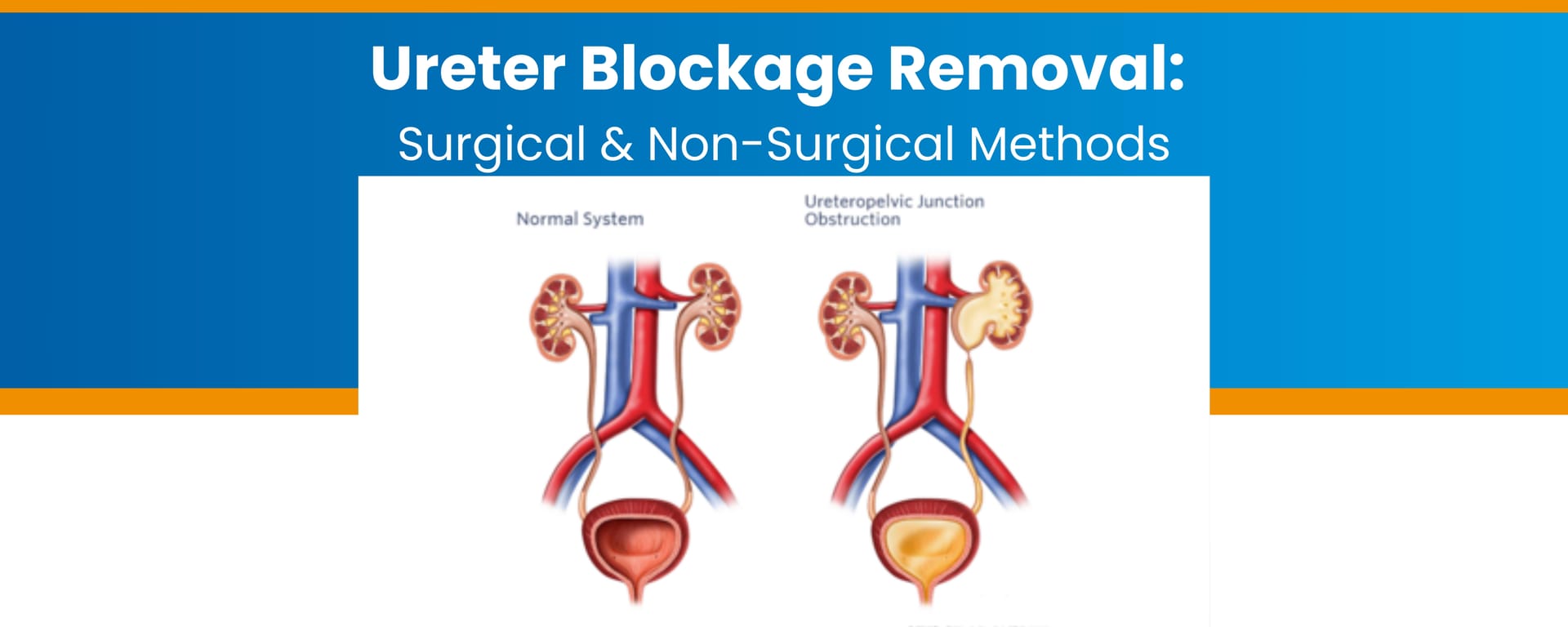
Intense pain in your back? It could be a Ureter blockage, also known as Ureter Obstruction.
12% of the population will develop a urinary stone at some point. This is one of the leading causes of ureter obstruction and kidney blockage. If it is left untreated, this can also lead to kidney swelling (hydronephrosis), infection, or even kidney failure.
But don't worry, folks! Due to advancements in surgical and non-surgical treatment options, you don’t have to let a little blockage hold you back. In this blog, we will explore the causes, the various treatment options, both surgical and non-surgical, and the road to recovery.
What is Ureter Blockage?
Think of your urinary system as a highway. The kidneys make urine. The ureters are small tubes that carry urine to the bladder. When something blocks this path or stops the urine flow, it is known as ureter blockage.
In this condition, the urine backs up into your kidneys. This increases the pressure inside your kidneys, causing them to swell. This swelling is known as hydronephrosis. It is a condition that can lead to painful symptoms and, over time, can cause permanent kidney damage if not addressed.
What are the Causes of Ureter Obstruction
There are several causes for a blocked ureter. They can be categorised under internal or external factors.
Internal Causes
These are blockages that occur inside your ureter itself.
-
Kidney Stones
Kidney stones are the most common cause. A kidney stone can pass from your kidney into the ureter and get stuck. This can lead to severe ureteric pain.
-
Scar Tissue (Strictures)
Previous surgeries, infections, or injuries can lead to the formation of scar tissue. This can narrow your ureter and restrict the urine flow.
-
Blood Clots
In rare cases, blood clots can form in your kidney or ureter. This can also create a blockage.
External Causes
-
Enlarged Prostate
An enlarged prostate gland in men can compress your urethra. This might cause urine to back up into your bladder and eventually into the ureters.
-
Tumors or Cysts
Growths in or near the kidneys, bladder, or other organs can press on your ureters and cause a kidney blockage.
-
Pregnancy
The growing uterus can sometimes compress your ureters, leading to temporary blockage.
-
Endometriosis
Endometriosis is a condition where tissue similar to the lining of the uterus grows outside the uterus, which can cause a ureteral blockage.
Surgical vs Non-Surgical Treatments
Your treatment for a blocked ureter will depend on its cause and severity. Non-surgical treatment can be the first line of treatment. However, if things get serious, surgery may be required.
Feature |
Non-Surgical Method |
Surgical Method |
Goal |
To relieve pressure and drain urine |
To remove the source of the blockage |
Invasiveness |
Minimally invasive |
Can be minimally invasive or open surgery |
Procedure |
Stent placement, drainage |
Open surgery, laparoscopic surgery, and ureteroscopy |
Long-Term Solution |
Often temporary |
Offers a permanent solution |
Recovery Time |
Hours to days |
A few days to a couple of weeks |
Used for |
|
|
Non-Surgical Treatments
The aim of non-surgical treatment for your blocked ureter is to provide immediate relief and drain the backed-up urine. This helps to prevent any further kidney damage.
-
DJ Stent Placement
A Double-J (DJ) stent is a thin, hollow tube that is temporarily placed inside your ureter. It will run from your kidney to the bladder. It bypasses the blockage and allows urine to flow freely.
It is a very common solution to relieve ureteral pain. It is done with the help of a procedure called ureteroscopy.
-
Percutaneous Nephrostomy
Percutaneous nephrostomy is a procedure where a tube is inserted through your back, directly into the kidney. This tube helps to drain your urine into an external bag. This helps to provide immediate relief from the pressure.
It is typically a short-term solution used for severe blockages or in emergency situations.
Surgical Treatments
When non-surgical options are not enough or if the blockages are caused due to large stones or a tumor, surgical solutions for ureter blockage removal are necessary.
-
Ureteroscopy
Ureteroscopy is a minimally invasive procedure where a thin, lighted scope is passed through your urethra and bladder and into the ureter. This will help your surgeon to see the blockage.
He will either use a laser to break up a kidney stone or remove the stone with a small basket. If a stricture causes the blockage, the surgeon may cut it and place a stent.
-
Laparoscopic and Robotic-Assisted Surgery
Laparoscopic and robotic-assisted surgery are advanced, minimally invasive surgical procedures. Small incisions are made in the abdomen, then small instruments are used to repair or remove the blocked section of the ureter.
These procedures offer a very high success rate with less pain and a faster recovery when compared to traditional open surgery.
-
Open Surgery
The concept of open surgery has become quite rare. However, it may be needed for a few complex or extensive blockages. Your surgeon will make a larger incision to get access and repair your ureter.
Urinary Obstruction: What to do
Dealing with urinary obstruction can be quite scary. However, if you have all the right information and the best urologist to guide you through it, you no longer need to worry. However, you must act quickly, whether you are looking for non-surgical treatment or a surgical one.
Don't let a urinary obstruction steal your peace of mind. NU Hospitals, Bangalore. We provide you with the expert care you need to address your condition. Whether it's ureteric pain or you want to know more about ureter blockage removal, we are here to help.







