 Nephrology
 Urology
 Andrology
 Fertility (IVF)
 General Nephrology
 Paediatric Nephrology
 Dialysis
 Renal (Kidney) Biopsy
 CRRT
 Peritonial Dialysis
 Robotic Surgery
 Urinary Incontinence
 Uro-Oncology
 Laparoscopic Urology
 Reconstructive Urology
 Anaesthesiology
 Radiodiagnosis
 Nutrition and Dietetics
 Pediatric and Immunization
 Cardiology
 Intensive Care Unit





Cancer sounds very scary to everyone. Especially when your urinary tract is involved, it is overwhelming.
Ureter cancer is one of the rarest forms of cancer of the urinary system. It accounts for 1-2% of all urothelial cancers in the world
This serious cancer affects the ureters (tubes that carry urine from the kidneys to your bladder). We at NU Hospitals are dedicated to providing the best treatments for everyone suffering from any kind of urological cancer.
Be assured that early detection and prompt treatment by our experts can save lives and protect your urinary system health.
Read on as we uncover how ureter cancer is diagnosed and treated, and also learn about your recovery phase after treatment.
What is Ureter Cancer?
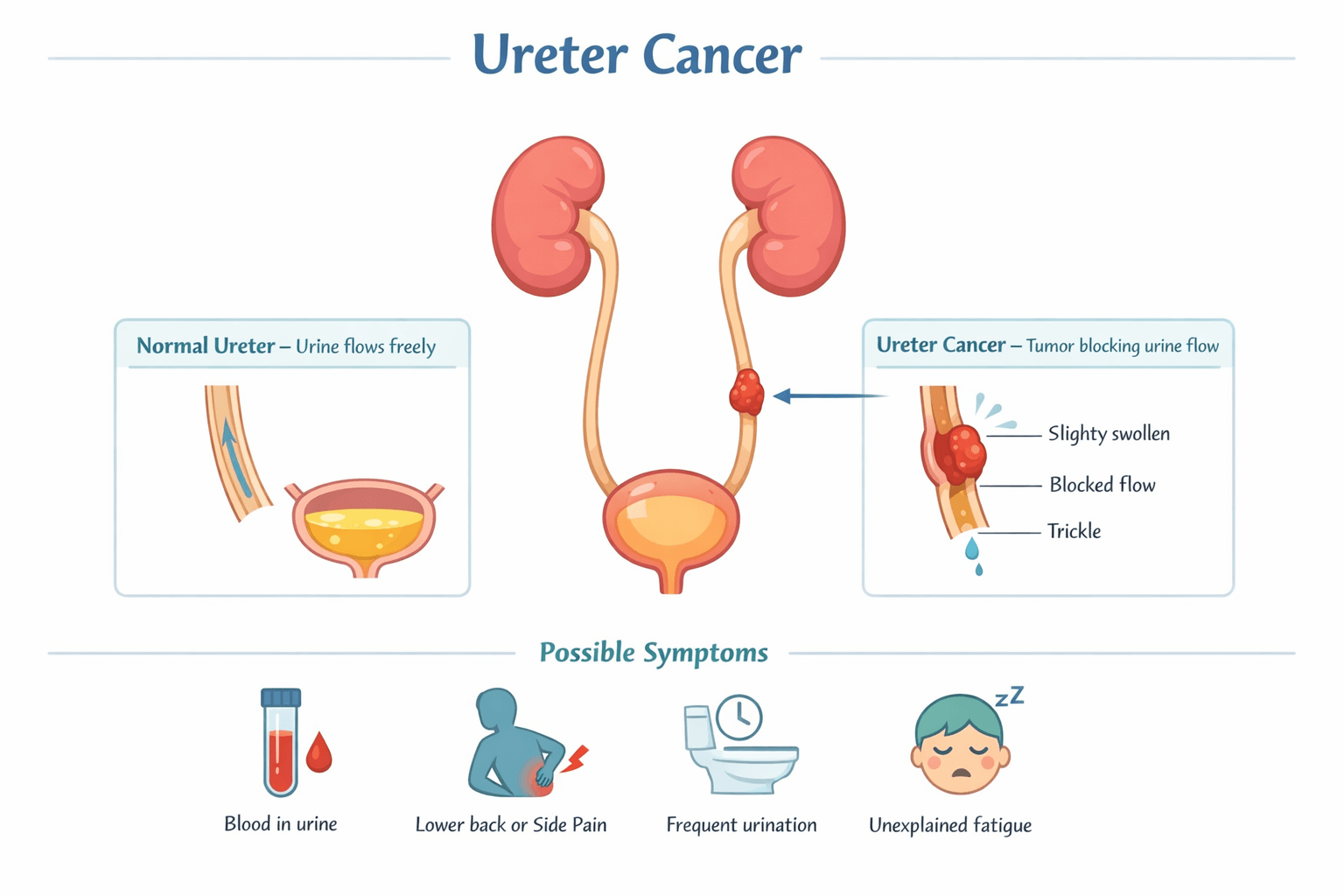
Ureter cancer, or urothelial carcinoma of the ureter, is a cancer that develops in the lining of the ureter.
When there is a malignant growth in the ureters, it blocks the urine flow. It can cause pain, blood in urine, and infections or even lead to kidney damage.
How Common is Ureter Cancer in Bangalore?
Ureter cancer is an uncommon cancer with a rare occurrence.
Ureteral cancer usually affects elders over the age of 65 years and is twice as common in men compared to women.
Although it is relatively rare, early diagnosis and treatment can help with better outcomes.
What Causes Ureter Cancer?
There are no specific causes of ureter cancer, but certain factors can increase the risk. This includes:
-
-
Smoking
-
Smoking is one of the leading risk factors for ureter cancer. It can also be a trigger for other urinary cancers.
-
-
Chemical exposure
-
Being exposed to hazardous chemicals regularly can increase your chances of getting ureteral cancer.
Constant exposure to industrial toxins, dyes, pesticides, etc.
-
-
Urinary tract infections
-
With chronic infections in the urinary tract, there is a chance of acquiring ureter cancer.
-
-
Recurrent kidney or bladder stones
-
Recurrent stones in the kidney, bladder or in the tract can scar the ureters and also lead to cancerous growth.
-
-
Genetic predisposition
-
Certain inherited syndromes play a major role in the development of cancers.
-
-
Age
-
With rising age, the probabilities of acquiring cancer also increase. Most ureteral cancer patients are aged between 65 and 80 years.
-
-
Family history
-
If you have a family history of ureteral cancer or any other urinary system cancer, you are more likely to develop this tumour than the rest.
What Are the Early Signs and Symptoms?
The signs and symptoms to look out for in the early stages are:
-
-
Blood in urine
-
The most common symptom is haematuria (blood in urine). You can see pinkish or brown urine.
-
-
Flank or abdominal pain
-
Persistent episodes of pain in the abdominal region, back and side.
-
-
Frequent urinary tract infections
-
Repetitive infections within 6 months
-
-
Unexplained weight loss
-
A sudden drop in weight and energy can also indicate tumour growth.
-
-
Constant fatigue
-
If you are constantly feeling tired, even after having a healthy lifestyle, you should check with a specialist
How Is Ureter Cancer Diagnosed at NU Hospitals?
Our expert uro-oncologists suggest a few tests to confirm the presence of a ureteral tumour. Our facility is equipped with world-class advanced tools and techniques. We aim to provide an accurate diagnosis for all our patients.
What Diagnostic Tests Are Used?
Uro-oncologists at NU Hospitals will prescribe a few tests, including:
-
-
Imaging tests
-
-
-
-
CT Urography
-
-
To detect the tumour size and location
-
-
-
MRI
-
-
To check if there is any soft tissue involvement
-
-
-
Ultrasound
-
-
To visualise and assess kidney and ureter obstruction
-
-
Ureteroscopy
-
A tiny tube with a camera is inserted into the urethra through the ureter to visualise and inspect the ureters and the tumour.
-
-
Biopsy
-
A small sample is taken for testing. This confirms the type and stage of cancer.
-
-
Urine tests
-
Urinalysis is done, followed by urine cytology to look for malignant cells.
-
-
Check for bladder cancer
-
As ureteral cancers are closely associated with bladder cancer, patients are more likely to develop both. We advise tests for bladder cancer as well as a preventive measure.
What Are My Treatment Options at NU Hospitals Bangalore?
We at NU Hospitals offer tailored treatment options for each patient according to their cancer stage, location, overall health and treatment receptivity.
With state-of-the-art amenities and globally trained experts, we are committed to providing treatments with global standards and high success rates.
Can Ureter Cancer Be Treated with Surgery?
Yes, ureterectomy surgery is one of the major treatment options for patients with ureteral cancer.
The different types of ureterectomy include:
-
-
Segmental Ureterectomy
-
Removal of the infected portion of the ureter (when the tumour is confined to the ureter).
-
-
Nephroureterectomy
-
This procedure involves removing the infected kidney and ureter if the cancer is widespread.
At NU Hospitals, these surgeries are carried out with minimally invasive procedures like laparoscopy or robotic assistance to ease recovery.
In the early stages of ureter cancer, surgery provides major success. The 5-year survival is 85-90%.
Is Chemotherapy or Radiation Therapy Needed?
-
-
Chemotherapy
-
It is recommended before the surgery to shrink the tumour and after the surgery to reduce the risk of recurrence.
-
-
Radiation Therapy
-
This is a less common method for ureteral cancer, but it may be suggested for patients where surgery is not possible.
What Is Minimally Invasive Treatment?
Minimally invasive treatment refers to surgeries performed with fewer incisions/cuts. They can be laparoscopic surgeries or robotic surgeries.
They offer many benefits to patients, including:
-
-
Small cuts
-
Reduced blood loss
-
Shorter hospital stays
-
Easy recovery
-
Faster return to daily life
-
How Much Does Ureter Cancer Treatment Cost in Bangalore?
Treatment cost for ureter cancer depends on which modalities and therapies are used, along with surgery type, hospital stay and postoperative care. An open ureterectomy surgery costs between INR 1,20,000 - 1,50,000 . Our team will help with a transparent estimate and insurance claims before you plan for the surgery.
What Factors Influence Treatment Costs?
The factors influencing treatment costs for ureter cancer include:
-
-
Cancer spread or stage
-
Complexity and type of surgery
-
Usage of robotic or laparoscopic techniques
-
Chemotherapy and radiation therapy charges
-
Hospital stay
-
Medications
-
Follow-up care
-
Why Choose NU Hospitals for Ureter Cancer Care?
Trusted by many, NU Hospitals has been the go-to healthcare provider for all urological cancers in Bangalore.
What Makes NU Hospitals Different?
-
-
NU Hospitals is the home for expert uro-oncologists with decades of experience and extensive training.
-
Availability of advanced world-class robotic systems and laparoscopic facilities
-
The patient-first approach and holistic care from diagnosis to rehabilitation
-
Success rates matching global standards
-
What Can I Expect During Recovery and Aftercare?
You will be guided through the entire process of recovery after surgery.
How Long Is Recovery?
-
- Hospital stay
You would stay in the hospital for 2-5 days for monitoring after a minimally invasive surgery.
-
- Full recovery
It might take 1-2 weeks for you to get back to regular daily activities. Your doctor will clear you for physical activities as per your recovery in these days.
What Follow-Up Care and Support Is Provided?
You would be advised to have regular checkups, at least for 5 years, to check for recurrence.
We help you with:
-
-
Regular monitoring with imaging and lab tests
-
Medication management
-
Lifestyle changes
-
Psychological support
-
We make sure you are not alone in this journey. Your battle against cancer is ours too.








