 Nephrology
 Urology
 Andrology
 Fertility (IVF)
 General Nephrology
 Paediatric Nephrology
 Dialysis
 Renal (Kidney) Biopsy
 CRRT
 Peritonial Dialysis
 Robotic Surgery
 Urinary Incontinence
 Uro-Oncology
 Laparoscopic Urology
 Reconstructive Urology
 Anaesthesiology
 Radiodiagnosis
 Nutrition and Dietetics
 Pediatric and Immunization
 Cardiology
 Intensive Care Unit




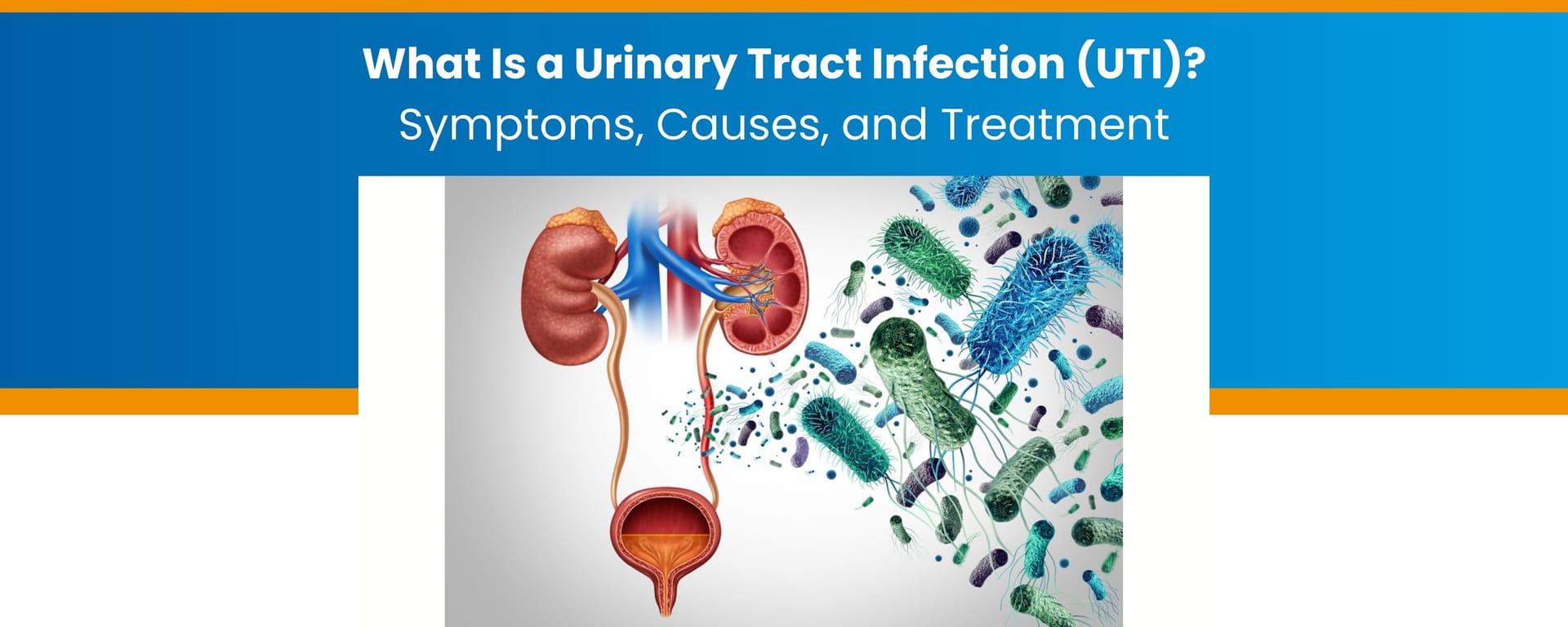
Are you travelling very frequently? Feeling a burning sensation every time you urinate? Having a constant urge to urinate?
Then you might have a urinary tract infection (UTI).
Dealing with UTI can be quite annoying and uncomfortable. But you are not alone. UTIs are very common.
The good news is they are also quite treatable. With the right knowledge and proper care, UTIs are easy to treat and prevent.
Stop ignoring UTI. They can turn into something worse. At NU Hospitals, our doctors help you diagnose and treat this condition effectively.
Read this blog to learn more about Urinary Tract Infection (UTI), UTI symptoms, and UTI treatment.
What is UTI?
A Urinary Tract Infection (UTI) is an infection of the urinary tract which includes your kidneys, the tubes that carry urine (ureters), your bladder, and your urethra.
UTI is quite common in women (twice as common as in men). Most women will have UTI at some point in their lives. Men can also get UTI.
Did you know? 8-10 million people are treated for UTI each year.
Symptoms and causes
Understanding the cause of UTI is the first step to stopping the infection.
What are UTI symptoms?
Spot the UTI symptoms early
-
Burning sensation
A sharp, burning feeling when you urinate is the most common sign.
-
Constant urge
Feeling like you need to urinate constantly, even if you just went two minutes ago, is sometimes associated with uncontrollable leakage of urine.
-
Cloudy Urine
Your urine may look cloudy.
-
Strange Smells
If your urine has a strong, unpleasant, or sweet-foul odor, bacteria are usually present.
-
Blood in urine
Urine that looks pink or red, this is a sign to consult your doctor immediately.
Symptoms of UTI by gender
Symptom |
Women |
Men |
Pain |
Center of your pelvisAround your pubic bone |
Rectal area or lower back. |
Occurrence |
Common (1 in 2 women will have one). |
Less common, but more complex. |
First Signs |
Burning and urgency are usually the first signs |
Usually starts with slow flow or difficulty starting urine |
What are UTI Causes?
-
Bacteria Invasion:
Most of the time, E. coli (which lives in your gut) takes a wrong turn and enters your urethra.
-
Anatomy and Physiology (Female Predisposition):
Women are more prone to UTIs, with roughly 50-60% of women experiencing at least one in their lifetime.
-
Shorter Urethra:
The female urethra is shorter and straighter compared to males, reducing the distance bacteria must travel to reach the bladder.
-
Proximity:
The close proximity of the urethral opening to the anus facilitates the transfer of intestinal flora.
-
Holding It In:
The urinary tract is designed to flush out bacteria through regular voiding. Holding urine for extended periods allows bacteria to stay in the bladder, multiply, and adhere to the bladder wall.
-
Blockages:
Structural or functional blockages prevent complete bladder emptying, creating a breeding ground for bacteria. These include:
-
Kidney or Bladder Stones:
These can act as a reservoir for bacteria.
-
Enlarged Prostate (BPH):
Affects men, causing residual urine in the bladder.
-
Menopause
Postmenopausal women face a higher risk of UTIs due to a drop in estrogen levels.
-
Loss of Protection:
Estrogen stimulates the growth of Lactobacillus, "good" bacteria in the vagina that maintain an acidic environment, preventing "bad" bacteria like E. coli from colonizing.
-
Atrophy:
Reduced estrogen causes thinning of the vaginal/urethral tissues, making them more vulnerable to infection.
Diagnosis and Tests
To get the right UTI treatment, you need to diagnose the condition first. There are a few ways to diagnose UTI.
How to diagnose Urinary Tract Infection (UTI)?
-
Urinalysis (Urine Routine & Microscopy):
As the primary diagnostic tool, this rapid test analyzes urine for white blood cells (indicating inflammation), red blood cells, and bacteria.
-
Urine Culture & Sensitivity:
For recurrent or complex infections, this laboratory test grows the specific bacteria present to identify the exact germ causing the infection. It also determines which antibiotics will be most effective, ensuring targeted, accurate treatment.
-
Imaging (Ultrasound or CT Scan):
If symptoms are chronic or recurrent, imaging tools are utilized to visualize the urinary tract, helping to detect underlying causes such as kidney stones, structural abnormalities, or blockages.
-
Cystoscopy:
In chronic or severe cases, a urologist uses a cystoscope—a thin, flexible tube equipped with a camera—to directly examine the inside of the bladder and urethra for inflammation or abnormalities
What is UTI treatment?
The goal of UTI treatment is to kill the bacteria and stop your pain. Don't try to be tough and wait, as infections can travel to your kidneys quickly.
How to manage UTI?
-
Antibiotics
This is the main UTI treatment. Only your doctor can prescribe these. They help to kill the bacteria and make you feel better within 24 - 48 hours.
A thorough evaluation is needed to identify the reason for UTI to prevent it from recurring.
Tips to Prevent Urinary Tract Infection (UTI)
While a number of tips and tricks are bandied about on the net, the most important ones are to keep the bladder and bowel empty. For diabetics, sugar control is also important.
No More Urinary Tract Infections (UTI)
Do you get frequent UTI? Are you ignoring your UTI symptoms, waiting for it to cure itself?
You are risking your kidneys.
While a Urinary Tract Infection (UTI) is a common problem, it’s also quite treatable. So don't suffer in silence anymore. Our specialists at NU Hospitals provide world-class care for all your urological troubles.
We don’t just treat your infection, but we help you figure out finjd out why it’s happening. We help you get a permanent solution.
Our doctors create a personalised treatment plan according to your diagnosis. At NU Hospitals, your comfort matters.
Book your appointment today to get rid of the pain and discomfort.








